SEO is changing rapidly. In 2026, the search engines work differently. Artificial intelligence tools, emerging technologies, and privacy policies mean that traditional methods like tracking rankings or page views will no longer work. You need a clear, concise, and consequence-oriented plan.
This guide shows you how to build an SEO strategy in 2026 that works. It is for SEO beginners, in-house marketers, small business owners, and agency teams. You will learn how to turn SEO work into real business results. This means getting more leads, sales, or visits to your store.
Why SEO Strategy Looks Different in 2026
SEO today isn’t the same as before. Searches and search tools have changed. A lot.
Many searches now end without a click. In 2025, about 60% of searches on Google did not lead to any website visit. That means more than half the people get answers without ever visiting a site.
One big reason: search pages often show answers right away. Instead of just links, users see summaries, quick answers, or “overviews.” When these appear, users click much less. Some studies show the click‑through rate (CTR) dropping almost in half.
Even if you rank at the top, you may not get a visit. For top search results, CTR dropped from around 28% to 19% after “answer-overview” features rolled out. Also, users don’t only search on Google anymore.
They look on video sites, apps, maps, social platforms, and even AI tools. That means many paths lead somewhere, but not necessarily to your website.
Because of these changes, you need a modern “SEO strategy in 2026” that does more than try to rank. You need a plan focused on real goals: leads, sales, conversions. You must think broader than just Google. You must adapt as search behavior shifts.
Set SEO goals that align with business results.

In 2026, SEO is not just about ranking on Google SERP. The goal is to help your business grow into a successful one. That means getting more leads, more sales, or more visits to your store.
Just tracking page views or keyword positions is not enough. A good SEO strategy for a small business or any company starts with goals that link directly to results.
Turning Business Targets Into SEO Goals
Different businesses have different goals. For instance
-
Local Business: Convert 50 new clients per month with search like “best European Gym in [city]”.
-
Affiliate Website: Make $10,000 each month sharing reviews and comparisons.
-
SaaS Startup: Collect 200 qualified quotes from search traffic.
-
E-commerce Stores: Grow profits by 30% on checkout pages.
The focus should not only be on results.
At this point, a simple table can help you visualize how business goals change across SEO strategies and content types.
Business Goal → SEO Goal → Content Type
|
Business Type |
Business Goal |
SEO Goal |
Content Type |
|
Local Restaurant |
50 new customers/month |
Rank for local search queries |
City pages, menu pages, blog posts |
|
Affiliate Website |
$10K monthly revenue |
Drive traffic to product pages |
Reviews, comparison posts, top-10 lists |
|
SaaS Startup |
200 demo requests/month |
Capture bottom-funnel searchers |
Landing pages, guides, and FAQ content |
|
E-commerce Store |
30% more organic revenue |
Increase visits to product pages |
Product pages, category pages, guides |
Mapping Goals to Strategic Focus Areas
Once you’ve decided, map them to the right SEO actions:
-
Topic clusters: Group discussion of basic concepts.
-
Landing Pages: Build landing pages that fulfil clients' demands and increase conversions.
-
Local SEO: Customize your maps, information, and pages.
-
Product or service content: Highlight products to increase sales or signups.
To see how all the pieces fit together, this diagram shows the flow of a complete SEO strategy in 2026.
Business Goals
↓
Content Creation
↓
Visibility in Search & Platforms
↓
Leads, Sales, & Revenue
Track What You Can Measure (Even With Less Data)

In 2026, measuring SEO success is more complicated. Zero-click searches enable users to get answers beyond visiting your site. Cookies and tracking data are short, so you can’t know where your visitor is coming from. This makes matrices like page views or rankings.
Instead of chasing bottom lines, look for indicators that show business growth and impact. These tips can help you understand where your SEO is headed.
Leading & Lagging KPIs You Should Track
There are some clear indicators of whether SEO is working for your business:
-
Search terms: How many people are searching for your company name?
-
Direct visitors: Are users coming directly to your website?
-
Cluster/page impressions: How often do your content clusters or pages appear in search results?
-
Leads and conversions: How many form submissions, demo requests, or purchases happen?
-
Revenue: Are organic visitors bringing in profits?
Leading indicators show early signs of growth. Leading indicators show real results for your business.
2026 SEO KPIs
|
KPI Type |
What to Track |
How to Measure |
Why It Matters |
|
Brand Awareness |
Brand search trends |
GSC: branded impressions |
Shows if more people are looking for your brand |
|
Traffic Signals |
Direct traffic |
GA4: direct visits |
Shows loyal or returning visitors |
|
Content Visibility |
Cluster/page impressions |
GSC: cluster impressions |
Shows which content appears in search results |
|
Lead Generation |
Form submissions, demo requests |
GA4 events, CRM tracking |
Measures real leads from organic traffic |
|
Revenue |
Sales from organic traffic |
GA4 e-commerce, CRM |
Measures true business impact |
Tools & Dashboards for Modern Analytics
Use a variety of free and paid tools to track this:
-
Google Search Console (GSC): Track views, clicks, and page activity.
-
Google Analytics 4 (GA4): Track leads, events, and conversions.
-
Google Business Profile Insights (GBP): Check local search and engagement.
-
Paid tools: Sites like Ahrefs, SEMrush, or SurferSEO help track keywords, competition, and rankings.
These tools combine into a single dashboard to give you an overview of your SEO performance. Even with a limited amount of data, you can find strategies that can lead to successful business outcomes.
Take advantage of opportunities on all platforms
People search in many places. They use Google, YouTube, Reddit, social media, and even online stores. If you only rely on keyword tools, you will miss important opportunities. A strong future of SEO 2026 strategy looks at all these platforms to find topics that bring real results.
Multi-Surface Research in 2026
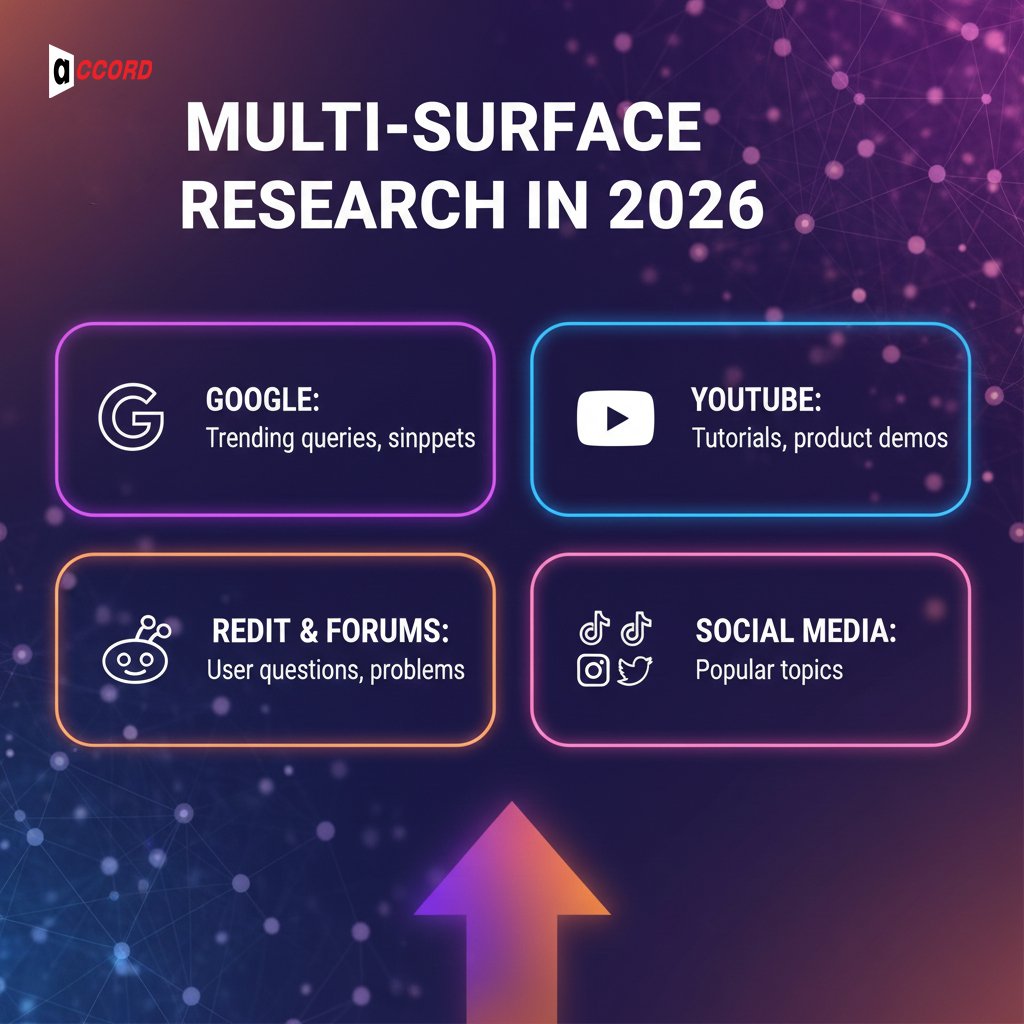
Keyword tools alone are not enough. People search in many ways today:
-
Google: See trending queries, featured snippets, and related questions.
-
YouTube: Check tutorials, how-to videos, and product demos.
-
Reddit & forums: Find real questions and problems from users.
-
Social media: Watch what topics are popular on Instagram, TikTok, and Twitter.
-
E-commerce sites: Look for product searches and reviews.
Tip: Topics that appear on many platforms are usually high-value.
Creating a Topic List for different platforms.
Once you’ve done your research, list out the topic. Include different types:
-
Informational: How-to guides, tips, and tutorials.
-
BOFU (Bottom-of-Funnel): Product pages, service demos, comparisons.
-
A problem most of your audience wants to solve.
-
Search terms: Questions or tips that connect your audience.
Sample for various types of business:
-
Local restaurants: “Best pizza in [city],” “How to pair wine with pasta.”
-
E-commerce store: “10 Running Shoes for Beginners,” “Shopping Guide.”
-
SaaS startups: “How to integrate your CRM with your email client,” “Step-by-step guide.”
-
Related: “Hearing aids 2026,” “Best healthcare brands.”
Keywords can help people find your content when they search.
Create a topic cluster for the new SEO trend
Topic clusters make clear information and make it easier to search. Every cluster included:
-
Pillar page: Covers a main topic fully.
-
Cluster content: Supports subtopics and links to the pillar page.
Examples by business type:
-
Local business: Area-based pages, services, FAQs.
-
E-commerce: Product pages, category guides, tips.
-
Affiliate sites: Review articles, comparisons, top lists.
-
SaaS startups: Feature guides, case studies, help articles.
-
Small businesses: Blog posts, service pages, local content.
Clusters help users navigate your site. They also help search engines understand your content.
This method makes your content useful, organized, and cross-platform.
Build content that ranks, gets featured, and clicks
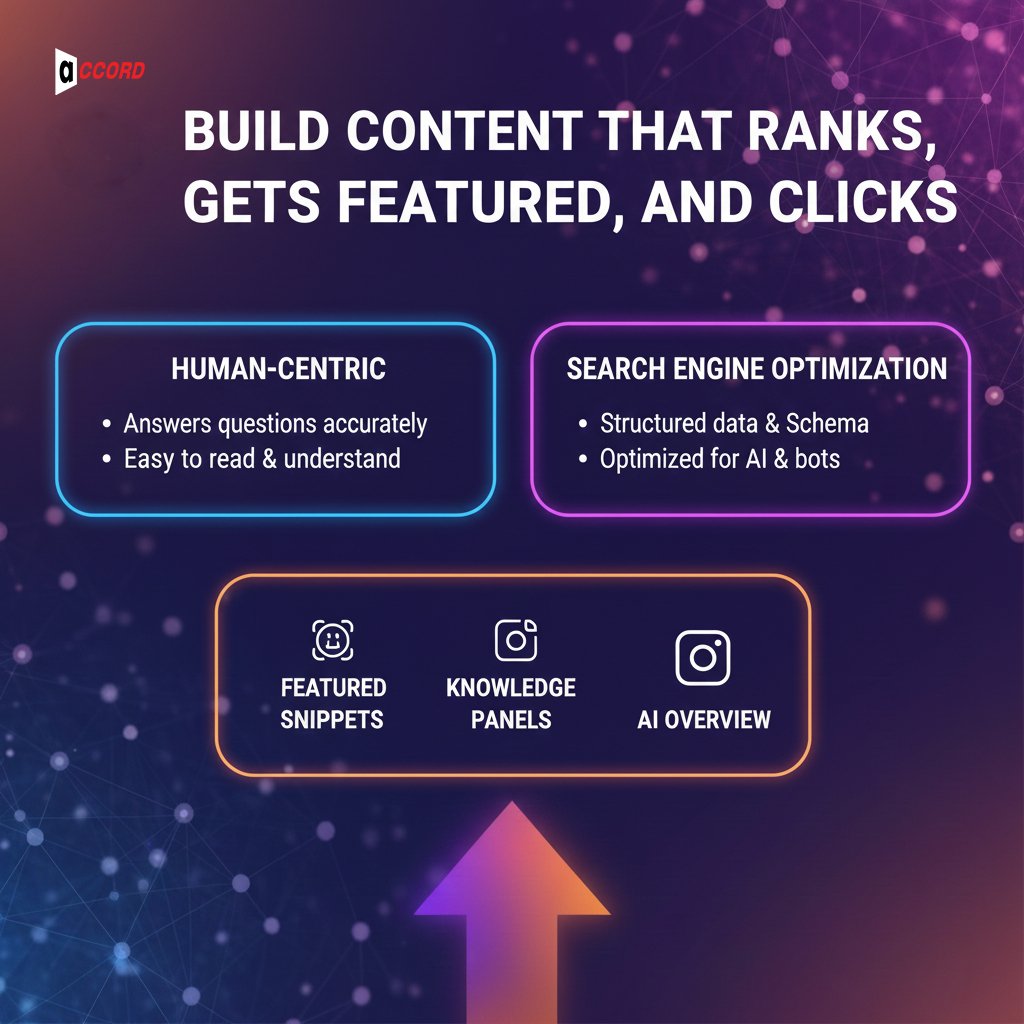
In 2026, brands will need to do more than just show in search. It should answer the question accurately and be easy for the machine to read.
The best information is displayed through featured snippets, panels, and an AI overview. A strong and effective SEO strategy focuses on people and search engines.
2026 Content Strategy
Content strategy for 2026 includes:
-
Useful: Solve real problems and answer questions.
-
Easy to read: Short paragraphs, headings, and keywords.
-
According to Experience: Contains evidence, advice, and real-life stories.
These posts get a lot of engagement, sharing, and leads.
Create a Pillar Pages & Cluster Topic
Customize the topic into pillar pages and clusters:
-
Pillar page: The main topic includes deep content.
-
Cluster page: Share supportive content or sub content that is linked with the pillar content.
For Instance
-
Local Business: Pillar page on “City Activities”, a cluster page for each activity.
-
E-commerce: Pillar on “Running Shoes,” clusters on reviews and buying guides.
-
SaaS: Pillar on “CRM Tools,” clusters on features and use cases.
Clusters help users find information and show expertise to search engines.
Customize content for trackability
Customize content for simple scanning and understanding
-
Share the definition for important topics
-
Add steps or instructions.
-
Include tables or stats.
-
Use structured markup for better indexing.
This makes content easier for readers and helps it get noticed in summaries and highlights.
Build Visibility for Search Engines and AI Tools
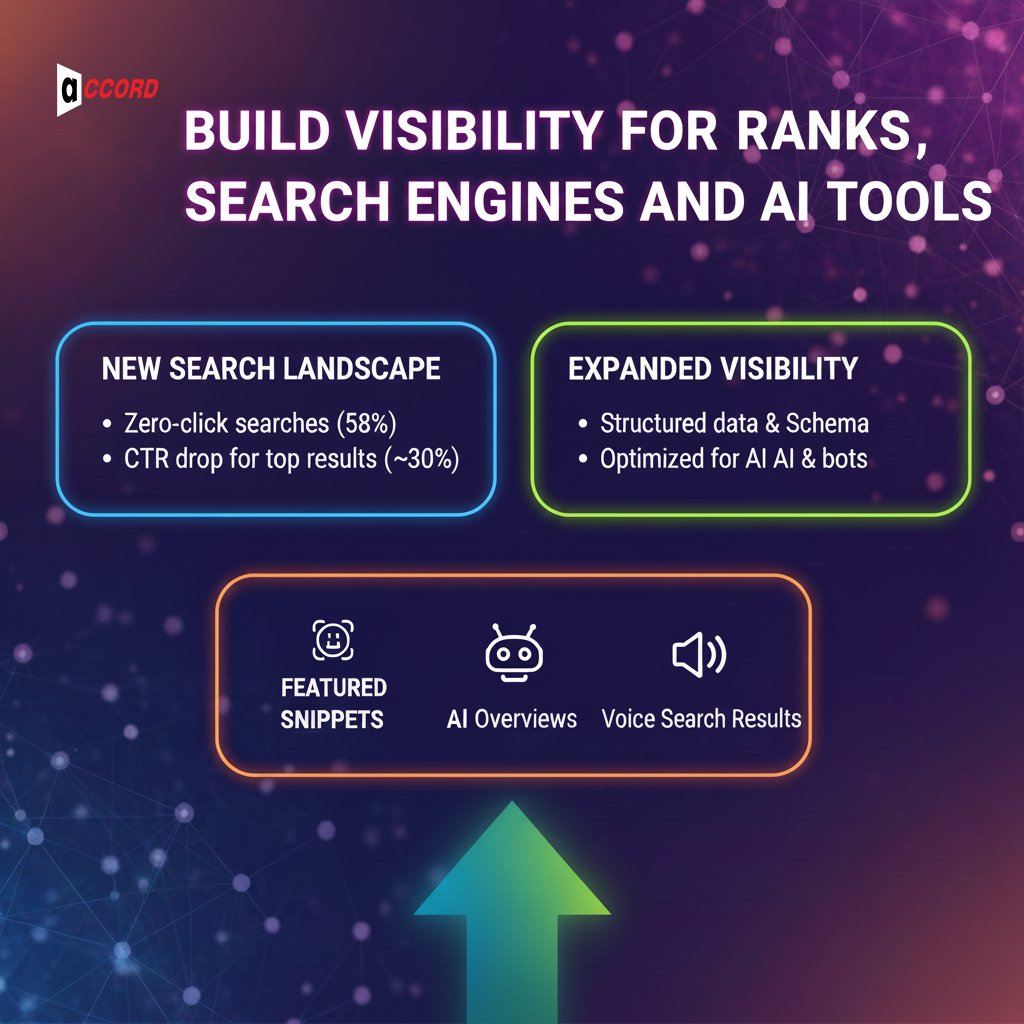
In 2026, it won’t appear on Google alone. 58% of searches are completed without visiting a website.
Click-through rate for the top result can drop by ~30% when summaries appear. This means your content will need to appear more often, not just in traditional search results.
AI Overview Optimization
Nowadays, people find answers directly on search engines. Things to remember:
-
Answer questions clearly and concisely.
-
Add tables, lists, or columns to make your text more visually appealing and stand out.
-
Support your beliefs with facts, data, or expert opinion.
This way, your content will appear in the AI overview.
Establish the rights and responsibilities of the Author.
Search engines always rely on expert reviews. Rely on:
-
Creating author profiles with experience.
-
Share a true story.
-
Include a reward, certificates, or a card
Create Link Building & Online PR
Link Building is still important, but the direction has changed:
-
Create content based on what makes people want to engage.
-
Develop the topical authority with strong, actionable goals.
-
Share a case study or some useful contact information.
These strategies help your content appear in both search results and summaries.
Local Traffic Imports
Local search is essential for every small business.
Always update the Google Business Profile with important information
Get customer reviews to boost trust.
Ensure Name, Address, Phone (NAP) are correct everywhere.
Keep Your Strategy Up to Date
SEO is always changing. What works today may not work tomorrow. A flexible SEO plan helps you stay visible, attract traffic, and grow your business.
By monitoring, updating, and pivoting, your SEO keeps bringing leads, sales, and results.
What to Monitor Every Month
Check your SEO regularly to catch problems and opportunities:
-
Topic clusters: See which clusters bring the most traffic and leads.
-
Updating pages: Fix pages that are losing visitors to protect revenue.
-
New search intents: Add content for questions users are now asking.
-
Search features: Track changes in search results or summaries that affect clicks.
Update your Content
Updating content regularly helps your site perform better:
-
Refresh old pages: Update stats, tips, and examples. This keeps traffic and leads steady.
-
Expand winning clusters: Add new pages on popular topics. This increases sales opportunities.
-
Add new formats: Videos, guides, tools, or case studies. This strengthens your brand and engagement.
Update your traditional strategy
At times, small changes aren’t enough. You may need to make some key changes:
-
Algorithm Update: If you don’t change it, the ranking result may be lost.
-
Modern Search results: Search results can reduce click-through rate.
-
Market Changes: New competition or new business models require new approaches.
-
Business Impact: Strategy changes manage your visitors, revenue, and market share.
SEO Content Flow
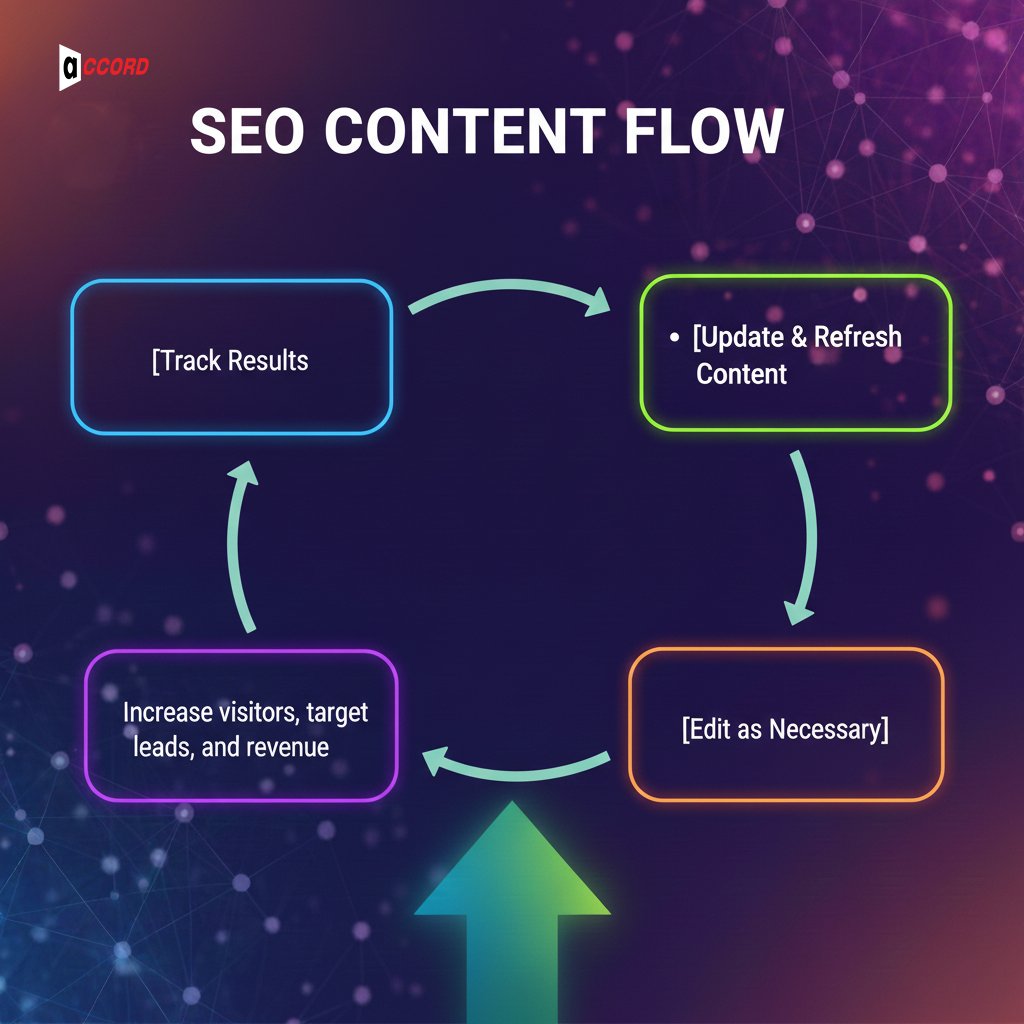
[Trak Results] → [Update & Refresh Content] → [Edit as Necessary] → [Increase visitors, target leads, and revenue].
Converts SEO results into Leads, Sales & Real Revenue
SEO is not just about visitors. It’s about turning them into potential leads. For entrepreneurs and small business owners, every traffic matter.
With a landing page, showcase your content and make it easy for your customers to take action.
Customizing your page for a High conversion rate
Landing pages that load quickly help visitors find the latest information. You can do this by:
-
Use a call to action (CTA): Tell people what they need to do, such as “sign up for our newsletter” or “contact us today”.
-
Build trust: Increase customer reviews, feedback, and testimonials.
-
Answer commonly asked questions: Use FAQs to reduce friction and put visitors at ease.
This makes your small business SEO work for leads and sales, not just traffic.
Mapping Content Clusters to Offers
Your content should guide visitors toward offers. Blogs, service pages, and guides can work together to create leads.
|
Content Cluster |
Goal |
Linked Offer / Conversion |
How It Helps |
|
Informational blogs |
Teach visitors |
Free guide or checklist |
Captures email or contact info |
|
Service pages |
Show solutions |
Free quote or consultation |
Moves visitors closer to buying |
|
Comparison/decision pages |
Help choose |
Demo, trial, or purchase page |
Converts interested visitors |
|
Local content |
Attract nearby users |
Click-to-call or booking page |
Bring local leads or foot traffic |
This shows how effective your SEO is. Each page should have its own function.
Transform Conversions for local businesses and small businesses.
Local businesses need an easy way to do this. Use:
-
Add a call to action: “Call Now” or “Order Online”.
-
Display maps and directions: Make your work easy to find.
-
Creating service pages: Each service gets its own page that matches what people search for.
-
Click to call: Make a simple call section bar.
By optimizing pages, linking content to products, and creating sites that help users navigate quickly, SEO can be used to generate leads and sales.
SEO Mistakes to Avoid in 2026
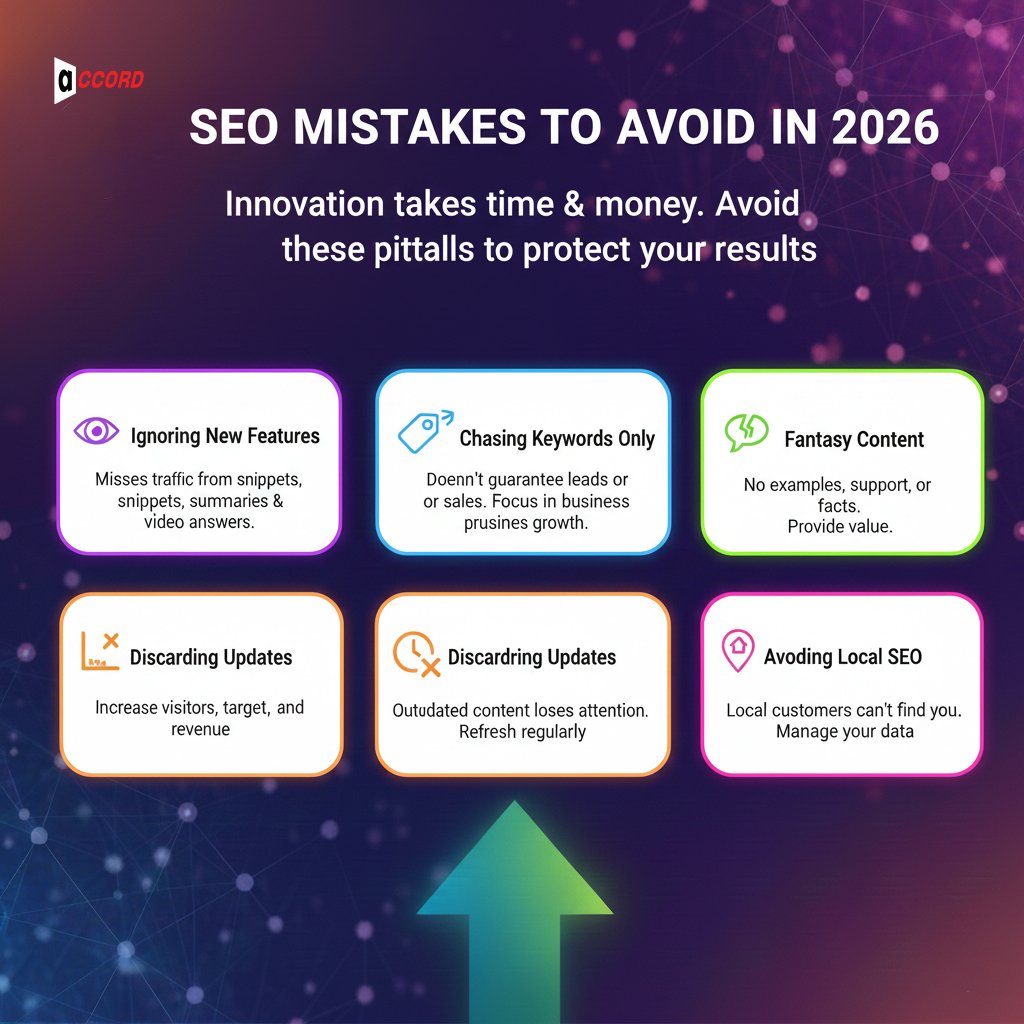
Smart marketers can make mistakes that can hurt results. In 2026, no matter what people search for, innovation will take time and money.
-
Avoiding new search features – Now, people get answers from summaries, snippets, and videos. Only focusing on regular search misses traffic.
-
Chasing keywords only – Ranking for keywords alone does not bring leads or sales. Target the things that will help your business grow.
-
Fantasy Creator - Doesn't work. Provide examples, support, or facts.
-
Discard posts and updates – Outdated content can quickly lose attention. Update your site regularly.
-
Avoiding Local SEO – Local customers can’t find you. Manage your data, view, and update your important documents.
Conclusion
In 2026, SEO will not be all about ranking. It’s about creating strategies that deliver results for your business. Target your business goal.
Make it meaningful and easy to get. Stay tuned and aware of the latest algorithms. Share real ideas, tips, and tricks to improve SEO results. This approach works for small businesses, local organizations, e-commerce, and SaaS.
Do you need a custom SEO plan for 2026 that is tailored to your business?
At Accord Tech Solutions, we help businesses build SEO strategies that get real results. Don’t follow generic advice. Get a plan made just for your business.
We offer SEO audits, consultations, and full strategy plans to boost traffic, leads, and sales.
Start today and make your SEO strategy in 2026 work for your business with Accord Tech Solutions.