
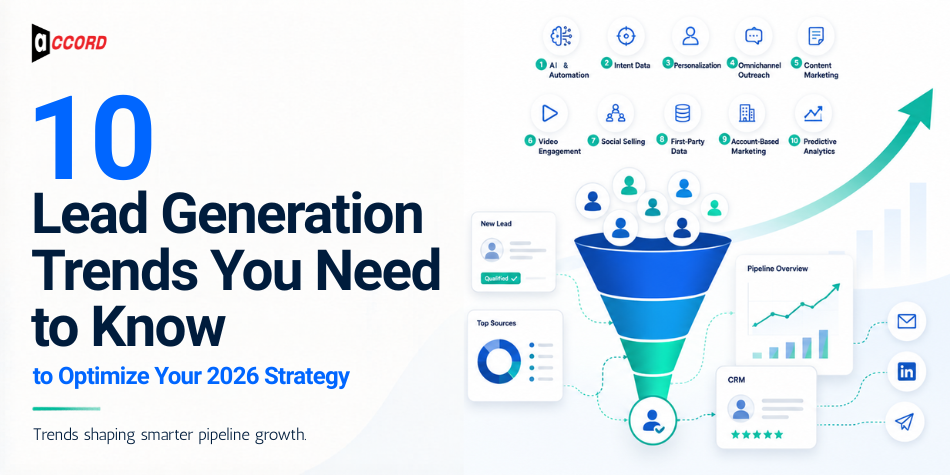
Lead generation plays a crucial role in increasing audience or sales. Therefore, in this AI era, lead generation is evolving rapidly and is very important to keeping the business moving forward. With the new tools, technologies, and strategies available today, new strategies are being created on how to attract and convert leads. In the next part of our Roy Blog, we will discuss 10 lead generation trends that you need to know to optimize your strategy for 2026.
Let's go!
1. AI-Powered Personalization at Scale
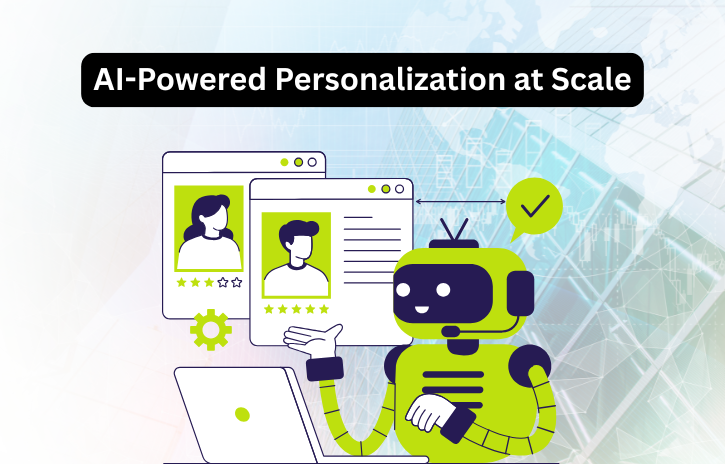
Artificial Intelligence (AI) is hyper-personalized that is increasing lead generation. Let’s first know what is this artificial intelligence (AI) hyper-personalized? It is a technique that makes it easy to grow leads through AI. It is a more advanced level, where AI, machine learning, big data and real-time analytics are used to increase user engagement and control the delivery of offers and interactions. By 2026, lead generation through this artificial intelligence (AI) hyper-personalized will double your previous leads.
For example, AI-powered platforms can create dynamic landing pages that resonate with specific audience segments by analyzing browsing patterns, purchase history and social media activity.
To implement this, invest in AI marketing platforms along with using CRM systems. These tools can automate personalized email campaigns, recommend products, and even predict the best times to engage leads. By 2026, businesses that fail to embrace AI personalization risk falling behind competitors who offer seamless, customized experiences.
2. Conversational Marketing Takes Center Stage

We never imagined that a chatbot would interact with an audience on behalf of a human. But now, AI has made it possible. Chatbot conversations are playing a crucial role. These chatbots have gone from being conversational to being the primary lead generation channel through support and leads. We still haven’t fully convinced ourselves that AI chatbots will provide human-like support. Now, in 2026, conversational marketing and support will be the norm as businesses use AI-powered chatbots to engage with potential customers in real time on websites, social media, and messaging apps.
These bots can qualify leads, answer questions, and guide users through the sales funnel 24/7.
But the question is still, how will this AI communicate? How will it know about me or my services?
wait,
The answer is very simple, for that you need to make sure that your chatbot is equipped with NLP (Natural Language Processing). Through this Natural Language Processing, your AI chatbot will start communicating for you very easily.
Yet another question may arise that where will I use this chatbot or through what medium?
Integrate it with platforms like WhatsApp, Facebook Messenger or Slack to reach your leads where they are. And additionally, use the chatbot to collect user preferences, which can inform future campaigns.
3. Video Content as a Lead Magnet

Chat automation is right, for this, people will depend on chatbots in the future, AI will collect leads by chatting, but how will leads be collected through video? Is this possible?
Possible
In the current AI era, difficult tasks around us are being made easier in a way that would have seemed impossible 5 years ago. But today, everything is possible with AI. So what about video?
Nowadays, people prefer to watch an article rather than read it, because it is possible to understand it later but not to make a choice. It is easier to choose a product by watching and listening to it through a video because it is trustworthy and we can see a real demo of the product.
So video still works as a powerful lead generation tool, where short-form videos, live streams and interactive content are gaining traction. By 2026, platforms like TikTok, Instagram Reels and YouTube Shorts will dominate, as users will lean towards short, engaging content. Videos showcasing product demos, customer testimonials, or behind-the-scenes content can capture attention and drive conversions.
could focus on storytelling through short-form videos. Use lead capture forms within videos or link to landing pages to convert viewers into leads.
Now use video leads to create content that is relevant to your audience's pain points and interests. For example: An SEO services company posts articles to sell its services, posts them on various platforms, but it doesn't get any sales. The reason is trust. Later, it starts posting its services on various platforms through videos and sales increase. Use lead capture forms in the video or use links to landing pages to convert viewers into leads.
4. Zero-Party Data for Enhanced Trust

With growing concerns about data privacy, zero-party data—information that customers willingly share, such as preferences or survey responses—will be critical in 2026. Unlike third-party data, zero-party data builds trust by prioritizing transparency and consent. Businesses can collect this data through quizzes, preference centers, or interactive forms.
To implement this, create engaging surveys or quizzes that offer value, such as personalized product recommendations. For example, a skincare brand might use a quiz to recommend products based on a user’s skin type, capturing valuable data while providing a tailored experience. Ensure compliance with privacy regulations like GDPR and CCPA to maintain trust.
5. Omnichannel Lead Nurturing
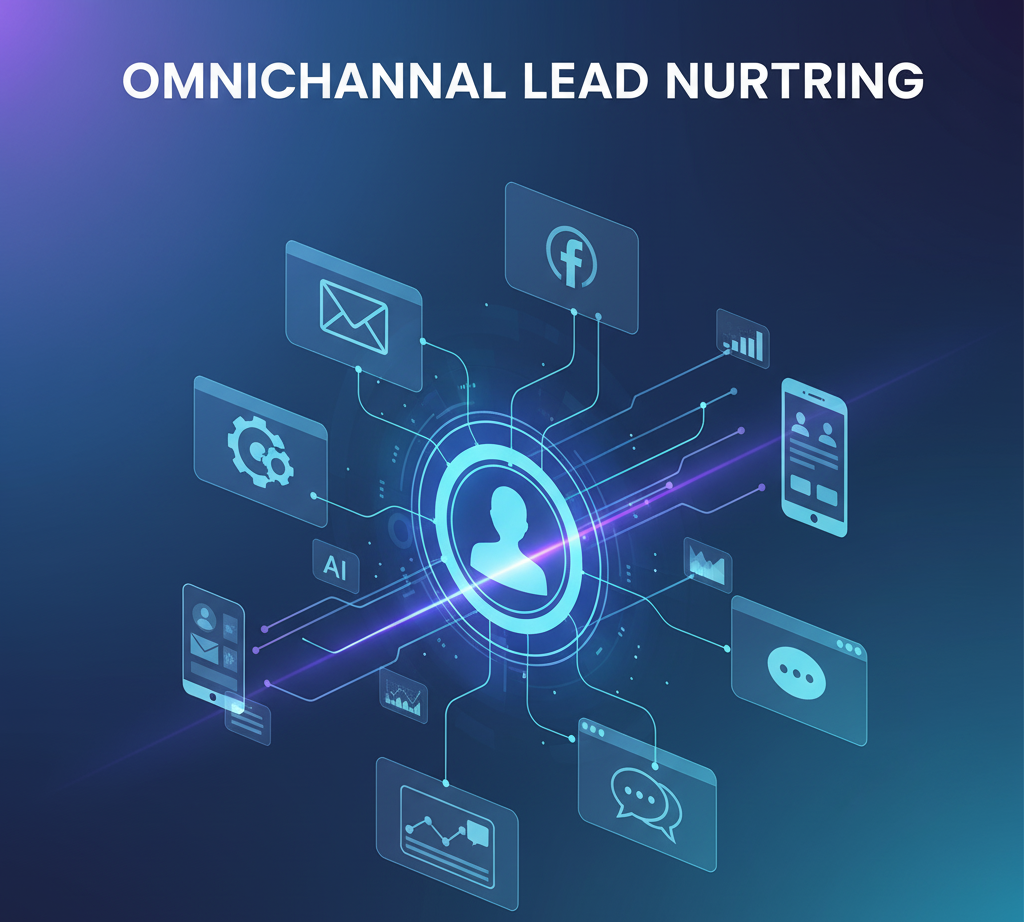
In 2026, successful lead generation will rely on seamless omnichannel strategies that engage prospects across multiple touchpoints—email, social media, SMS, and websites. An omnichannel approach ensures consistent messaging and a unified customer experience, increasing the likelihood of conversion.
To adopt this trend, map out your customer journey and identify key touchpoints. Use marketing automation tools to deliver consistent messages across channels. For instance, a lead who abandons a cart on your website could receive a follow-up email, a retargeting ad on social media, and an SMS with a discount code, all working together to re-engage them.
6. Interactive Content Drives Engagement
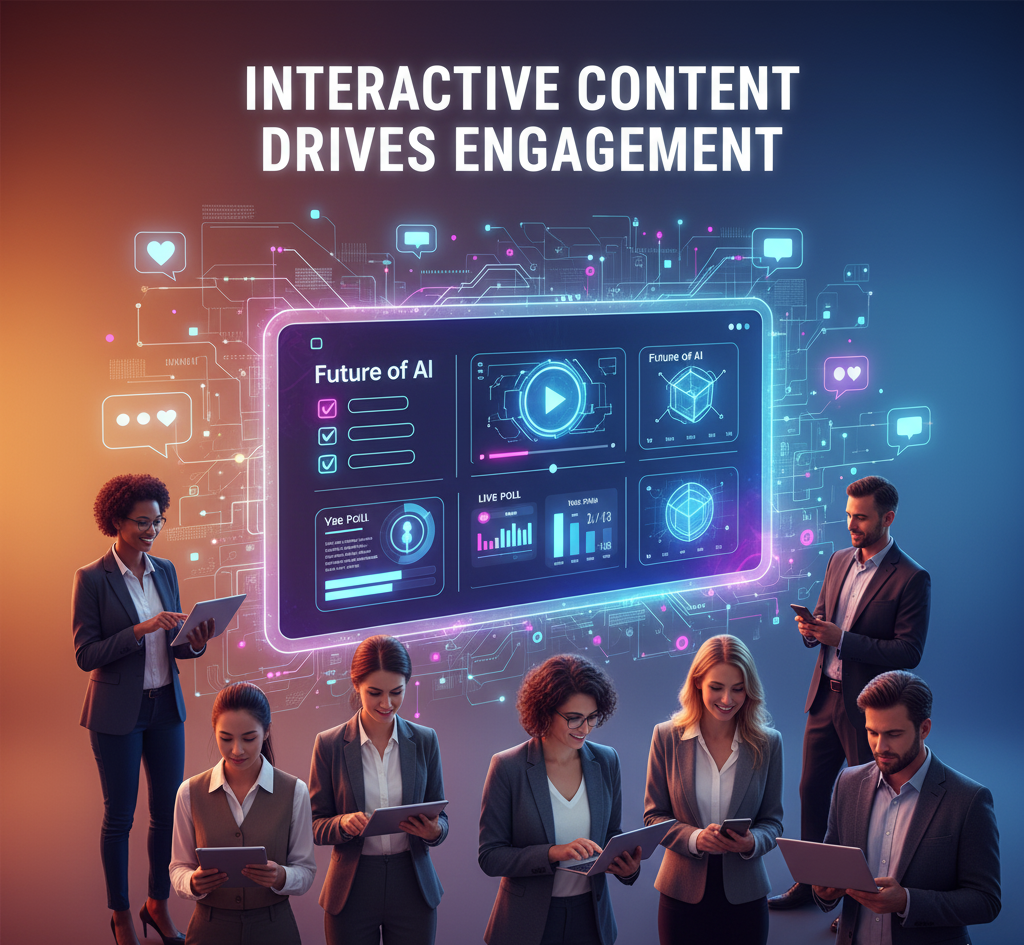
Interactive content, such as polls, calculators, and immersive storytelling, is gaining popularity for its ability to engage and qualify leads. In 2026, businesses will increasingly use interactive tools to capture attention and gather insights. For example, a financial services company might offer a retirement savings calculator to attract leads while collecting data on their financial goals.
To get started, identify interactive formats that align with your brand. Tools like Outgrow or Type form can help create quizzes, calculators, or assessments. Promote these assets through social media and email campaigns to drive traffic and capture leads.
7. Social Media as a Lead Generation Powerhouse
Social media platforms are evolving into full-fledged lead generation ecosystems. In 2026, features like Instagram’s shoppable posts, LinkedIn’s lead gen forms, and TikTok’s in-app purchases will make it easier to capture leads directly on social platforms. Additionally, social listening tools will help identify prospects who are discussing your industry or competitors.
To optimize social media lead generation, focus on platforms where your target audience is most active. Use native lead capture tools, such as LinkedIn’s Lead Gen Ads, to streamline the process. Additionally, invest in social listening to monitor conversations and engage with potential leads in real time.
8. Account-Based Marketing (ABM) for B2B Success
Account-based marketing (ABM) is becoming a go-to strategy for B2B companies aiming to target high-value accounts. In 2026, ABM will leverage AI and data analytics to identify ideal customer profiles and deliver personalized campaigns to decision-makers within those accounts. This approach ensures resources are focused on the most promising leads.
To implement ABM, use tools like HubSpot or Marketo to identify target accounts and create tailored content. For example, a SaaS company might create a custom whitepaper for a target company’s leadership team, addressing their specific pain points. Combine ABM with LinkedIn advertising to reach key stakeholders effectively.
9. Voice Search Optimization
With the rise of smart speakers and voice assistants, optimizing for voice search is becoming essential for lead generation. By 2026, more users will rely on voice queries to find products and services, particularly on mobile devices. Voice searches tend to be conversational and long-tail, requiring a different approach to SEO.
To prepare, optimize your website content for natural language queries. For example, instead of targeting “best CRM software,” focus on phrases like “What is the best CRM software for small businesses?” Create FAQ pages and blog posts that answer common voice search queries, and ensure your site is mobile-friendly to capture these leads.
10. Sustainability and Purpose-Driven Marketing
Consumers in 2026 will prioritize brands that align with their values, particularly around sustainability and social responsibility. Purpose-driven marketing—campaigns that highlight a brand’s commitment to ethical practices—can attract leads who value transparency and impact.
To leverage this trend, incorporate your brand’s sustainability efforts into your lead generation strategy. For example, a clothing brand might offer a lead magnet like a guide to sustainable fashion, capturing leads while showcasing its eco-friendly practices. Highlight your values across your website, social media, and email campaigns to build trust and attract like-minded prospects.
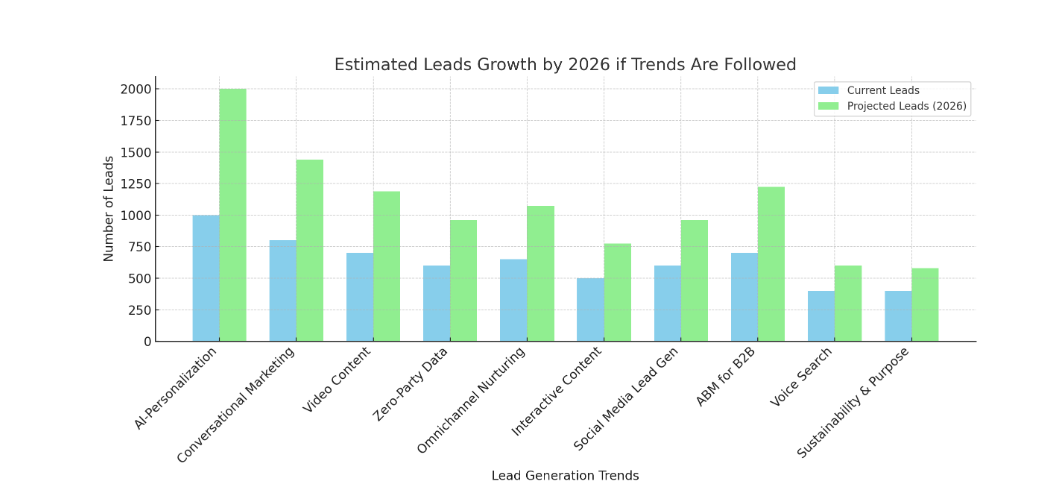
Lead Growth by 2026: Current vs. Future Projection
|
Lead Generation Trends |
Current Leads |
Projected Leads (2026) |
|
AI Personalization |
1,000 |
2,000 |
|
Conversational Marketing |
800 |
1,400 |
|
Video Content |
700 |
1,200 |
|
Zero-Party Data |
600 |
950 |
|
Omnichannel Nurturing |
650 |
1,100 |
|
Interactive Content |
700 |
1,050 |
|
Social Media Lead Gen |
500 |
750 |
|
ABM for B2B |
600 |
1,200 |
|
Voice Search |
400 |
600 |
|
Sustainability & Purpose |
400 |
600 |
How to Prepare for 2026
To stay competitive, start integrating these trends into your lead generation strategy now. Here’s a quick roadmap:
-
Invest in Technology: Adopt AI tools, marketing automation platforms, and CRM systems to streamline personalization and omnichannel efforts.
-
Prioritize Data Privacy: Build trust by focusing on zero-party data and ensuring compliance with privacy regulations.
-
Experiment with Content: Test interactive and video content to see what resonates with your audience.
-
Train Your Team: Equip your marketing team with the skills to leverage ABM, social listening, and voice search optimization.
-
Align with Values: Incorporate sustainability and purpose-driven messaging into your campaigns to connect with modern consumers.
Conclusion
The lead generation landscape in 2026 will be defined by personalization, technology, and trust. By embracing AI, conversational marketing, video content, and purpose-driven strategies, businesses can attract and convert high-quality leads. Start preparing now to ensure your strategy is future-proof, and don’t hesitate to experiment with new tools and channels to stay ahead of the competition. With these 10 trends in your arsenal, you’ll be well-positioned to optimize your lead generation efforts and drive growth in 2026.