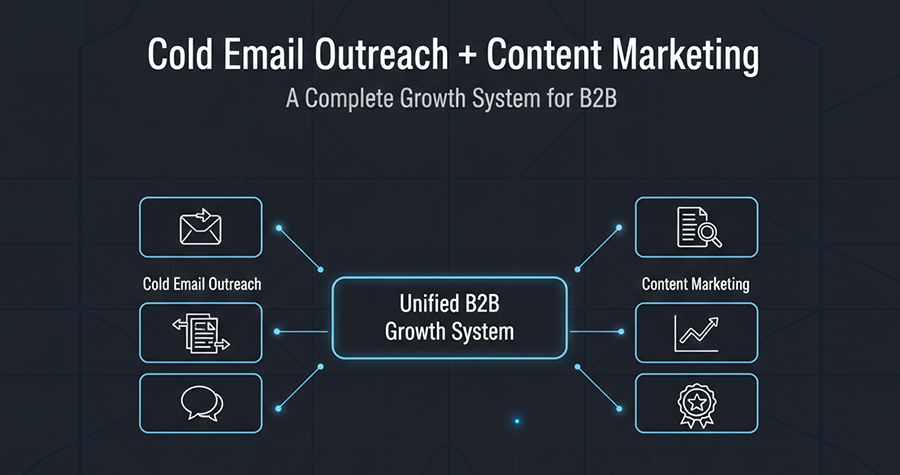
Do you ever wonder why some B2B emails get replies while most are ignored?
Sending cold emails alone often does not work. Content marketing alone can take a long time to bring results. The best way to grow your business is to use cold email and content marketing together.
In this guide, we will show you how to build a complete growth system for B2B. You will learn how to reach the right people, share helpful content, and turn interest into real business.
By the end, you will know how to create digital outreach campaigns that reach more prospects, get them engaged, and help your business grow.
Understanding the Modern B2B Buyer Journey
Do you know how B2B buyers make decisions today? Most buyers do research before replying. They compare options, read guides, and check who they can trust. That means your cold emails need more than just a message. They need helpful content to back them up.
When you combine cold email outreach with useful content, you reach the right people and earn their trust. Cold emails start the conversation. Content shows that you understand their problems and can help.
How B2B Buyers Make Decisions Today
B2B sales take time. Often, many people are involved in the decision. Buyers read blogs, guides, case studies, and reviews to learn more.
If your email shows up without proof, it might get ignored. But if you share helpful content, you become a trusted source. That’s why using content marketing for lead generation with cold email works so well. It teaches your prospects and builds trust before they reply.
Where Cold Outreach Fits in the Funnel
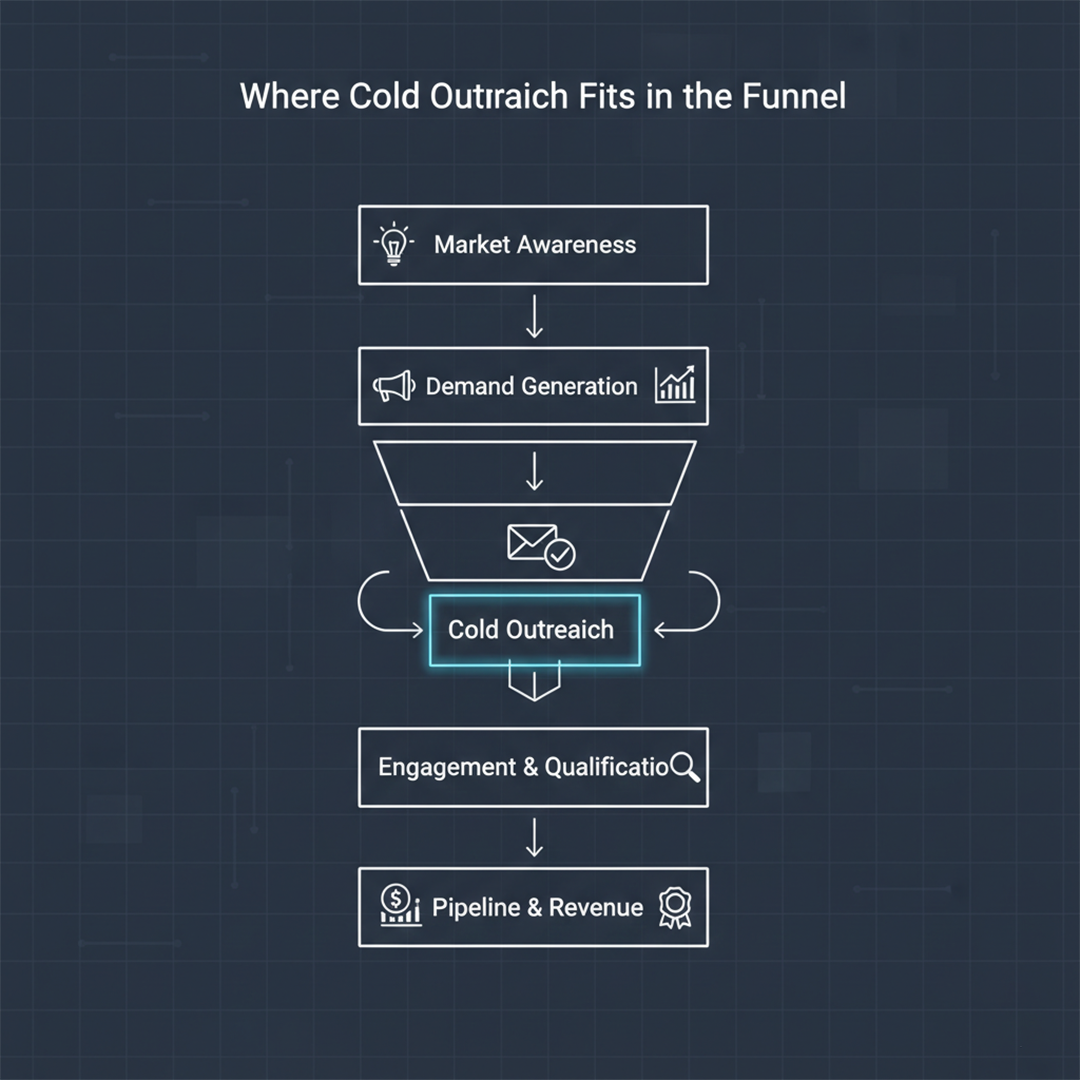
Cold emails are the first step. They create awareness and start a conversation. A short, targeted email can reach the right person at the right time.
Think of cold emails as a spark. But the spark alone is not enough. You need content to keep the prospect interested. Every email should link to something helpful, like a guide, blog, or case study. This forms a strong digital outreach campaign.
Where Content Builds Trust and Intent
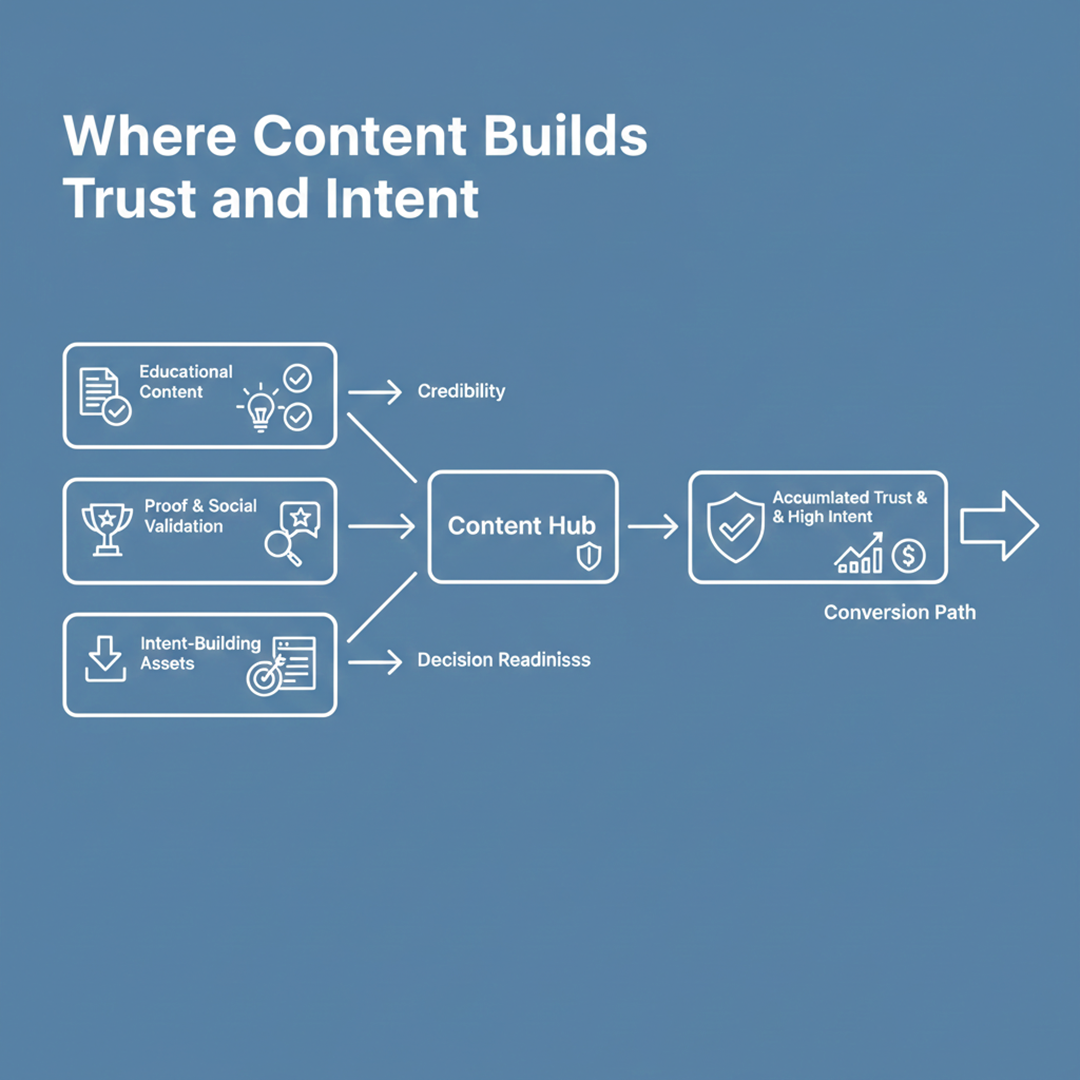
Content keeps prospects engaged after your first email. Blogs, guides, and case studies show that you understand their work and challenges. This builds trust.
Content marketing for lead generation does more than get clicks. When your emails point to blogs or guides, every click moves the prospect closer to a decision. They start to trust you and are more likely to respond.
B2B Buyer Journey: Cold Email + Content System
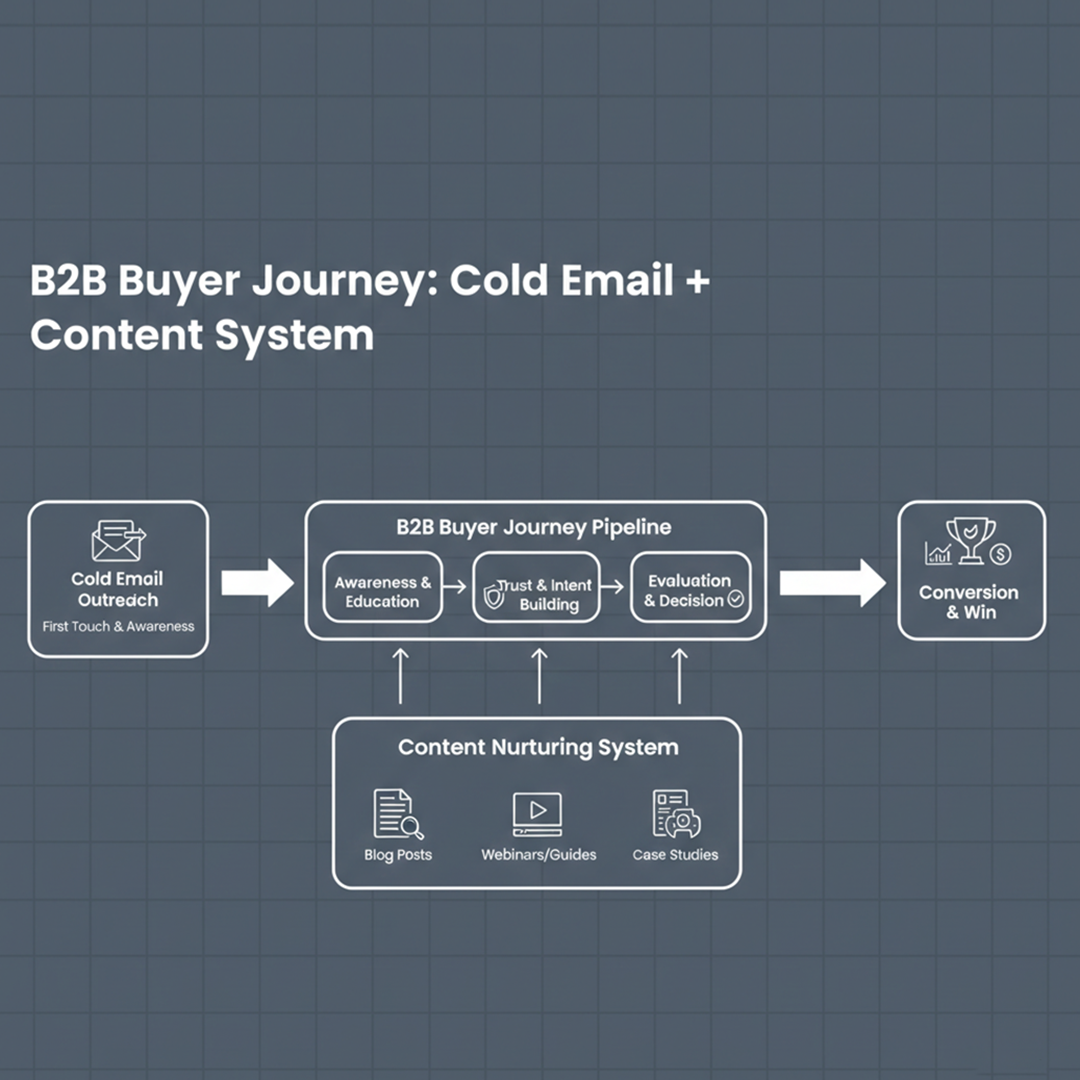
Awareness Stage
|
| <-- Cold Email: First contact, spark interest
| <-- Content: Simple blog, helpful guide
v
Consideration Stage
|
| <-- Cold Email Follow-Up: Answer questions
| <-- Content: Case studies, step-by-step guides
v
Decision Stage
|
| <-- Cold Email: Offer demo or free trial
| <-- Content: Testimonials, ROI examples
v
Conversion
|
| <-- Prospect becomes a lead or customer
| <-- Keep sharing useful content to stay helpful
How it works:
-
Awareness: Introduce your brand and share helpful content.
-
Consideration: Show guides and case studies to help them decide.
-
Decision: Share proof and offers to make it easy to act.
-
Conversion: Prospect becomes a customer. Keep sharing useful content to build loyalty.
Building a Cold Email Outreach Strategy That Actually Converts

If you want your cold emails to work, you need a clear plan. Random emails rarely get replies. A strong cold email outreach strategy helps you reach the right people and get real responses. When you add helpful content, your emails work even better.
Here’s how to build a system that works:
Defining Your ICP and Outreach List
Before sending emails, know exactly who you want to reach. Start with your ideal customer profile (ICP).
-
Targeting: Focus on companies that need your solution.
-
Firmographics: Look at company size, industry, and location.
-
Roles: Reach the right people, like managers, directors, or founders.
A clean list makes sure your emails reach the right inbox. This is the first step in a good outreach marketing strategy.
Crafting Emails That Get Replies
Your email must grab attention fast. Most people spend only a few seconds reading an email. Keep It Simple and Clear. Good emails are easy to read. They get to the point fast.
Tips for writing great emails:
-
Subject line: Keep it short. Make people curious.
-
Personalization: Use their name or company name.
-
Body: Keep it short. Be helpful. Share value right away.
-
CTA: Ask for one small action. A reply, a call, or a download.
Email Example
Subject: Quick question about [company name].
Hi [First Name],
I noticed that [Company Name] is growing at [job/location]. We help companies like yours reach more customers with email campaigns and a content system.
Here’s a handy guide to help you out: [Get Guide].
Want a 15-minute call to see if this works for you?
Thank you,
[Your Name]
This email is short and simple. It feels personal. It gives value first. And it gives the reader a clear reason to reply.
Structuring Follow-Ups Without Spamming
Most replies come from follow-ups. But timing and content matter. You want to stay in front of the prospect without annoying them.
Follow-up tips:
-
Timing: Send the first follow-up 2–4 days after the first email. Space others 3–5 days apart.
-
Value: Add something new each time, like a tip, guide, or case study.
-
Keep it short: Be polite and professional.
-
Limit your follow-ups.
-
Stop after 3 to 5 tries.
Sample Follow-Up Email
Subject: Just checking in
Hi [First Name],
I am following up on my last email. I shared how we help [Company Name] get more leads. Here is a short case study.
It shows how we helped a similar business. [Case study link]
Would you like a quick 15-minute call this week? We can see if this fits your needs.
Thanks,
[Your Name]
Smart follow-ups make cold emails work better. They keep conversing and build trust.
First, you choose the right people. Then you send personal emails. Next, you follow up with care.
This creates a system that works again and again. When you add helpful content, it works even better. You get more replies, build trust. You move people closer to saying yes.
A strong outreach marketing strategy is not about sending more emails. It means sending the right emails. Send them to the right people. Share real value every time.
Content Marketing for Lead Generation
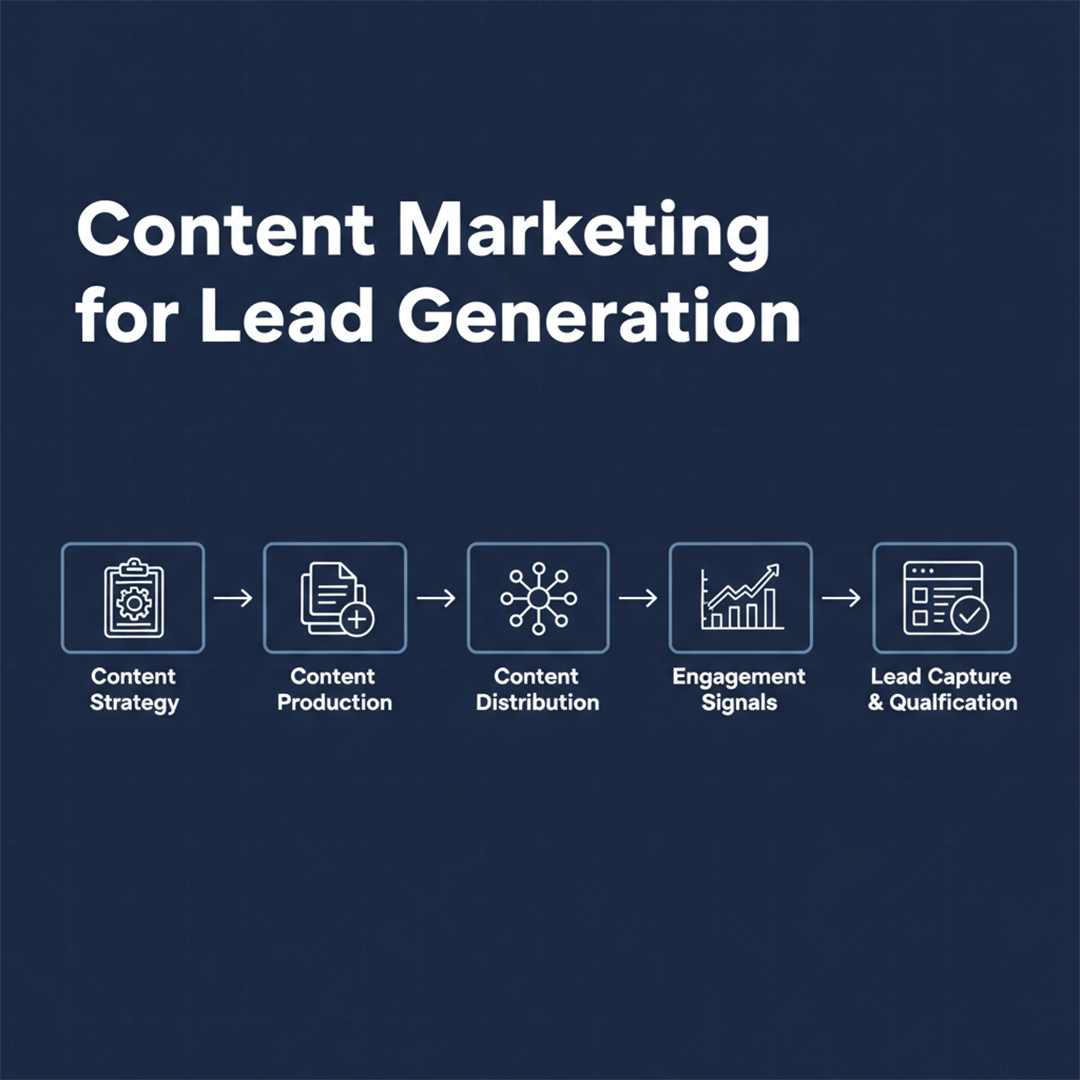
Cold emails can start a talk. They rarely close deals alone. That is why content marketing matters.
Good content builds trust. It shows your skills and gives people a reason to reply.
It also helps prospects engage and stay interested. When you add helpful content to your emails, cold leads turn into warm conversations and then into customers.
I’ve seen teams get much better results when they share the right content with every email. It’s not about sending more emails. It’s about sending emails that teach, help, and guide.
Content Types That Work Best for Cold Emails
Not all content works the same. Some grab attention. Some build trust. Some helps the prospect decide.
-
Blogs: Short posts that answer common questions. Good for first contact.
-
Case Studies: Show results you’ve achieved for other companies. Builds credibility.
-
Checklists & Templates: Give simple, actionable tips. Adds value quickly.
-
Reports & White Papers: These are detailed guides. They show your expertise. They work best in later stages of the funnel.
The right content makes your emails useful. It should help your reader, not push them to buy.
Match Content to Buyer Stages
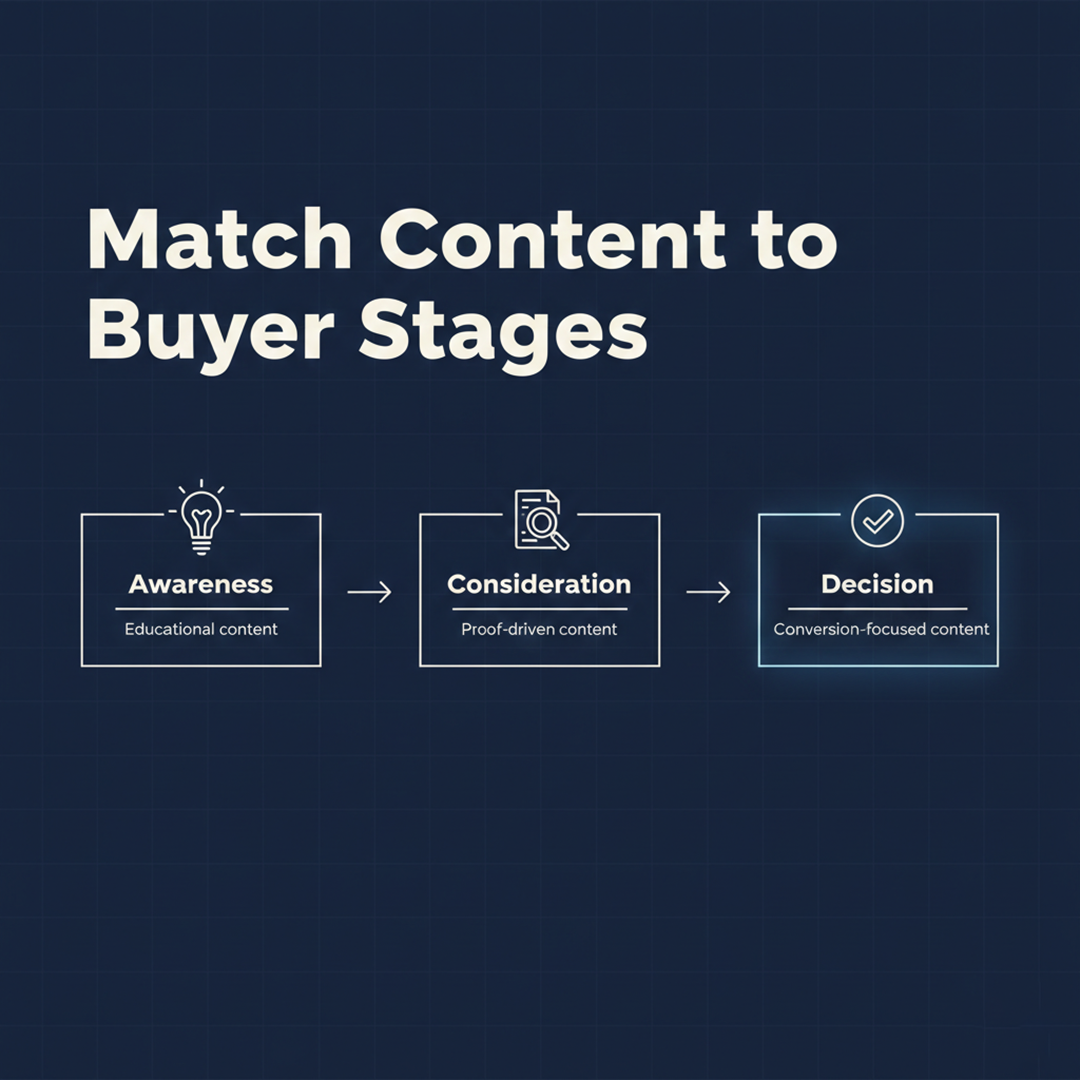
Your content should fit where the reader is in their journey. Sending the wrong content can feel pushy.
Awareness Stage (Top of Funnel)
-
Perspective is learning about a problem.
-
Good content: blogs, guides, and tips about your industry.
Consideration Stage (Middle of Funnel)
-
Perspective is looking at options.
-
Good content: case studies, checklists, and comparison guides.
Decision Stage (Bottom of Funnel)
-
Perspective is ready to make a choice.
-
Good content: ROI reports, testimonials, and detailed guides.
Conversion
-
Prospect becomes a lead or customer.
-
Keep sharing helpful content to stay useful and trusted.
Match Content to the Right Stage. Send emails that feel natural. Each email should help, not push. Good content moves your prospect closer to saying yes.
How to Share Content in a Cold Email
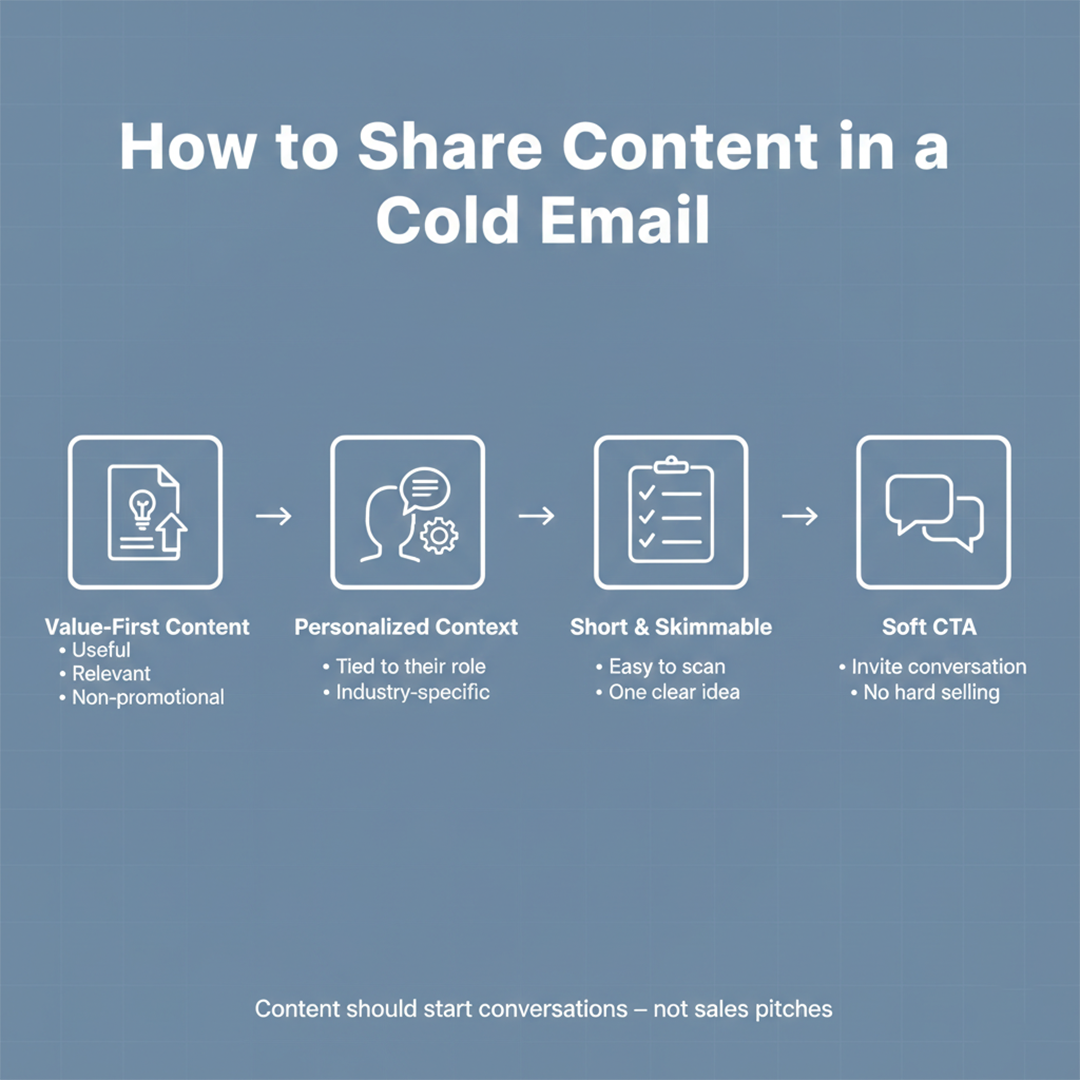
Be a helper, not a salesy.
-
Mention content naturally: "I thought you might like this guide..."
-
Link to their suggestions: Show how to deal with their problems.
-
Enter a few: One link or guide per email is enough.
-
Add a simple call to action: Invite them to read, re-download, or visit.
Content marketing with cold emails builds trust. It shows that you know what they want.
Putting the right content in the right places will guide them.
Combined with a strong cold email strategy, this system turns cold leads into warm, engaged prospects who are ready to talk.
Creating an Email Automation Workflow
Sending emails one by one takes too much time. An email automation workflow solves this problem. It helps you connect cold emails with content delivery automatically. You can reach more prospects, send the right content, and follow up without losing a personal touch.
A good workflow saves time and gets better results. Here’s how to set it up.
Trigger-Based Email Sequences
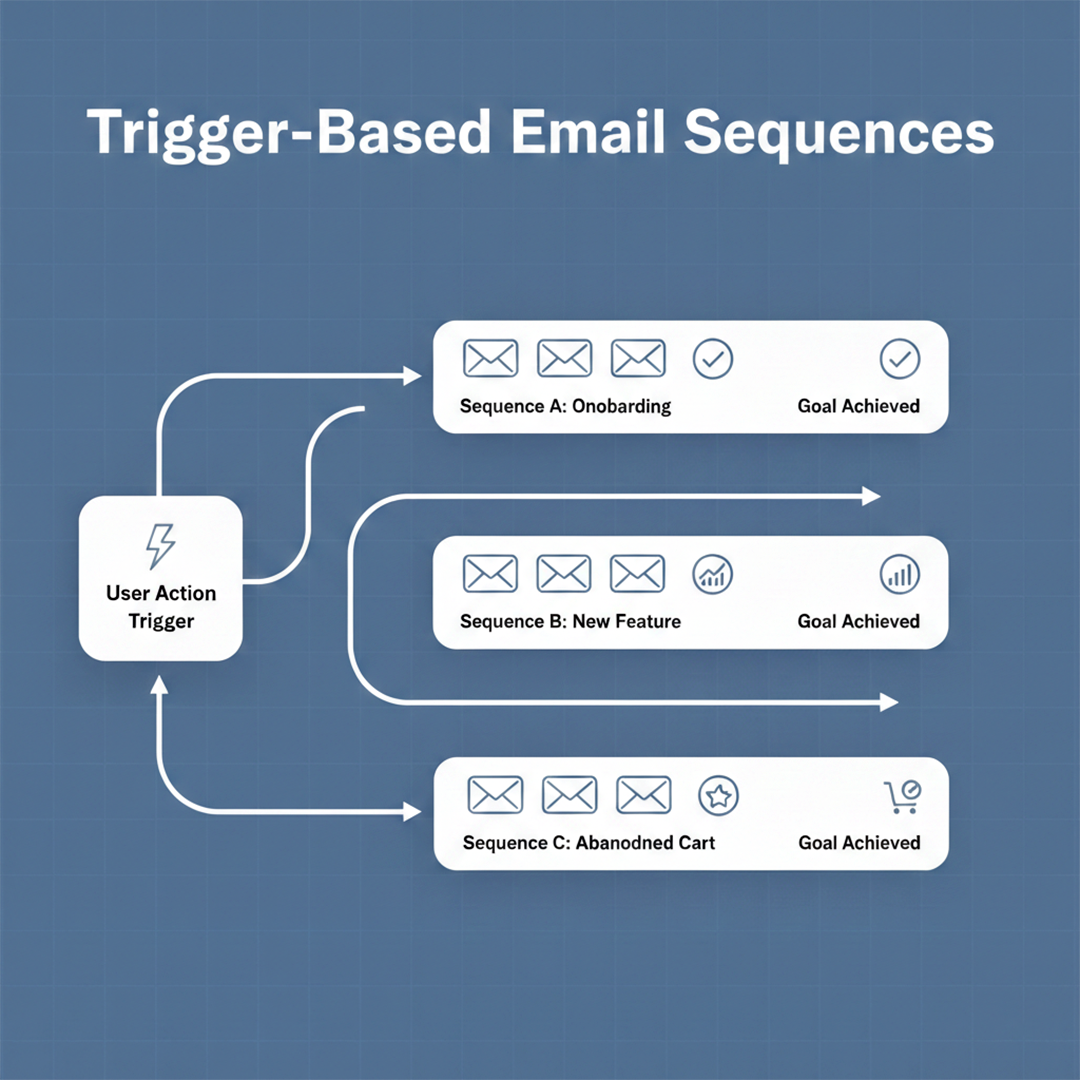
Automation is great when it comes to responding to your customers’ actions. You can set triggers based on actions like:
-
Email opens: Send a follow-up email when someone opens your first email.
-
Click on a link: Send related content when a user clicks on a link.
-
Download: If they download a book, send them additional resources and invite them to call.
Triggers make sure your emails reach the right person at the right time. Each action can move a prospect down the funnel automatically.
Personalization at Scale Using Automation
It doesn’t have to feel robotic. You can create a custom email personal using:
Edit field: Add a name, company name, title, or industry.
-
Behavior-based messaging: Set a message based on clicks, opens, or downloads.
-
Segmented lists: Group prospects by stage, industry, or behavior and send the right message.
This way, each email feels personal while reaching many leads at once.
Aligning Sales and Marketing Workflows
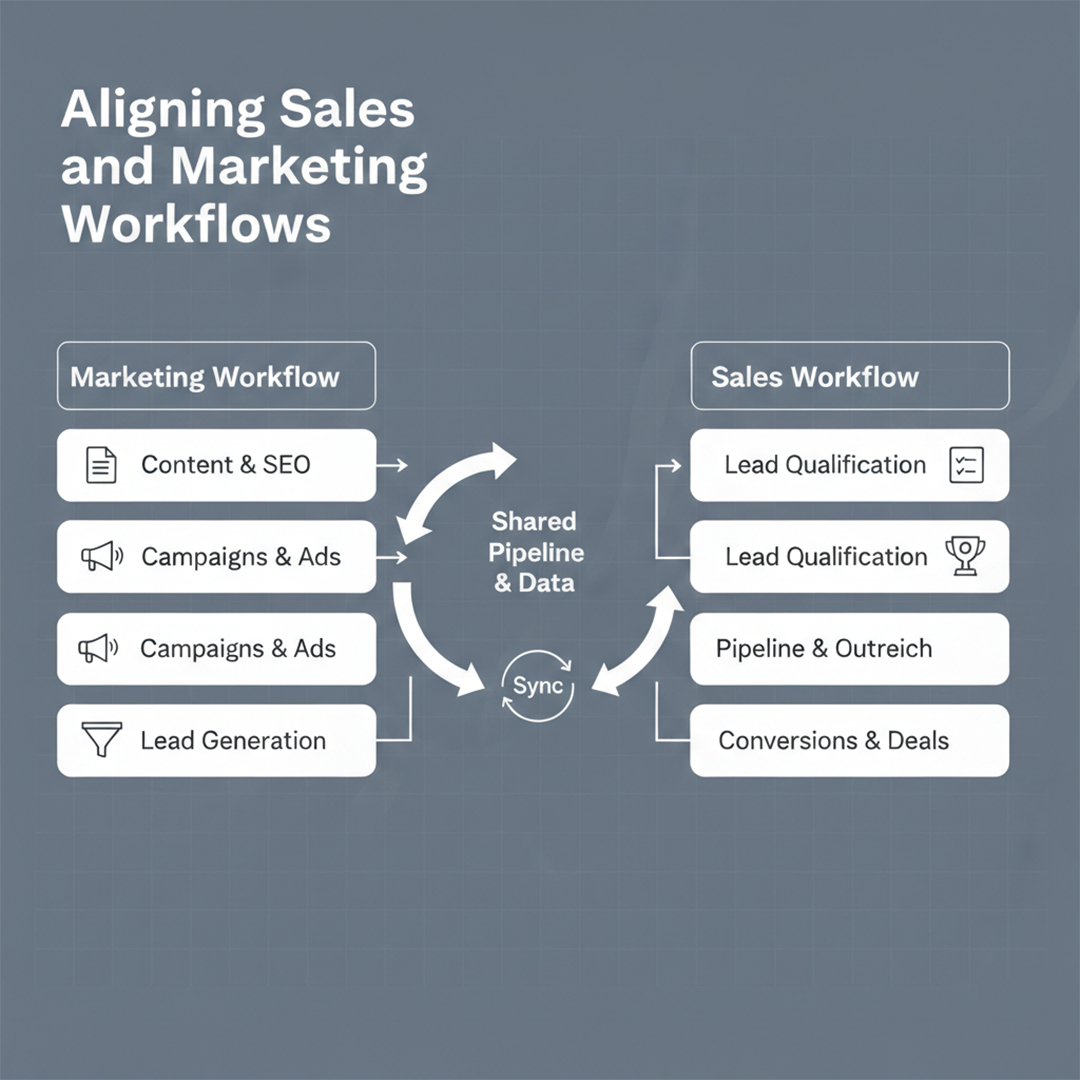
Sales and marketing need to work together for automation to succeed.
-
Marketing: Creates blogs, guides, and case studies for outreach.
-
Automation: Send emails based on a user’s actions.
-
Acquisition: A process in which an interested party commits or expresses interest in an acquisition.
This partnership will ensure a smooth journey through the funnel. Automation helps both teams work more efficiently and effectively.
Running Scalable Digital Outreach Campaigns
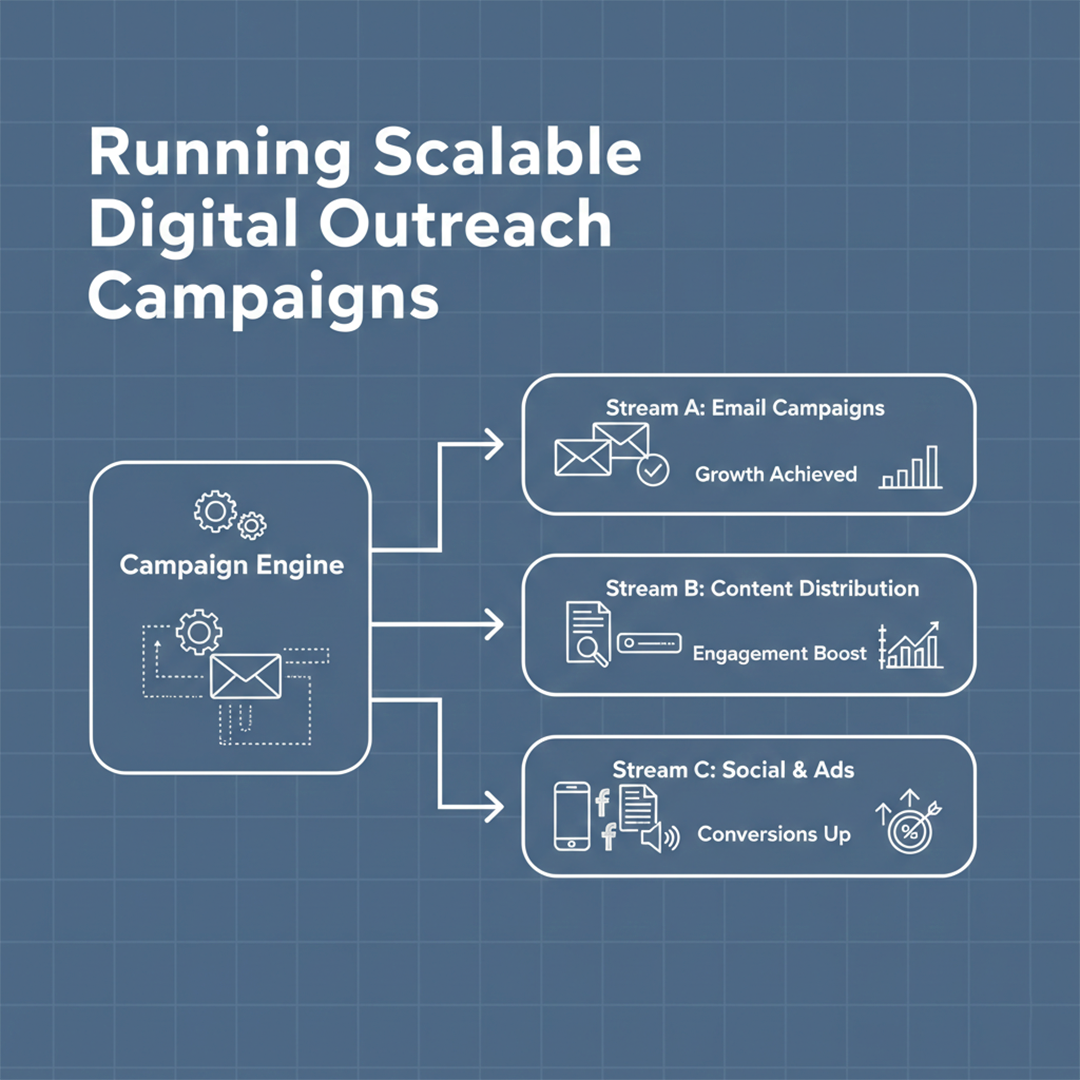
Reaching prospects on one channel is not enough. Effective teams use email, LinkedIn, and content together. Digital outreach campaigns allow you to connect with customers in a variety of ways.
This increases your brand visibility and increases engagement. When done right, multi-channel campaigns get more meetings, replies, and leads.
Multi-Channel Outreach Strategy
A simple multi-channel approach works best:
-
Email: Your main channel. Send short, helpful messages with content.
-
LinkedIn: Connect with prospects, like or comment on posts, and send short messages.
-
Content / Retargeting: Share blogs, guides, or ads to keep your brand visible.
Using all channels together makes your outreach stronger. Each message supports the others. This is a key part of a good outreach marketing strategy.
Timing and Frequency Across Channels
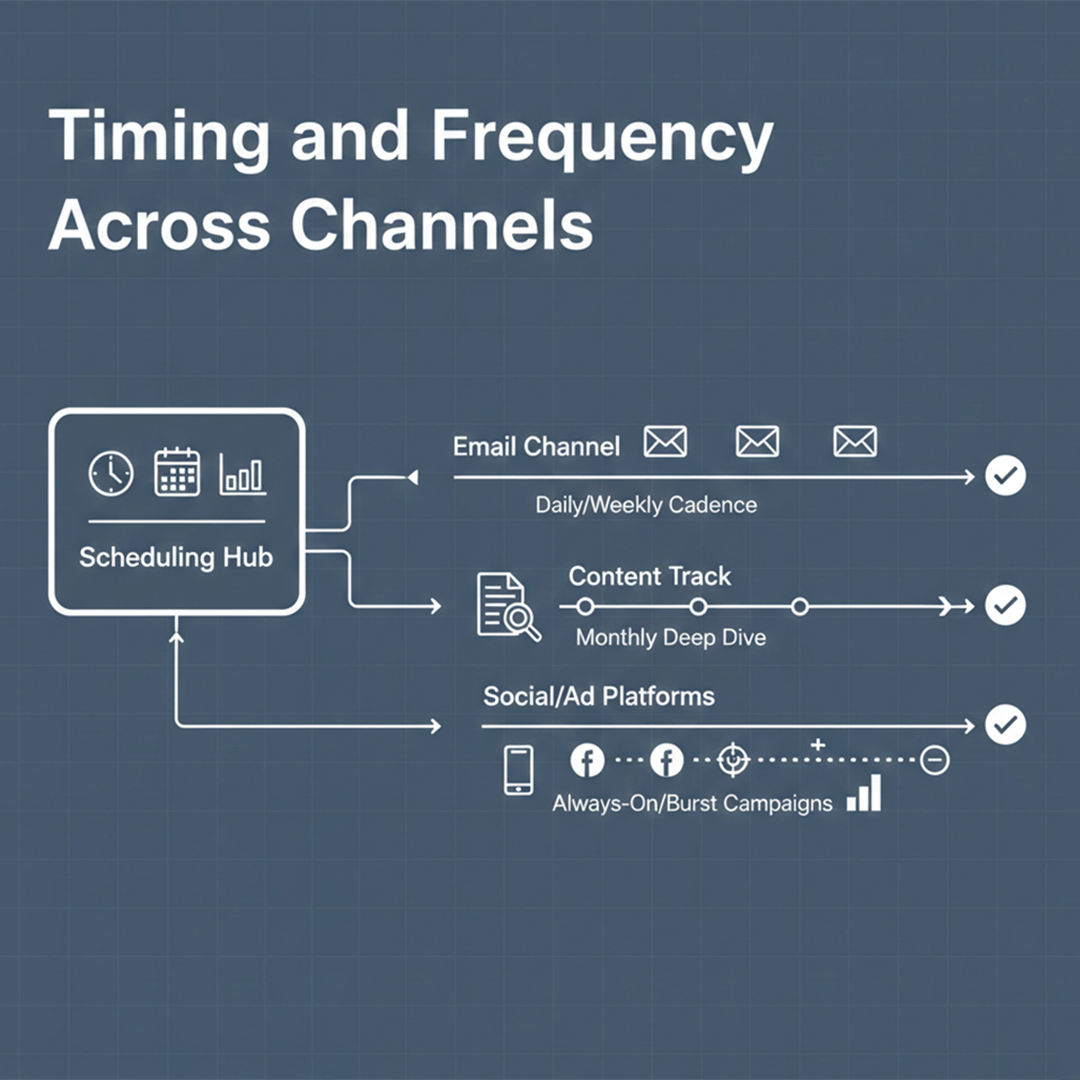
Too many messages annoy prospects. Very little is left out. Get the right balance:
-
Email: Send 3-5 emails, within 2-4 days.
-
LinkedIn: Post 1-2 articles per week and engage with their posts.
-
Content touches: Share an article or blog post once a week to get noticed.
Spreading messages across channels keeps outreach professional and effective.
Measuring Campaign-Level Performance
You need to track results to improve campaigns. Watch these metrics:
-
Open rate: How many people opened your emails?
-
Reply rate: How many people responded?
-
Content engagement: How many clicked links, downloaded guides, or viewed posts?
Example Results: A software company ran a 4-week campaign using email, LinkedIn, and guides.
-
Open rate: 52%
-
Reply rate: 18%
-
Meetings booked: 12% of prospects
Multi-channel outreach increased engagement by 40% compared to email only.
This shows digital outreach campaigns work well to reach more prospects and get better results.
Conclusion
Cold email outreach and content marketing work best when used together. Emails start the conversation. Content builds trust and helps prospects decide.
A strong system means knowing your audience, writing emails that get replies, sharing helpful content, and using automation. Multi-channel campaigns reach more people. Getting expert help can save time and improve results.
Track your campaigns, see what works, and keep improving. Focus on giving value in every email and message.
When you do this consistently, cold leads turn into warm prospects and then into loyal customers.
Ready to take your outreach to the next level? Contact industry expert Accord Tech Solutions for professional B2B email marketing services.