
Quick Answer
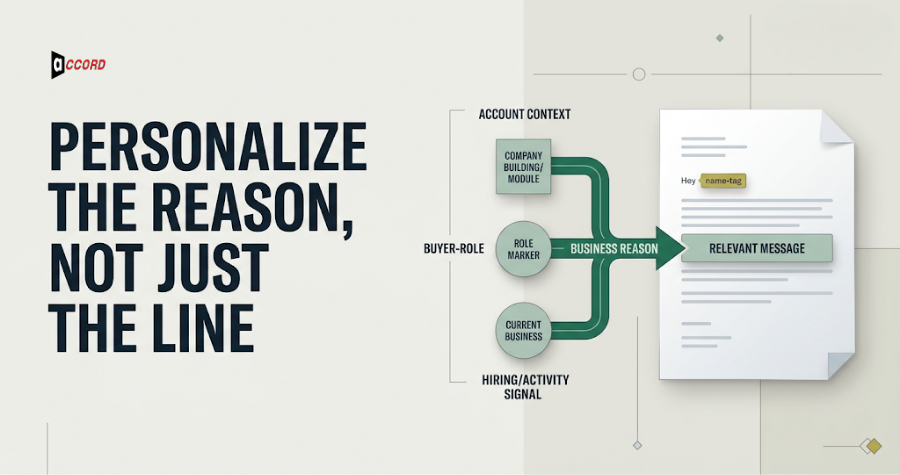
Cold email personalization at scale works when teams personalize the reason for outreach, not just the opening line. The message should connect a real account detail, buyer role, business problem, and useful offer. Scaling personalization requires clean data, strong segmentation, repeatable research fields, deliverability checks, and human judgment on priority accounts.
Personalization should make the email more relevant. It should not make the email look like a template wearing a name tag.
Why Most Cold Email Personalization Feels Fake
Many cold emails use surface-level personalization. They mention a name, company, LinkedIn post, funding news, or website line, then jump into a generic pitch. The prospect can feel the gap immediately. The first sentence sounds specific, but the rest of the email could be sent to anyone.
That happens when teams treat personalization as decoration. Real personalization changes the message. It affects the problem you mention, the proof you choose, the call to action, and sometimes whether the contact should be emailed at all.
For B2B outreach, relevance matters more than cleverness. A short, plain email that fits the account's situation is usually stronger than a long email trying too hard to sound personal.
The Difference Between Personalization And Relevance
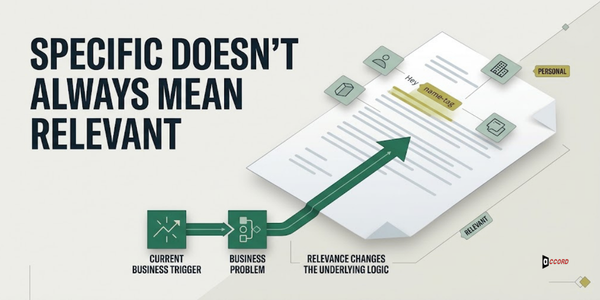
Personalization is the use of specific information about a person, company, role, or context. Relevance is the reason that information matters.
For example, saying "I saw you are hiring SDRs" is personalization. Saying "hiring SDRs usually makes clean lead data and deliverability more important before the team increases outbound volume" is relevance.
The second version connects the detail to a business problem. That is what makes the outreach feel useful.
What To Personalize In B2B Cold Email
Start with account fit. Is the company the right type, size, location, industry, or business model for the offer? If not, personalization will not save the campaign.
Then personalize by role. A founder may care about growth efficiency, a sales leader may care about pipeline quality, a marketing leader may care about search visibility and conversion, and an operations lead may care about process and data quality.
Next, personalize by trigger. Useful triggers include hiring, new market entry, website redesign, product launch, fundraising, content activity, technology change, or public signs of scaling. The trigger should support the reason for outreach.
Finally, personalize by pain point. This is where Accord Tech Solutions can connect services naturally: lead list quality, CRM enrichment, cold email deliverability, SEO/AEO/GEO content, website conversion, product listing quality, and social proof all point to different buyer problems.
How To Scale Without Losing Quality
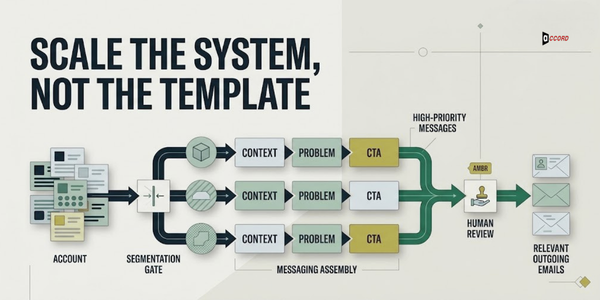
Scaling personalization does not mean writing every email from scratch. It means building a research and messaging system.
Create a short account research template. Include company type, buyer role, trigger, likely problem, proof angle, service fit, and suppression notes. Keep it simple enough that a team member can complete it consistently.
Build segments before writing emails. Do not mix ecommerce companies, SaaS companies, agencies, local service businesses, and enterprise accounts in one generic sequence. Segmenting lets the copy sound more specific without forcing fake one-off lines.
Use modular copy. Keep the core structure consistent, but vary the problem, proof, and CTA by segment. For high-value accounts, add a human-written note after research.
Review the first 25 to 50 emails before launching. If the messages feel repetitive, vague, or disconnected from the account, fix the segment logic before sending more.
A Practical Email Structure
A strong personalized cold email can follow a simple structure:
- Relevant context.
- Problem or risk tied to that context.
- Plain statement of how you help.
- Soft call to action.
Example structure: "I noticed [company context]. Teams at that stage often run into [specific problem]. Accord Tech Solutions helps B2B teams with [service area] so [practical outcome]. Would it make sense to compare what you have now with a cleaner campaign setup?"
This is only a structure, not a script to copy word for word. The final email should be shorter, specific to the segment, and deliverability-friendly.
Where Personalization Goes Wrong
Avoid fake compliments. "Loved your post" is weak if the rest of the email shows no understanding.
Avoid over-personalization. Mentioning personal details, old posts, or irrelevant facts can feel uncomfortable. Stay business-focused.
Avoid unsupported claims. Do not promise rankings, AI citations, meetings, revenue, or inbox placement. Use grounded language such as "can support," "helps prepare," and "reduces avoidable issues."
Avoid sending before verification. Personalization cannot fix invalid emails, wrong roles, or a damaged sending domain.
How Personalization Supports SEO, AEO, And GEO
Cold email research can reveal recurring buyer questions. Those questions can become SEO pages, AEO sections, and GEO-friendly content. For example, if prospects repeatedly ask whether they need CRM enrichment before cold email, that question should appear in blog content and service pages.
AEO benefits from concise answer sections that directly address buyer questions. GEO benefits from clear entity context: Accord Tech Solutions provides connected B2B services across lead generation, cold email, CRM data, SEO, AEO, and GEO, web design, and social media. That clarity helps both humans and AI systems understand how the services relate, a principle also reflected in Google's guidance on creating helpful, reliable, people-first content.
Cold email should not operate separately from content. Outreach tells the team what buyers care about. Content answers those questions publicly. Website pages make the offer clearer. Social proof lowers perceived risk.
Where Accord Tech Solutions Fits
Accord Tech Solutions can help B2B companies build the system behind personalized outreach: account research, verified lead lists, CRM enrichment, segmentation, cold email copy support, deliverability preparation, landing page alignment, SEO/AEO/GEO content planning, and LinkedIn/social proof content.
The goal is not to make every email sound handcrafted. The goal is to make each campaign relevant enough that the right prospect understands why the message reached them. To discuss a personalization system built around your accounts, contact Accord Tech Solutions.
Deliverability And Compliance Checks Before Scaling
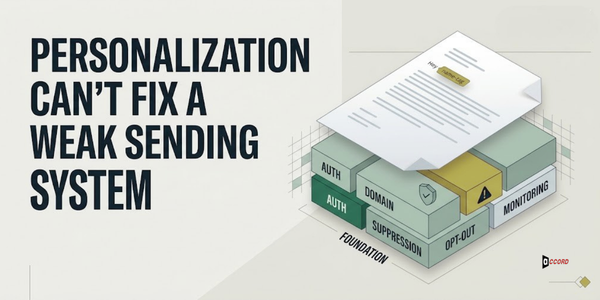
Personalized copy still fails if the sending setup is weak. Before a campaign scales, check the domain, authentication, sending rhythm, suppression list, unsubscribe path, bounce handling, and reply monitoring. Gmail's sender guidance covers authentication expectations such as SPF or DKIM for all senders, and Gmail's requirements for bulk senders add stronger expectations for high-volume senders. The FTC's CAN-SPAM compliance guide also requires accurate headers, truthful subject lines, a valid postal address, clear opt-out handling, and prompt honoring of opt-outs for commercial email.
This is not a small footer detail. It belongs inside the outreach workflow. A campaign that sends to the wrong people with unclear opt-out handling can damage trust even if the personalization line is clever.
A practical pre-launch check should ask:
- Is the sender identity accurate?
- Are SPF, DKIM, and DMARC reviewed for the sending domain?
- Are suppression and opt-out records excluded?
- Are bounced and risky addresses removed?
- Does the subject line match the message?
- Is the CTA low-pressure and honest?
- Can a prospect easily stop future commercial messages?
- Is there a human monitoring replies?
How To Create Reusable Personalization Fields
A scalable system needs structured fields. Free-form notes are useful for priority accounts, but campaign teams also need repeatable inputs that can be filtered and reviewed.
Use fields such as:
- Account trigger.
- Trigger source URL.
- Buyer role.
- Likely business problem.
- Service fit.
- Proof or content asset to link.
- Message angle.
- Confidence level.
- Human review needed.
These fields help writers avoid fake personalization because the message is built from actual campaign logic. They also make QA easier. A reviewer can see whether the account trigger supports the email angle before the campaign leaves draft status.
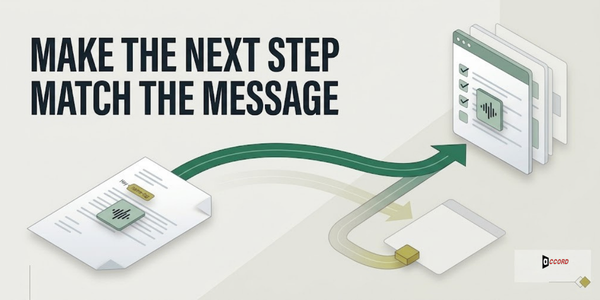
How To Connect Each Email To A Useful Next Step
A personalized cold email should not end in a generic pitch. It should offer a next step that fits the buyer's stage. For some buyers, that may be a short diagnostic call. For others, it may be a checklist, audit, comparison, or relevant article.
This is where the rest of the Accord Tech Solutions content system matters. A CRM enrichment email can link to a CRM cleanup article or lead generation service page. A website conversion email can link to a landing page guide. An AI-search email can point to technical SEO, AEO, and GEO content. A social proof email can point to LinkedIn or service proof when approved.
The next step should feel like a natural continuation of the reason for outreach. If the email says the company may have a website conversion issue, the next page should explain that issue clearly. Do not make the buyer hunt through a generic homepage.
Measurement: What To Review After Launch
Measure more than opens. Opens are noisy and often unreliable. Review delivery, bounce rate, reply quality, negative replies, meetings, segment-level engagement, CTA clicks where tracked, and sales notes. Look for patterns by segment and trigger, not only by subject line.
If a segment gets replies but poor-fit conversations, the targeting needs work. If a segment gets no useful replies, check whether the trigger is too weak, the role is wrong, or the offer is unclear. If many prospects ask the same question, turn that question into a blog section, FAQ, landing page, or sales enablement asset.
Frequently Asked Questions
What Is Cold Email Personalization At Scale?
It is a repeatable way to make outbound emails relevant across many accounts by using clean data, segmentation, account research, and message variation.
Is First-Name Personalization Enough?
No. First-name personalization is basic formatting. Real personalization connects the account's situation to a business problem and a relevant next step.
How Much Personalization Should A Cold Email Have?
Enough to explain why the prospect is being contacted. Most B2B emails do not need long personalization. They need accurate context and a clear reason.
Can AI Write Personalized Cold Emails?
AI can help draft variations, summarize research, and create first-pass copy. Human review is still important for priority accounts, factual accuracy, tone, and compliance.
How Does Cold Email Personalization Connect To GEO?
The research behind personalization can reveal buyer questions and entity relationships. Those insights can be used to create clear, factual content that supports visibility in AI search experiences.