
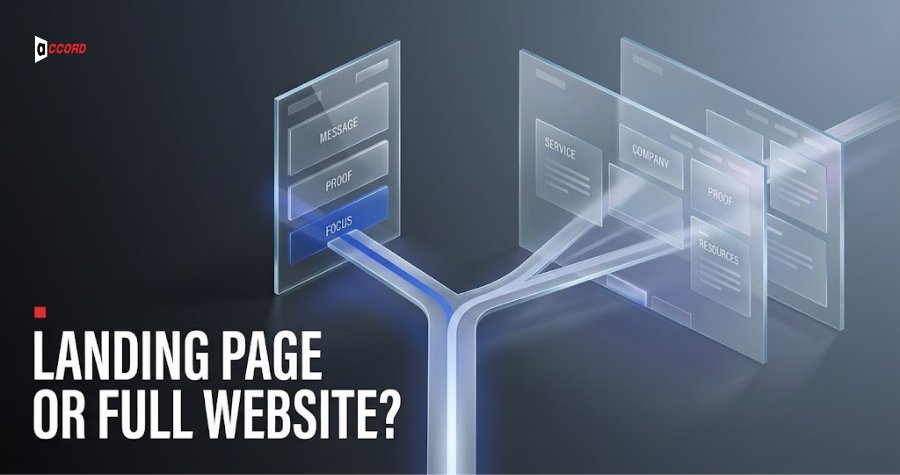
Quick answer: A B2B lead generation campaign needs a landing page first when the offer is specific, the audience is narrow, and the traffic source is controlled. It needs a full website first when buyers need broader trust signals, multiple service explanations, SEO visibility, social proof, and company context before they convert. Many B2B companies eventually need both: a clear website for trust and search, plus focused landing pages for campaigns.
The right choice depends on buyer intent, offer complexity, sales cycle, traffic source, and how much trust the company already has.
What a landing page does best
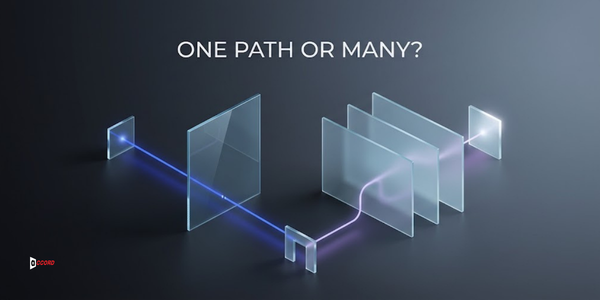
A landing page is built for one campaign, one audience, and one action. It is useful when the visitor arrives from a cold email, paid ad, LinkedIn message, event campaign, or partner referral and needs a direct explanation of the offer.
A strong B2B landing page should answer:
- Who is this for?
- What problem does it solve?
- Why is this relevant now?
- What does the process look like?
- What proof reduces risk?
- What should the visitor do next?
Landing pages work best when they stay focused. Too many navigation choices, broad service menus, and unrelated content can weaken the campaign path.
What a full website does best
A full website builds broader trust. It helps buyers understand the company, services, proof, process, pricing context where appropriate, team credibility, and related content.
A website is especially important when the company offers multiple services or when prospects need time to evaluate. B2B buyers often visit several pages before making contact. They may compare service pages, read blogs, check case-style content, review social proof, and look for signs that the business is real and relevant.
For Accord Tech Solutions, a full website should clearly explain lead generation, CRM enrichment, cold email, SEO/AEO/GEO, web design, product listing SEO, and social media marketing as connected services.
When to choose a landing page first
Choose a landing page first when the campaign is narrow. For example, a campaign targeting SaaS founders about cold email deliverability does not need to send visitors to a broad homepage. It needs a focused page that speaks to that audience.
A landing page is also useful when speed matters. If the website is not ready but the offer is clear, a landing page can test demand and collect early learning.
Use a landing page when:
- The offer is specific.
- The audience segment is clear.
- The campaign source is controlled.
- The CTA is simple.
- The website would distract from the action.
- You need to test messaging quickly.

When to choose a full website first
Choose a full website first when the business lacks basic trust infrastructure. If prospects cannot understand what the company does, who it serves, what services connect, or why the team is credible, a landing page may not be enough.
A full website is also better when SEO, AEO, and GEO are priorities. Landing pages can rank in some cases, but a full site gives more room for service pages, topical content, internal links, structured data, FAQs, and entity clarity.
Use a full website first when:
- The offer has multiple services.
- Buyers need education before contact.
- The sales cycle is longer.
- Search visibility matters.
- There is limited social proof online.
- The current site creates confusion.
- The company needs a stronger brand foundation.
How SEO, AEO, and GEO change the decision
SEO favors a site architecture that can support multiple search intents. A single landing page may not be enough to cover lead generation, cold email, CRM enrichment, website design, and AI visibility topics.
AEO favors pages that directly answer buyer questions. These can live on service pages, blog posts, FAQ sections, and landing pages.
GEO favors clear entity context. A full website can explain Accord Tech Solutions as a B2B growth partner and connect each service to the others. Landing pages can support GEO when they include clear company context, service definitions, FAQs, and structured facts.
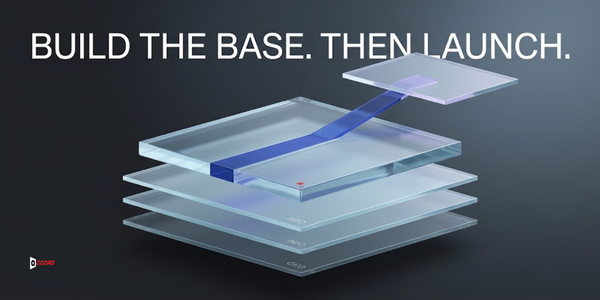
The best approach is often a hybrid: build the website as the trust and search base, then create focused landing pages for specific campaigns.
What a B2B campaign page should include
A campaign landing page should include a specific headline, problem statement, service explanation, process, proof, FAQ, CTA, and tracking. It should match the message that brought the visitor there.
If a cold email promises help with CRM enrichment before outreach, the page should not talk broadly about every marketing service. It should explain the CRM enrichment process, why it matters for campaigns, how Accord Tech Solutions supports it, and what the next step is.
What a B2B website should include
A full website should include a homepage, service pages, about page, contact page, blog or resource hub, social proof, FAQ sections, privacy/compliance pages where needed, and clear conversion paths.
It should also include internal links between related services. Lead generation should connect to CRM enrichment and cold email. Cold email should connect to landing pages and deliverability. SEO/AEO/GEO should connect to content authority and technical SEO. Social media should connect to founder visibility and proof.
Common mistakes
- Do not send all campaign traffic to a generic homepage if the offer is specific.
- Do not build a landing page that hides the company identity.
- Do not create a full website with vague service pages and no clear CTA.
- Do not publish campaign pages without tracking, form testing, mobile review, or internal links.
- Do not promise leads, rankings, meetings, or AI citations. Use realistic language tied to process and quality.
Where Accord Tech Solutions fits
Accord Tech Solutions can help decide and build the right conversion asset for a campaign. That may include landing page copy, full website structure, service-page writing, SEO/AEO/GEO planning, internal linking, CRM-to-page alignment, cold email campaign support, social proof content, and analytics setup.
The goal is to give buyers enough clarity to take the next step without forcing them through a confusing path. Need to decide between a landing page and a full website? Contact Accord Tech Solutions for a campaign page review.
Decision framework: choose by campaign risk
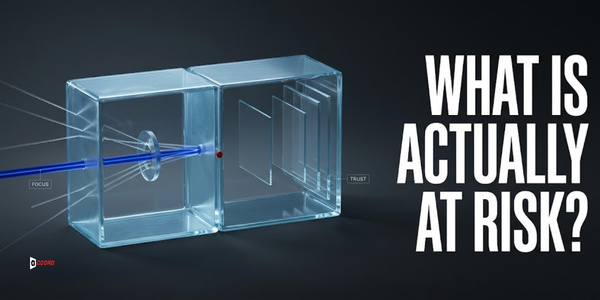
Use a landing page when focus is the main risk. Use the full website when trust is the main risk.
Focus risk appears when the buyer lands on a broad page and does not know what to do next. The campaign says one thing, but the page says many things. A focused landing page solves that by matching one offer, one segment, and one CTA.
Trust risk appears when the buyer needs more proof before acting. They may want to know whether the company is real, whether the team understands their market, whether related services exist, and whether the website feels credible. A full website solves that by giving context beyond one campaign.
A simple decision rule:
- If traffic is from one campaign and the offer is clear, start with a landing page.
- If buyers research the company before replying, improve the full website.
- If SEO and AI-search visibility matter, build the website foundation.
- If speed matters and the current site is credible, launch a focused page first.
- If the current site is confusing, fix the site before scaling traffic.
Conversion QA before publication
Before a landing page or website update goes live, test the page like a buyer. The page should load quickly, work on mobile, state the offer clearly, show the next step, and avoid unnecessary form friction.
Check these items:
- Headline matches the campaign promise.
- First screen explains who the offer is for.
- CTA is visible without confusion.
- Form works and sends to the right owner.
- Thank-you page or reply path is ready.
- Internal links do not distract from the main action.
- Tracking is installed and tested.
- Service claims are accurate.
- Proof is approved.
- Metadata and schema match the page.
SEO and AI-search implementation notes
Google's SEO Starter Guide emphasizes helping search engines understand content while helping users decide whether to visit. For B2B websites, that means service pages and landing pages should be readable, crawlable, and useful.
Google's guidance for generative AI features also reinforces that strong SEO basics continue to matter. A landing page can support AI-search clarity when it has visible company context, direct answers, schema that matches visible content, and links to related service pages. A full website usually gives more room for those signals.
Do not add schema as decoration. Google's structured data guidelines say structured data should represent visible content and should not mislead users. If the page has FAQs, FAQPage schema can support them. If the page describes a service, Service schema may help. If the page is a blog post, BlogPosting or Article schema should be used.
FAQ
Is a landing page better than a website for lead generation?
A landing page is better for focused campaigns. A full website is better for broader trust, search visibility, and multi-service explanation.
Can a landing page rank on Google?
It can, but ranking depends on search intent, content depth, technical quality, links, competition, and whether the page deserves to be indexed.
Does a cold email campaign need a landing page?
Often yes. A focused landing page can reinforce the outreach message and give prospects a clearer next step.
When should a B2B company redesign its website first?
Redesign first when the current site confuses buyers, lacks trust signals, has weak service pages, performs poorly on mobile, or cannot support SEO/AEO/GEO.
Can Accord Tech Solutions help with both?
Yes. Accord Tech Solutions can support landing pages, full websites, SEO/AEO/GEO content, lead generation, cold email, and social proof systems.