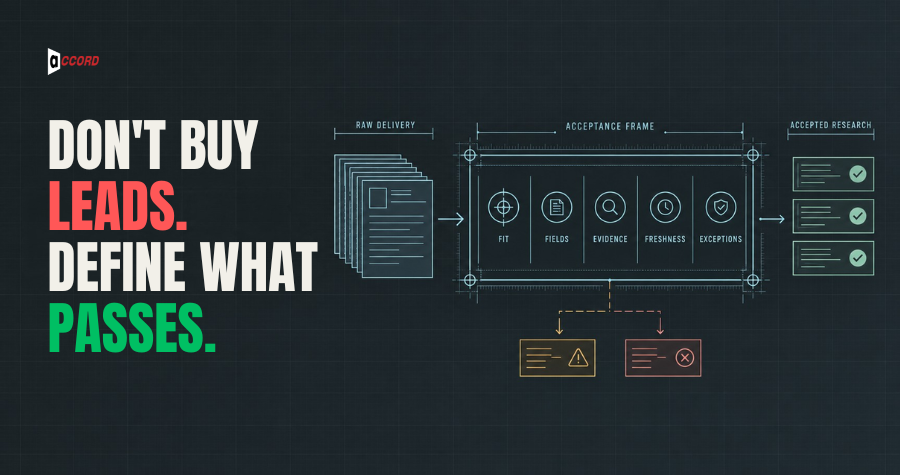
Outsourced lead research needs an acceptance plan that defines account fit, required fields, evidence, freshness, and exception handling before production begins. Approve a representative sample, review both records and reasoning, and agree how rejected work will be corrected. Evaluate the supplier on usable research rather than raw row count alone.
A research file can look complete while leaving sales with unanswered questions. Contacts may belong to unsuitable companies, titles may not match responsibilities, or source links may fail to support the claims attached to them. More rows do not resolve those weaknesses.
The buyer and research provider need a shared definition of acceptable work. That definition should be specific enough for a reviewer to apply without renegotiating the brief record by record.
This guide is for B2B teams preparing an outsourced research assignment. It focuses on delivery quality and operational acceptance, rather than choosing a database subscription or writing an outreach sequence.
Define the decision the research supports
Start with the action sales will take after receiving the file. Will the team evaluate account fit, identify relevant functions, prepare a campaign, or update an existing CRM? Each purpose changes the required research.
If sales needs account prioritization, a list of names and email addresses is incomplete. The deliverable needs an account rationale and supporting evidence. If the assignment is CRM enrichment, existing identifiers and field-update rules become central.
Describe the target offer and its boundaries. Include the markets served, operating situations that fit, and exclusions that make an account unsuitable. "US businesses that need marketing" is too broad to produce consistent research.
State the difference between research and confirmation. Public evidence can support a hypothesis about relevance. It rarely proves budget, willingness to buy, or current internal priorities.
A well-defined brief makes Accord's lead generation and online research services easier to scope and evaluate.
Turn the brief into a field dictionary
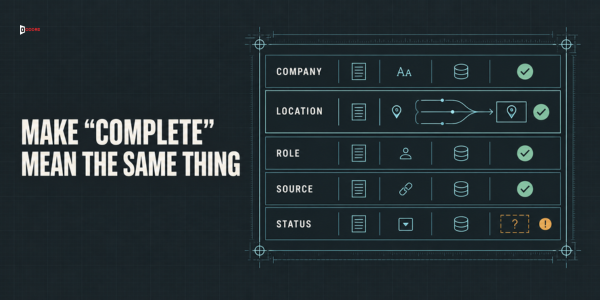
For every field, define its meaning, accepted format, source expectation, and whether it is required. A field called "location" is ambiguous until you explain whether it refers to headquarters, service area, or the contact's working location.
Separate company fields from contact fields. An account-level industry classification should not be inferred from one employee's title. A contact's department should not be assumed from a generic company description.
Include identifiers needed for delivery into your system. If the provider is enriching existing records, supply the appropriate record ID and define which fields may be changed.
Make unknown values explicit. Choose a consistent marker and explain when the researcher should use it. Blank cells can otherwise mean missing work, unavailable information, or an accidental export problem.
Keep the dictionary focused. Requiring fields that sales will never use increases research cost and creates more opportunities for low-confidence assumptions.
Specify evidence and freshness requirements
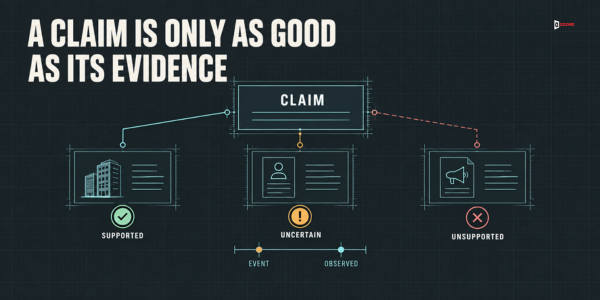
Define which claims need source links and what kinds of sources are acceptable. Company websites, official announcements, role descriptions, and other primary sources may support different parts of the record.
Require a short evidence note for decisions that are not self-evident. The reviewer should understand how the source supports the account's inclusion without repeating the entire investigation.
Freshness should follow the field's rate of change and intended use. A company description may remain useful longer than a contact's role or a time-sensitive business event. Avoid one universal freshness label for the entire record.
Record the observation date separately from the date of the event being described. Reading an old announcement today does not make the event current.
Do not require researchers to manufacture certainty. A transparent "not publicly confirmed" result can be more valuable than a polished but unsupported claim about technology use or purchase intent.
Separate acceptance criteria by severity
Some defects make a record unusable. Others require a small correction. Distinguish those categories before the delivery so disputes do not depend on how urgently the buyer needs the list.
A wrong target market, unsupported account identity, or contact assigned to the wrong company may be critical. An inconsistent abbreviation may be minor if it does not affect matching or interpretation.
Define the treatment for each severity level. A critical defect may trigger rejection and review of similar records. A minor format issue may be corrected across the file without repeating the research.
Avoid inventing universal quality percentages. Set your own acceptance thresholds according to the use case, risk, and review capacity, and label them as contractual project criteria.
Specify who can resolve an ambiguous rule. Researchers need an escalation route while production is underway; otherwise they may improvise interpretations that spread through the batch.
Use a representative pilot
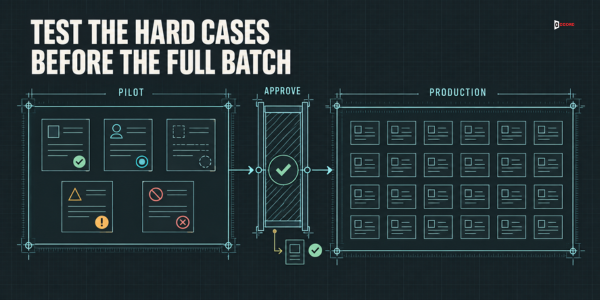
A pilot should test the brief, not merely showcase easy records. Include different account types, edge cases, sparse public information, and known exclusions. Give the provider examples of ambiguity you expect to encounter.
Review the pilot at the field and account levels. A record can satisfy every formatting rule while failing the actual account-fit requirement. Conversely, useful research may need a modest formatting adjustment before import.
Ask the provider to explain a few decisions. This reveals whether the team understands the offer and evidence rules or is simply filling columns.
Revise the brief after the pilot and document the changes. Both sides should know which version governs the full batch. Do not leave critical corrections buried in a message thread.
Approve production only when the remaining disagreements have a clear treatment. A pilot that exposes uncertainty is doing its job; ignoring that uncertainty transfers the problem into a larger file.
Review delivery with a documented sampling method
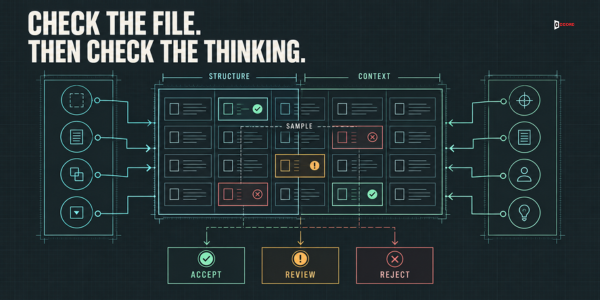
For a large file, combine automated structural checks with human review. Structural checks can identify missing required fields, invalid formats, duplicate identifiers, and inconsistent controlled values.
Human review should assess fit, source support, role relevance, and interpretation. These questions require context that a spreadsheet formula cannot reliably settle.
Choose the sample method before examining results. Include a random component and targeted review of high-risk groups. A convenience sample from the first rows may miss problems concentrated later in the delivery.
Record the sample size, selection method, defects, and limits of the conclusion. If the sample was not designed for statistical inference, do not present its defect rate as a precise estimate for the whole batch.
When a repeated defect appears, inspect the affected category more broadly. The useful question is whether a rule or source caused a systematic problem, not whether the initial sample can still be made to pass.
Evaluate contactability separately from suitability
A valid-looking business email does not make the account relevant. An appropriate account does not guarantee that a contact address can be used successfully. Treat these as separate quality dimensions.
Define the provider's validation method and the meaning of each status. Ask what the method can and cannot establish. Technical validation is not the same as permission, a relationship, or an assurance of delivery.
Require exceptions to remain visible. Catch-all domains, uncertain role matches, or ambiguous affiliations should not be silently grouped with fully supported records.
Before activation, connect the data review to email campaign operations. The sending team needs the validation date, restrictions, and uncertainty relevant to its workflow.
Do not let a provider's performance promise replace your acceptance process. The buyer remains responsible for deciding whether the research is appropriate for the intended action.
Agree on correction and replacement rules
Specify what happens after rejection. The provider may correct a field, repeat the research, replace an unsuitable account, or return an unresolved exception. Different defects need different remedies.
Set a clear feedback format. Include record ID, defect category, evidence, expected correction, and reviewer. A general note saying "these leads are poor" is difficult to act on.
Define whether replacement records must satisfy the same original criteria. They should not quietly come from a broader market simply to preserve the agreed row count.
Preserve rejected records and reasons in the project history where appropriate. That history helps prevent the same accounts from returning in a later delivery under a slightly different name.
Avoid making the correction process a contest over isolated examples. Look for the underlying rule that would prevent recurrence and update the operating brief when the original instruction was unclear.
Work through an illustrative acceptance review
Suppose a hypothetical B2B software team requests research on distributors with several operating locations and a central operations function. The provider delivers a pilot with complete contact fields and source links.
The reviewer finds that some included companies are single-location retailers. Their records are well formatted, but the account-fit rule was interpreted too broadly. This is a targeting defect, not a cosmetic problem.
A second group has plausible account fit but unclear responsibility for the named contacts. Those records need role research or an explicit uncertainty status. Replacing them immediately might waste useful company research.
The team revises the operating-model definition, adds a counterexample, and requests a corrected pilot. It also separates account acceptance from contact acceptance so the next review can diagnose the problem faster.
This is a fictional workflow example. It demonstrates how an acceptance plan supports decisions without claiming an industry benchmark or supplier success rate.
Prepare the CRM handoff before final acceptance
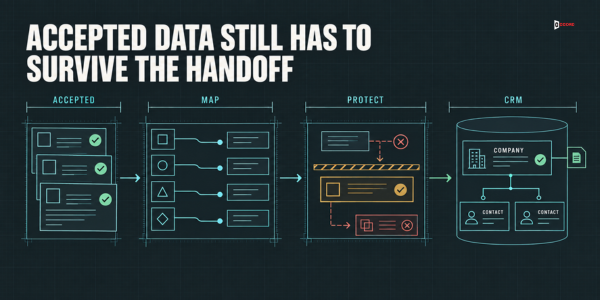
A file is not fully usable until it can enter the intended workflow. Test field mapping, identifiers, duplicate handling, ownership, and required values before accepting the production format.
Use a controlled import sample and inspect the resulting records. Confirm that company and contact relationships remain correct and that source evidence is accessible to the people who need it.
Define how existing values are treated. An enrichment file should not overwrite a verified field with a blank or lower-confidence value simply because the import contains a column with the same name.
Agree who owns the final import and who investigates integration errors. Outsourced research and internal system administration may belong to different teams, but the handoff between them must be explicit.
Keep the accepted delivery and its version available as an audit reference. Subsequent edits should not erase the file that was actually reviewed.
Review supplier performance over several deliveries
Assess whether the provider applies feedback, maintains evidence quality, and escalates ambiguity early. A single polished sample is less informative than consistent behavior across several assignments.
Track categories such as accepted accounts, accepted contacts, recurring defects, correction time, and useful exception reporting. Use those measures to improve the brief and supplier relationship.
Include downstream feedback from sales, but interpret it carefully. A lack of replies can reflect the offer, message, timing, or sending conditions as well as research quality.
Separate provider errors from changes in your own target definition. If the business changes the offer after delivery, records that matched the approved brief should not automatically be described as defective work.
Renew the engagement around demonstrated usefulness and a clear scope. Low cost per row can be misleading when internal teams must spend substantial time repairing or reinterpreting the output.
Frequently asked questions
Should we pay per contact or per project?
Choose a commercial structure that matches the work and acceptance criteria. Per-contact pricing can suit repeatable research with clear fields. A project fee may better fit complex account analysis or CRM reconciliation. In either case, define usable delivery, exceptions, and corrections before work begins.
Is a small sample enough to approve a provider?
A pilot can show whether the provider understands the brief and handles difficult cases. It does not guarantee every later record will meet the same standard. Continue structural checks, risk-based review, and feedback during production, with a sampling method appropriate to the assignment.
Should every field have a source URL?
Require evidence where it supports an important decision or a changeable claim. Some structural fields come from your own system and may not need a public URL. Define source expectations field by field so the file remains useful without becoming cluttered with redundant links.
What should we do with uncertain records?
Keep uncertainty visible and assign a next action. Some records can move to manual review, while others need a clarification question or additional research. Do not force every row into accepted or rejected status when the evidence supports a more qualified decision.
Can we judge research quality from reply rates?
Reply rates alone are not a clean measure of research quality. Messaging, relevance, timing, sender conditions, and the offer all affect responses. Review account fit and evidence directly, then use sales outcomes as contextual feedback rather than attributing every result to the research provider.
Make acceptance part of the brief
Write the quality rules before production, test them on a varied pilot, and connect final acceptance to the CRM handoff. The result should be research that sales can understand and use.
Discuss an outsourced research brief with Accord Tech Solutions using sample accounts, required fields, exclusions, and the decisions the finished file must support. Those inputs make scope and quality easier to agree.
Methodology and sources
Original editorial procurement and research-operations guidance. The pilot scenario is fictional and the suggested review categories are project design choices, not published benchmark thresholds. Service references were checked against Accord's current public pages.