
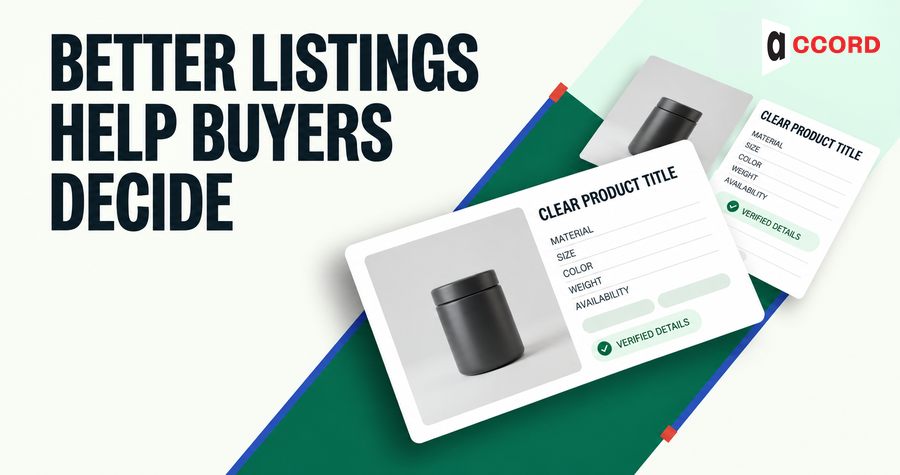
Quick answer: Product listing SEO helps ecommerce buyers decide by making product pages easier to find, compare, understand, and trust. Clean data supports search filters and structured information. Strong images show the product clearly. Useful descriptions answer buyer questions. Together, they support SEO, AEO, GEO, marketplace visibility, and conversion.
For ecommerce brands and B2B product sellers, product listings are not just catalog entries. They are sales pages.
Many ecommerce product pages have good products but fail to convert because of weak titles, incomplete attributes, and poor images. Product listing SEO solves these problems by making product pages more visible, understandable, and trustworthy.
What product listing SEO means
Product listing SEO is the process of improving product titles, descriptions, categories, attributes, images, internal links, metadata, and structured data so buyers and search systems can understand the product.
It applies to ecommerce websites, marketplaces, product catalogs, B2B supplier pages, and product feeds. The goal is not only to rank. The goal is to help the right buyer decide with less confusion.
A strong listing should answer:
- What is the product?
- Who is it for?
- What problem does it solve?
- What size, material, model, or specification matters?
- How is it different from similar options?
- What images prove what the buyer will receive?
- What should the buyer do next?
Why clean product data matters
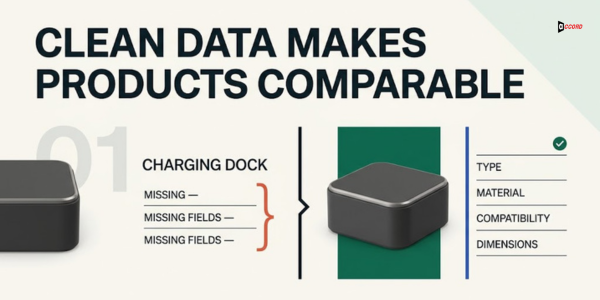
Clean data makes product pages usable. If titles, categories, SKUs, variants, sizes, colors, materials, dimensions, stock status, prices, and specifications are inconsistent, buyers struggle to compare options.
Search systems also depend on data clarity. A product with missing attributes may not appear in filters. A product with vague titles may match the wrong search intent. A product with duplicate descriptions may look less useful than a page with specific information.
For B2B ecommerce, data quality can matter even more because buyers often compare technical details before contacting sales.
Real-World Example
A buyer is searching for "industrial water pump 2HP stainless steel". Your product page title only says "Water Pump", attributes do not include capacity or material, and images do not show scale. The buyer will leave the page because they cannot confirm if this is the right product.
On the other hand, an optimized listing will have a title like "Industrial Water Pump 2HP Stainless Steel for Commercial Use", clear attributes for capacity, material, voltage, and inlet size, and images with scale references. The buyer can decide quickly.
Product titles
Product titles should be clear and searchable. They should usually include the product type, important attribute, model or variant, and buyer-relevant descriptor.
Avoid keyword stuffing. A title that repeats the same phrase several times can look low quality. A practical title helps both search systems and buyers.
Example structure:
Product type + key attribute + model/size + use case or differentiator.
Examples:
- "Wireless Bluetooth Headphones Over-Ear with Noise Cancellation for Travel"
- "Stainless Steel Water Bottle 750ml BPA-Free for Gym and Office"
- "Industrial LED Flood Light 100W IP65 Waterproof for Warehouse"
Descriptions that help buyers decide
A useful product description does more than fill space. It explains what the product is, why it matters, when to use it, and what details affect the buying decision.
Good descriptions include plain-language benefits, key specifications, use cases, compatibility notes, care or setup details where needed, and answers to common objections.
For AEO, product pages should include concise answer sections or FAQs. For GEO, pages should include clear entity and product context so AI systems can understand the product category, brand, attributes, and buyer use case.
How to write product descriptions for buyers and answer engines
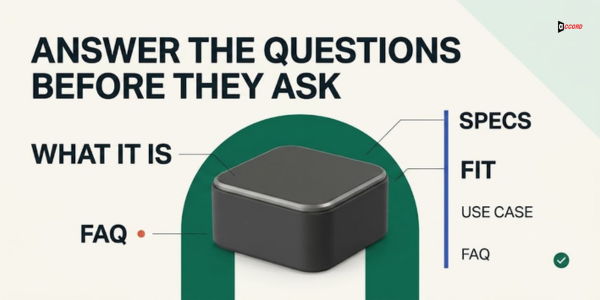
A good product description should answer questions in the order buyers usually ask them. Start with what the product is. Then explain who it is for, the key use case, the most important specifications, and what makes the product different from similar options.
A practical structure:
- One-sentence product summary.
- Key buyer benefit.
- Main specifications.
- Use cases.
- Compatibility or fit notes.
- Care, setup, shipping, or handling notes where relevant.
- Short FAQ for common doubts.
This supports AEO because the page contains clear answers. It supports GEO because AI systems have cleaner product facts and entity relationships. It supports conversion because buyers do not need to contact support for basic questions.
AEO and GEO in Practice: Real Questions to Answer
Add questions like these to your product page to help buyers decide faster:
- Is this product compatible with Model X or System Y?
- What material is this product made from? Is it durable?
- What size should I choose for my needs?
- Is this product suitable for commercial or industrial use?
- How long does shipping take? What is the return policy?
- Does this product come with a warranty?
When buyers find direct answers to these questions in the product description or FAQ section, they can purchase or inquire with confidence.
Images and visual trust
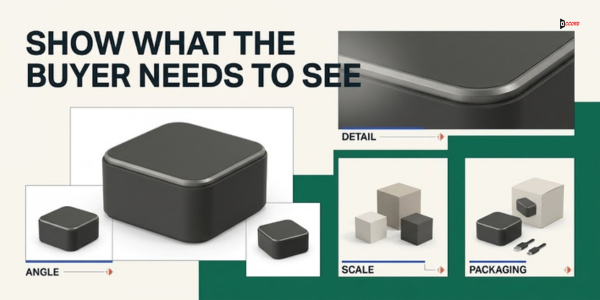
Images affect confidence. Buyers want to see the actual product, important angles, scale, packaging, texture, variants, and details. Blurry, dark, inconsistent, or generic images reduce trust.
Image SEO also matters. Use descriptive file names where possible, helpful alt text, compressed image files, correct dimensions, and image sitemaps where appropriate.
For product listings, alt text should describe the product accurately. It should not be stuffed with keywords.
Image Best Practices
- Multiple angles: Show front, back, side, top, and important details.
- Scale reference: Use common objects or measurements to show size.
- Variants: Display different colors, sizes, or models clearly.
- Packaging: Show what the buyer will actually receive.
- Context: Show the product in use where relevant.
- Quality: Use high-resolution, well-lit, professional images.
Categories, attributes, and filters
Categories help buyers browse. Attributes help buyers filter. Both help search systems understand the product.
Important attributes may include size, color, material, use case, compatibility, industry, brand, model, weight, dimensions, capacity, finish, and certifications where relevant.
For marketplaces, missing attributes can reduce visibility inside platform search. For ecommerce sites, weak attributes can make collection pages less useful.
Attribute Examples by Product Type
Electronics:
- Voltage, wattage, connectivity type, compatibility, warranty period
Apparel:
- Size, color, material, fit type, care instructions
Industrial Equipment:
- Capacity, power source, dimensions, weight, certifications, safety features
Home and Kitchen:
- Material, capacity, dishwasher-safe, BPA-free, dimensions
Structured data for product pages
Product schema can help search systems understand product name, image, description, brand, SKU, offers, availability, price, reviews, and ratings where accurate and allowed.
Structured data must match visible page content. Do not mark up fake reviews, inaccurate prices, or hidden information. For B2B products without public pricing, schema should be used carefully and honestly.
Official product data and structured data notes
Google's product structured data documentation separates product snippets from merchant listings. Product snippets can show product-related information in search results, while merchant listings support pages where customers can buy products and may use more detailed offer, shipping, return, and availability information. Production teams should choose markup based on the actual page type.
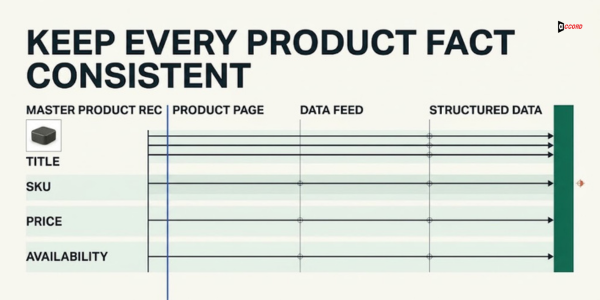
For ecommerce pages, product facts must stay consistent. Google Merchant Center guidance notes that structured data should match product data and visible landing page information. That means price, availability, condition, title, description, image, SKU, GTIN, and variant information should not conflict across the page, feed, and markup.
For variant products, Google's product variant documentation recommends grouping variants with ProductGroup where appropriate and making variant details clear. This matters for products with size, color, material, pattern, capacity, or model variations. Each variant should be understandable without forcing the buyer to guess.
How product listing SEO supports SEO, AEO, and GEO
SEO benefits from clear titles, unique descriptions, optimized category pages, internal links, image optimization, and structured data.
- Clear titles: Help search engines understand product relevance.
- Unique descriptions: Avoid duplicate content issues and improve ranking potential.
- Optimized category pages: Support broader keyword targeting and internal linking.
- Internal links: Connect related products, guides, and resources.
- Image optimization: Improve page load speed and image search visibility.
- Structured data: Enable rich snippets and better search result presentation.
AEO benefits from direct answers to buyer questions such as sizing, compatibility, material, delivery, use case, and comparison.
- FAQ sections: Answer common buyer questions directly.
- Clear specifications: Provide quick reference for decision-making.
- Comparison content: Help buyers understand differences between products.
- Use case descriptions: Show when and how to use the product.
GEO benefits from clear product entities, consistent brand and category information, structured facts, and useful context that AI systems can summarize. GEO does not guarantee AI citations, but clean product pages are easier to interpret.
- Consistent product naming: Help AI systems recognize product entities.
- Structured attributes: Enable accurate product comparisons by AI.
- Clear use cases: Support AI-generated recommendations.
- Brand and category context: Improve AI understanding of product positioning.
Common mistakes
- Do not copy manufacturer descriptions without adding useful buyer context. Generic descriptions do not differentiate your product.
- Do not use the same description across many similar products without meaningful differences. Duplicate content hurts SEO and confuses buyers.
- Do not upload images that hide the product details buyers need. Show the actual product clearly.
- Do not ignore attributes and filters. Complete attributes improve discoverability.
- Do not overuse keywords in titles or descriptions. Keyword stuffing looks spammy and reduces trust.
- Do not make claims that are not visible, sourced, or approved. Unsupported claims can damage credibility.
A practical product listing workflow
Step 1: Audit Existing Listings
Identify missing titles, duplicate descriptions, weak images, incomplete attributes, broken variants, and thin category pages.
Step 2: Prioritize High-Impact Products
Start with best sellers, high-margin products, paid campaign products, or products with search demand.
Step 3: Define a Data Template
Decide required fields for title, description, specs, images, alt text, category, attributes, internal links, and schema.
Step 4: Rewrite Descriptions Around Buyer Decisions
Include use cases, differentiators, specifications, and FAQs. Focus on answering buyer questions.
Step 5: Improve Images
Add clear product photos, alternate angles, scale references, and compressed files. Ensure images load quickly on mobile.
Step 6: Connect Listings to Content
Buying guides, comparison pages, FAQs, and category content can support product pages. Internal linking improves SEO and user experience.
Product listing QA checklist
Before publishing or updating product listings, check:
- Product title is clear and not keyword-stuffed.
- Description is unique and buyer-focused.
- Category is accurate.
- SKU or product ID is consistent.
- Variant fields are complete.
- Price and availability match visible page content.
- Images show the actual product clearly.
- Alt text describes the image accurately.
- Specifications are complete enough for comparison.
- Internal links connect to category, guide, or related product pages.
- Product schema matches visible content.
- Merchant feed data matches the landing page where applicable.
- Page loads well on mobile.
- No unsupported claims are used.
Where Accord Tech Solutions fits
Accord Tech Solutions can support ecommerce and B2B product teams with product data cleanup and listing optimization, product descriptions, image guidance, ecommerce SEO, AEO-ready FAQs, GEO-focused product context, website structure, and social media content that drives buyers back to useful pages.
This service connects naturally with broader growth work. Clean product listings support search, paid campaigns, marketplace visibility, email campaigns, and website conversion.
Service Package Overview
The product listing optimization service can include:
- Product data audit: Identify gaps and inconsistencies in existing listings.
- Title cleanup: Create clear, searchable, and buyer-focused product titles.
- Description rewrite: Develop unique, useful descriptions that answer buyer questions.
- Attribute mapping: Ensure all relevant product attributes are complete and accurate.
- Image guidance: Provide recommendations for image quality, angles, and optimization.
- Category review: Verify products are in the right categories for better discoverability.
- SEO metadata: Optimize meta titles, descriptions, and structured data.
- Internal linking: Connect product pages to relevant guides, categories, and related products.
- Structured data notes: Implement product schema correctly and honestly.
- Content repurposing: Adapt product content for social media or email campaigns.
For B2B product sellers, this can also connect to lead generation. Clean product pages help buyers evaluate before submitting an inquiry. They also give sales teams better links to send during follow-up.
Call to Action
Are your ecommerce or B2B product listings not getting visibility in search? Accord Tech Solutions can help you with product data audit, title and description optimization, image guidance, attribute mapping, and SEO implementation. Contact us today to review your product catalog.
Clean product listings support search, paid campaigns, marketplace visibility, email campaigns, and website conversion. Invest in product listing SEO to help buyers decide with confidence.
FAQ
What is product listing SEO?
Product listing SEO is the improvement of product titles, descriptions, images, attributes, metadata, and structured data so buyers and search systems can understand the product.
Why are product descriptions important for SEO?
Descriptions help search systems understand the product and help buyers decide whether it fits their needs. Unique, useful descriptions are stronger than copied generic text.
Do product images affect SEO?
Images can support SEO through file size, alt text, file names, structured data, user engagement, and buyer trust.
How does product data cleanup help ecommerce sales?
Clean data makes products easier to filter, compare, find, and understand. It can reduce confusion before purchase or inquiry.
How does product listing SEO connect to GEO?
Clean product facts, structured data, and clear descriptions help AI systems understand product entities, categories, features, and use cases.