
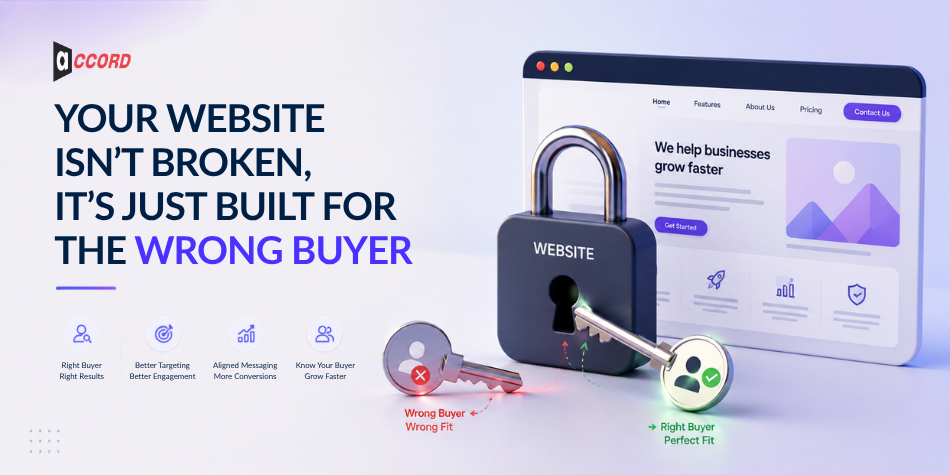
Is your website conversion strategy failing because your site is broken or because it is speaking to the wrong buyer?
For most companies in 2026, the answer is uncomfortable but clear. The website works. The traffic is there. The pages load fast. Rankings look fine. Yet leads feel soft, sales cycles drag, and revenue stalls. This disconnect matters now more than ever because buying behavior has changed faster than most websites have.
This change has an effect on B2B and service brands in the fields of SaaS, cybersecurity, consulting, and professional services. Companies are putting more money into SEO, design, and content, but the results seem less impressive. It's not because of technical debt or an old UI. It is buyer misalignment.
A modern website conversion strategy is no longer about traffic volume. It is about attracting, educating, and converting the right decision-stage audience at the right moment. When a site is built for the wrong buyer, everything looks fine on the surface and fails quietly underneath.
Trusted guidance from Google Search Central and recent UX research from Nielsen Norman Group consistently point to one truth. Relevance beats reach. Intent beats impressions. And clarity beats cleverness.
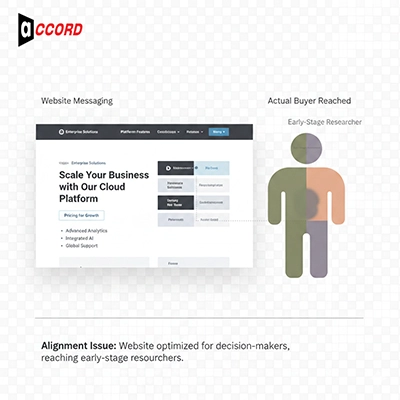
Why did this problem explode in 2026
The last two years reshaped how people buy. AI search summaries, longer research cycles, and tighter budgets changed buyer behavior. Decision makers now arrive later, ask sharper questions, and tolerate less fluff.
Many websites still follow outdated B2B website strategy playbooks. They chase awareness traffic while hoping conversions follow later. That gap used to work. It does not anymore.
In real client audits, one pattern keeps showing up. Traffic grows. Demo requests do not. The site is technically sound but emotionally disconnected from the buyer’s reality.
This is where buyer-focused website design separates growing companies from stagnant ones. The goal is no longer to impress everyone. It is to resonate deeply with the few who are ready to decide.
There is a quiet issue behind many SEO dashboards. Rankings look strong, but sales teams complain about lead quality. This is the wrong buyer website problem SEO leaders hesitate to name.
SEO that drives conversion, not traffic, requires uncomfortable choices. You have to stop optimizing for curiosity clicks and start optimizing for buying intent. That means fewer visitors and more revenue.
When SEO is disconnected from buyer intent, it creates a qualified lead generation SEO illusion. The numbers go up. The pipeline does not.
In 2026, buyer intent SEO services focus less on keywords and more on context. Why is this person searching now? What decision are they trying to make? And what risk are they trying to avoid?
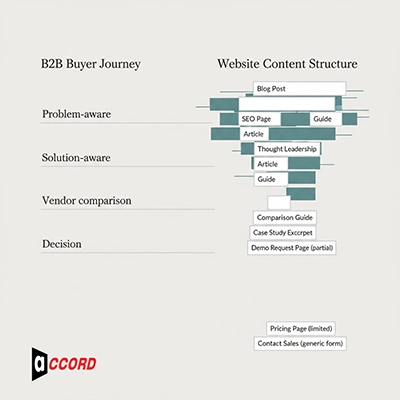
Buyer journey mapping is the missing foundation.
Most websites skip the hard work. They jump straight into content creation without buyer journey mapping. That is like building a house without knowing who will live in it.
A serious website conversion strategy starts by mapping how buyers move from awareness to decision. Not in theory, but in real conversations with sales teams and customers.
Early-stage buyers want clarity. Mid-stage buyers want proof. Decision-stage buyers want reassurance and risk reduction. When your content treats them all the same, nobody feels understood.
Buyer journey mapping also reveals where your site loses momentum. These gaps are often invisible in analytics but obvious in buyer interviews.
Message-market fit is not a slogan problem.
Many teams confuse message-market fit with better copywriting. That is only part of the picture.
Message-market fit is about alignment between what you say and what the buyer already believes. If your site explains things the buyer already knows, it feels slow. If it jumps too far ahead, it feels risky. A business growth website in 2026 speaks in the buyer’s internal language. It reflects their doubts, constraints, and political realities inside their organization.
This is where conversion-focused content marketing quietly outperforms louder competitors. It does not shout benefits. It removes fear.
Trust-focused web design matters more than aesthetics.
Design trends come and go. Trust does not. Trust-focused web design is about reducing friction at every step. Clear navigation. Honest claims. Specific examples. Visible expertise. In high-consideration industries like finance and SaaS, trust signals convert better than creativity. Buyers are not looking for delight. They are looking for certainty.
Trust shows up in structure. Case depth. Clear pricing logic. Human language. And yes, sometimes in what you choose not to say.
Conversion psychology explains why traffic fails to convert.
Conversion psychology is not manipulation. It is empathy applied at scale. Buyers hesitate for predictable reasons. Fear of making the wrong choice. Fear of internal backlash. Fear of wasting time. A strong website conversion strategy anticipates these fears and addresses them before they become objections. That is why decision-stage optimization matters more than blogs in 2026.
Decision-stage optimization focuses on clarity, proof, and next steps. Not excitement. Not clever CTAs.
Website content hierarchy shapes buyer confidence.
Most sites suffer from a flat website content hierarchy. Everything feels equally important. That overwhelms buyers. Website content hierarchy helps buyers self-navigate based on intent. Decision-stage content should be obvious. Educational content should support, not distract.
A funnel-aligned website structure does not hide pricing, comparisons, or limitations. It surfaces them when the buyer is ready.
This structure is often the difference between a high-intent SEO strategy, 2026 success, and traffic that never converts.
Why traffic without buyers is dangerous in 2026
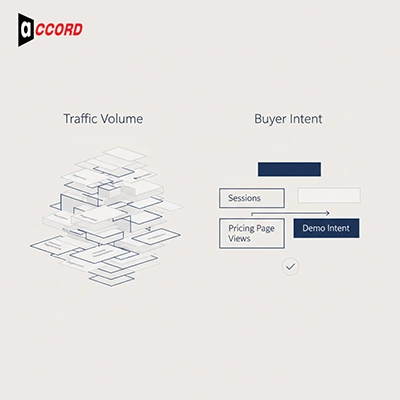
Traffic for the wrong audience trains your analytics to lie to you. It creates false confidence. When companies ask, “Why does my website get traffic but no customers?” The answer is rarely technical. It is strategic.
The best SEO services to fix wrong audience traffic focus on pruning, not expanding. Removing pages that attract the wrong buyer is often the fastest growth lever. Website conversion optimization services must evolve.
Traditional website conversion optimization services focused on button colors and headline tests. That era is over. Modern optimization starts with buyer persona alignment SEO. Who is this page really for? What decision does it support?
How to optimize a website for buyers ready to buy is no longer a CRO question. It is a strategy question.
SEO audit conversion focus now includes sales call analysis, lost deal reviews, and intent segmentation.
FAQs people also ask
Final takeaway
Your website is not broken. It is doing exactly what it was designed to do. Attract attention. The real question is whether your website conversion strategy is designed to attract buyers, not browsers.
In 2026, growth belongs to companies willing to say no to the wrong audience and yes to relevance. When your site speaks clearly to the right buyer, conversion stops feeling mysterious. It feels inevitable.