

Choose specialist agencies when you already have one internal leader who owns the meetings number and one or two channels need deep skill. Choose a full-service agency when nobody inside your company can coordinate partners and three or more channels need work. Choose a hybrid when you have a strong owner and one gap that needs a specialist. The most common reason pipeline stalls while every agency dashboard looks green is simple: each agency is paid to improve its own number, and nobody is paid to improve the number that matters, which is qualified meetings held. You can run the five tests in 15 minutes. The rest of this guide shows how to price the coordination cost of several specialists, what to ask any agency, and how a 60-to-90-day trial keeps the decision reversible.
Why can every agency report look green while pipeline is flat?
An email specialist reports reply rates. An SEO specialist reports rankings and visits. A web agency reports page speed and launch dates. A social agency reports reach. Each report is accurate for its own scope, and each one ends where the agency's responsibility ends. A buyer who replies to an email, lands on a slow page and never receives an answer appears as a success in two reports and a loss in none.
This is not a flaw in specialists. It is how any divided work behaves when nobody owns the whole path. A full-service agency can have the same problem if it reports channel by channel and never counts meetings. The question to ask is not "how many services does this agency sell?" It is "who is responsible for the number that pays for all of this?"
What is the real difference between full-service and specialist agencies?
Both can be excellent. They differ in who does the joining-up.
| Question | Specialist agency | Full-service agency |
|---|---|---|
| Scope | One to three channels, with deep skill | Several channels under one engagement |
| Who coordinates the channels | You or your internal leader | The agency, if the contract says so |
| Reporting | One report per channel, one vendor each | One combined report, if it is built that way |
| Depth in one area | Usually the strongest | Varies by channel, so ask who does the work |
| Contracts and access | One contract and one set of logins per vendor | One contract, one point of contact |
| Your time cost | Higher, because you run the joining-up | Lower, if the agency owns coordination |
Prices vary too much by market and scope for this guide to quote a range. Compare total cost, including the hours your own team spends managing each partner, not only the monthly fees.
Which five tests decide the choice?
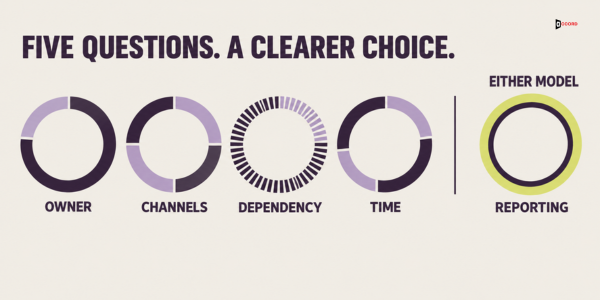
Answer each question with yes or no for your own company. Tests one to four each cast one vote, for specialists or for full-service. Test five does not vote on the model; it sets how much reporting you need. Write the answers down before you talk to any agency, so a sales pitch cannot change them.
- The owner test. Can one person inside your company hold the qualified-meetings number and run a weekly review? Yes points to specialists. No points to full-service.
- The channel test. Do three or more channels need real work in the next six months? Fewer than three points to specialists. Three or more points to full-service.
- The dependency test. Does a fix in one channel need a change in another? For example, a new email campaign needs a new landing page. Yes points to full-service, or to a lead partner. No points to specialists.
- The time test. Can your team spare roughly six hours a week to manage vendors? No points to full-service. Yes points to specialists. Six hours is a starting line, not a rule; use the count in the next section to set your own.
- The report test. Can you get one view that runs from first contact to a held meeting? This test does not vote for either model; it sets your reporting need. If separate vendors cannot build the view, add a lead partner or an internal owner who counts it by hand.
Count the votes from tests one to four. If three or four point the same way, the choice is clear. If they split two and two, a hybrid is the safer start. Then use test five, whichever model you chose: if one view from first contact to a held meeting is not possible, build it with a lead partner or count it by hand. The next two sections show what the typical answers look like.
When is a specialist the right choice?
A specialist is usually right when most of these are true:
- You have a senior owner. One person inside your company can hold the meetings number, run a weekly review and tell vendors when two channels collide.
- One channel has a hard technical problem. Examples are email deliverability, a site migration, or technical SEO on a large site. These reward deep, narrow skill.
- The rest of the path works. Replies get answered, forms reach a person, and the CRM is clean.
- You want to keep control of the strategy. You are buying skill, not management.
If you are hiring a specialist, ask what the agency expects from you each week. Specialists work best when the client supplies the strategy and the coordination.
When does a full-service agency make more sense?
A full-service partner is usually right when most of these are true:
- Nobody inside owns the whole path. Marketing, sales and web each run their own tasks, and nobody adds them up.
- Three or more channels need work at the same time. Managing three vendors takes real internal hours, and a small team may not have them.
- The channels depend on each other. For example, outbound email sends buyers to a page that needs to change, and a replied lead needs a follow-up system. These links are easier to fix when one team holds both ends.
- You need one report that reaches the calendar. A single combined view is hard to build across separate vendors.
A fair disclosure: Accord Tech Solutions sells several of these services together, including data and list building, outbound email, SEO and AI search, web development and social media. Read the advice here with that in mind. The tests and questions work for any agency, including ours.
What is the hidden cost of coordinating several specialists?
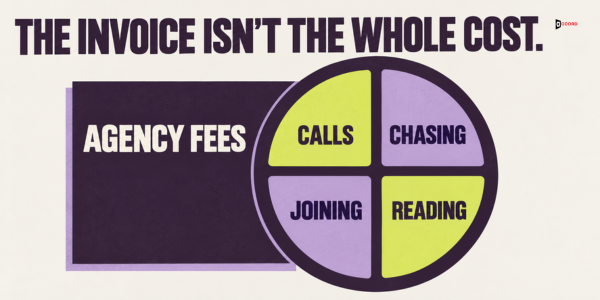
A specialist's invoice does not show the hours your team spends joining the work up. Measure the coordination cost before you decide. Use this simple count for one typical week:
- Calls: hours spent in weekly or biweekly calls with each vendor.
- Chasing: hours spent asking for access, assets, approvals or answers.
- Joining: hours spent moving data between vendors, such as sending replies from the email team to the sales team or fixing a form for the web team.
- Reading: hours spent reading reports from each vendor and working out how they relate.
Add the four numbers, multiply by four for a month, and multiply by the hourly cost of the person who does the work. The result is a real cost that belongs next to the invoices.
Imagine three specialists, each with a weekly call of one hour. Add two hours of chasing, one hour of joining and one hour of reading each week. That is seven hours a week, or about 28 hours a month. Suppose, in this invented case, that a full-service agency could take most of those hours away and that its fee came out slightly higher than the three specialists' fees. The comparison would then no longer be fee against fee. It would be the three fees plus 28 hours against one slightly higher fee plus a few hours. At an invented internal cost of $50 an hour (use your own rate), 28 hours is $1,400 a month on top of the three invoices. Real fees and hours depend on your quotes and your team, so this example does not predict your result.
What should you ask any agency before you sign?
Ask each of these questions of every agency you consider, whether it is a specialist or a full-service partner. Write down the answers so you can compare them later.
- Which number will you report on every month? Listen for qualified meetings held, or a clear path to it. Be cautious if the answer stops at clicks, rankings or opens.
- Who owns the accounts, the data and the sending domains? Listen for "you do." Be cautious if the agency keeps the logins, the sending accounts or the list.
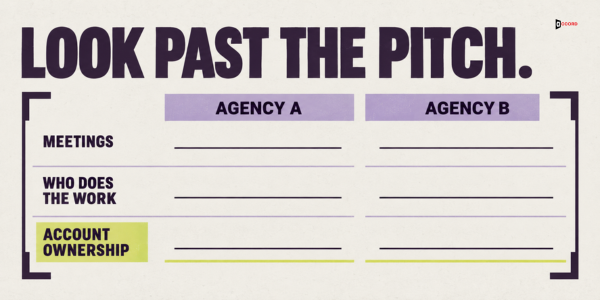
- Who does the work, and who checks it? Listen for names and roles. Be cautious if the senior team sells and a junior team delivers without a stated review.
- What do you need from us each week? Listen for a short, specific list. Be cautious if the answer is "nothing."
- What happens when two channels disagree? For example, SEO wants a page change that web cannot make this month. Listen for a named decision-maker and a way to settle it.
- How do you protect our sending reputation? Listen for authentication, complaint monitoring and volume limits that follow the sender rules of mailbox providers. Google publishes its email sender guidelines, and a good agency can explain how it meets them without reading from a script.
- When a channel is not working, do you recommend we stop spending on it? Listen for a yes with an example. Be cautious if the agency never recommends spending less.
- How does an engagement end? Listen for data and accounts returned to you within a stated time. Be cautious if you cannot get a clear answer on exit terms before you sign.
If you want a wider view of what agencies cover, read what a digital marketing agency does and whether you need one.
How do you compare two or three agencies side by side?
After the calls, score every agency on the same eight criteria so a polished pitch does not decide the result. Give each criterion a score from 1 to 5 right after the call, before you talk to anyone else on your team, and write one sentence of evidence beside it.
| Criterion | What a 5 looks like | What a 1 looks like |
|---|---|---|
| Reports a number that reaches the calendar | Meetings held, defined with you | Clicks, opens or rankings only |
| Names who does the work | Named people with roles | "Our team" and no names |
| Gives you ownership of accounts and data | Everything in your name from day one | The agency holds the logins |
| Explains how channels connect | A concrete example of a handoff it manages | Lists services side by side |
| Asks about your buyers | Specific questions about roles, size and sales cycle | Starts with its own packages |
| Admits what it will not do | Names a limit and refers you elsewhere | Says yes to everything |
| Describes a plan for the first 30 days | Week-by-week actions and what it needs from you | A general promise to "get started" |
| Explains how engagements end | Written exit terms and data return | Vague or avoids the question |
Add the scores and compare. A gap of a few points between two agencies is a close call, so use the next section on contracts to break the tie. A single 1 on ownership of accounts and data is a reason to walk away, whatever the total says.
Which contract terms matter most?
Read the contract for the eight points below before you read the price. Each one decides how much freedom you keep if the work goes badly.
- Term and notice. How long is the commitment, and how many days of notice does each side owe? A long term without an exit review is a risk for the buyer.
- Renewal. Does the contract renew automatically? If it does, put the date in your calendar.
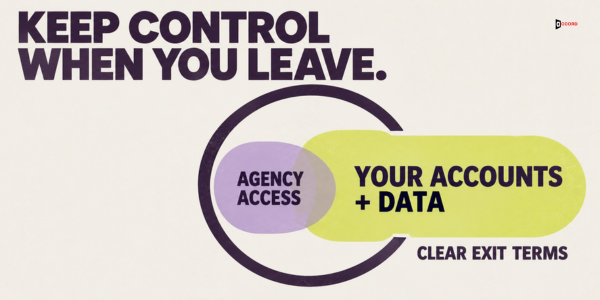
- Ownership. Who owns the ad accounts, the website, the domains, the sending accounts, the lists and the content? The answer should be you, with the agency as a user.
- Access. Do you have administrator access to every account at all times, including reporting tools?
- Scope changes. How does the price change when the scope changes, and who must agree in writing?
- Subcontractors. Does the agency use freelancers or other firms, and will it tell you who?
- Spend. If the agency manages paid media or tools, who pays the platform directly, and what is the agency fee on top?
- Ending. What happens to your data and accounts at the end, and how quickly is everything returned?
Which red flags show up during the pitch?
Some warning signs appear before you sign anything. Watch for these four:
- A promised result. Rankings, AI citations, inbox placement and meetings depend on factors no agency controls. An agency that names a specific outcome in advance is selling confidence, not a method.
- No questions about your buyers. An agency that proposes a plan before it asks who buys from you is describing its own services, not your problem.
- Reports shown without a definition. A chart with no explanation of how the number is counted cannot be checked.
- Pressure to decide quickly. A deadline that benefits only the seller is a reason to ask for more time.
How do you start with a 60-to-90-day trial?
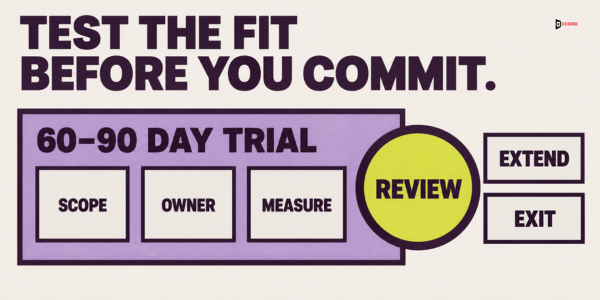
Do not sign a long contract on the strength of a good meeting. Start with a scoped trial of 60 to 90 days and write five things down before work begins:
- Two measures. Agree on one outcome measure, such as qualified meetings held from a named channel, and who counts it. Add one work-progress measure, because slow channels such as SEO and AI search can take months to move meetings, and a trial judged on held meetings alone may end before the work can show results. Write down what the agency will have finished by day 30, 60 and 90, for example pages fixed or published, technical issues resolved and tracking set up, and who checks it.
- A short scope. List exactly what the agency will do and what it will not do in the trial.
- A weekly rhythm. Agree on a short weekly call or written update, and the owner on your side.
- Access you own. Create the accounts in your name and add the agency as a user.
- An exit clause. State how either side ends the trial, and what is returned.
At the end of the trial, count the same stages you counted before it started: contacts reached, replies, positive replies, meetings booked, meetings held and qualified meetings held. If the meeting number moved and the cost of coordination fell, extend. For a slow channel such as SEO, also check the work-progress items you wrote down: if the work was delivered on schedule but meetings have not moved yet, extend only with a fixed date to review again; if the work was not delivered, the trial has told you about the agency's delivery. If neither measure moved, you have lost 90 days rather than a year. For a method that links marketing activity to revenue, read how marketing-generated pipeline connects leads to revenue.
Can you mix both models?
Yes. You do not have to pick one model for everything. Two patterns work well:
- An internal owner with one specialist. Your team runs strategy and coordination, and a specialist fixes the one hard problem.
- A lead partner with one specialist. A full-service partner runs most channels, and a specialist handles an area that needs unusual depth. The lead partner needs to agree on how the specialist reports, so the combined view still reaches the calendar.
The rule underneath both patterns is the same: whoever owns the meetings number also owns the coordination. If that person is not on your payroll, the contract has to say who it is.
Imagine: three agencies and a board meeting
The details of this example are invented. Imagine a 45-person cybersecurity training company with three agencies: one for outbound email, one for SEO and one for the website. Each sends a monthly report, and each looks good. Reply rates are steady, rankings are up, and the redesigned pages load quickly.
Before a board meeting, the sales director asks a simple question: how many qualified meetings came from these three? Nobody can answer. The email agency counts replies, the SEO agency counts visits, and the web agency counts form fills. A manual count from the calendar shows that meetings are flat.
The company does three things. It names the sales director as owner of the qualified-meetings number. It asks all three agencies to add a monthly count of meetings held from their channel, using the same definition. And it adds a weekly 30-minute call where the three agencies join one meeting instead of three. Nothing is replaced, and for the first time the three reports describe one path.
Frequently asked questions
Is a full-service agency always more expensive than specialists?
Not always. Compare total cost: the fees plus the hours your team spends coordinating each partner. A full-service engagement can cost more per month and less in total, or the reverse. Ask for scope in writing and compare the same scope.
How long should an agency contract be?
There is no single answer. A short trial of 60 to 90 days with a clear outcome measure, a work-progress measure and an exit clause lets you test the working relationship before you commit to a longer term.
What if my current agency says its channel is fine but meetings are flat?
Ask it to report meetings held from its channel, using your definition, for the last three months. If it cannot, count them yourself from the calendar and CRM. A channel can be fine on its own numbers and still not be producing meetings.
Next step
If you are weighing a full-service partner against specialists and want a second opinion, book a 30-minute working session with the Accord team: book a 30-minute working session. Bring your current vendor list and last quarter's meetings count, and use the time to decide which of the five tests matters most for you.