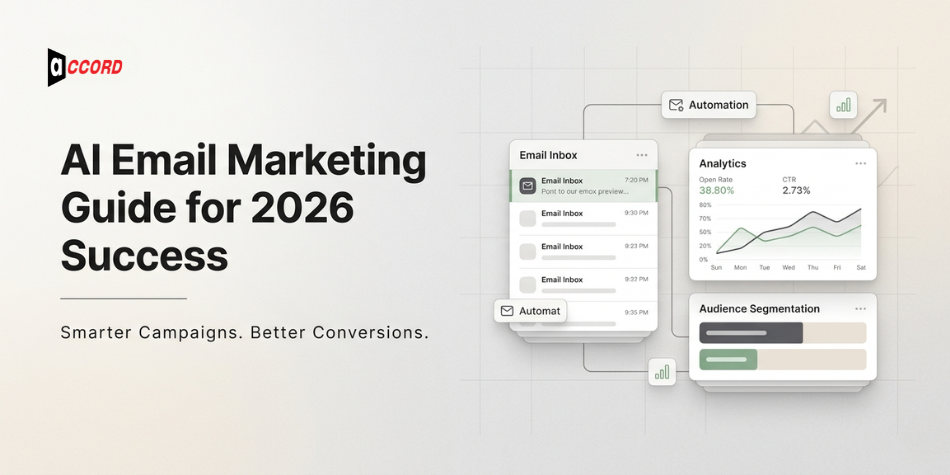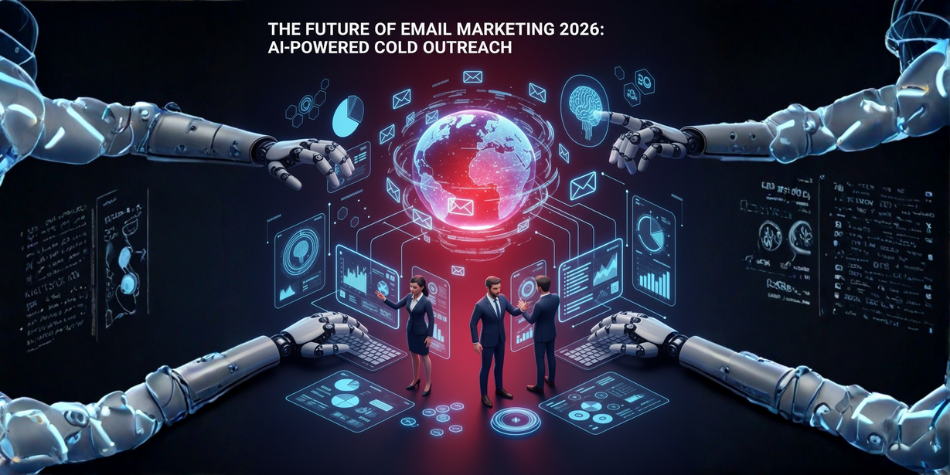
The future of email marketing in 2026 is closely connected to AI-based cold outreach, where businesses use automation, personalization, and data-driven timing to reach the right prospects with more relevant messages.
Introduction
The way businesses communicate by email has changed dramatically in just a few years.
In 2025, success came from avoiding mistakes - write poor subject lines or a low level of personalization.
But in 2026, email campaigns are not just mistake-free - they're AI-based, hyper-personalized, and insight-driven.
Now, Email marketing is not only a guessing game. In today's smart automation, advanced segmentation, and hyper-personalization remind whether your campaigns reach the inbox or move in spam. So, if you're planning your next outreach strategy - here's exactly how email marketing in 2026 can help you to get more replies, conversions, and loyal customers.
How to Use AI for Cold Outreach in 5 Steps

AI-based cold outreach works best when it supports better targeting, personalization, timing, and follow-up. Here is a simple 5-step process businesses can follow in 2026.
1. Build a focused prospect list
Start with a clear audience. Use AI tools to filter prospects by industry, company size, location, job title, buying signals, and recent activity. A focused list helps you avoid sending generic emails to people who are not a good fit.
2. Research each prospect before writing
Use AI to collect useful context, such as company updates, hiring activity, website changes, LinkedIn posts, or recent business news. This helps your cold email feel relevant instead of automated.
3. Write personalized email angles
AI can help create subject lines, opening lines, and message angles based on each prospect’s needs. Keep the final email short, clear, and human. The goal is to start a conversation, not overwhelm the reader.
4. Send emails at the right time
Use AI-supported send-time insights to understand when your audience is more likely to open and reply. Better timing can improve engagement without increasing email volume.
5. Improve follow-ups with behavior data
Track opens, clicks, replies, and website visits. Then use AI to adjust follow-up messages based on real behavior. Someone who opened your email twice may need a different follow-up than someone who never engaged.
<!-- Table of Contents -->Table of Contents
- 1. AI-Driven Personalization (By First Name)
- 2. Smart Automation and Predictive Send Timing
- 3. Smarter Deliverability - Goodbye Spam Folder
- 4. Interactive Emails Are the New Click Magnets
- 5. Voice-Assisted Email Reading (AI Voice Integration)
- 6. The Rise of Trust Signals & Email Credibility
- 7. Continuous Optimization and Advanced A/B Testing
- 8. Hyper Segmentation: From Lists to Micro-Audiences
- 9. Data-Driven Follow-Ups (No More Guesswork)
- 10. Integrating Email and Social Media: "Omni-Channel Outreach"
- Conclusion
- FAQs
1. AI-Driven Personalization (By First Name)
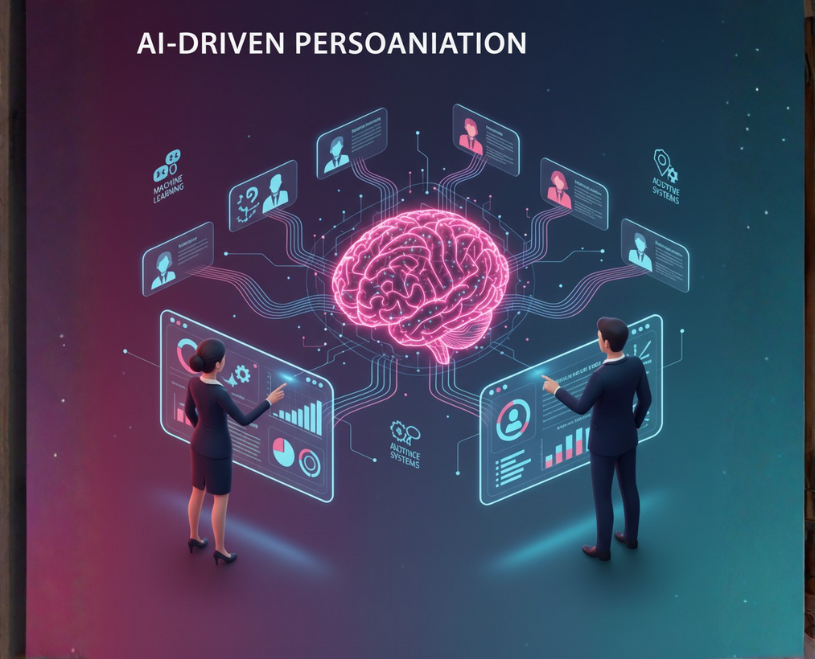
In 2025, when adding {{firstName}} felt "personalized".
But that stage is gone. In 2026, AI personalization uses behavioral data, purchase history, recent posts, intent signals, and even real-time context (like weather or local events) to send every message.
Example:
"It looks like your team in Austin has moved recently - here's a 2-step email automation to handle new client leads effortlessly."
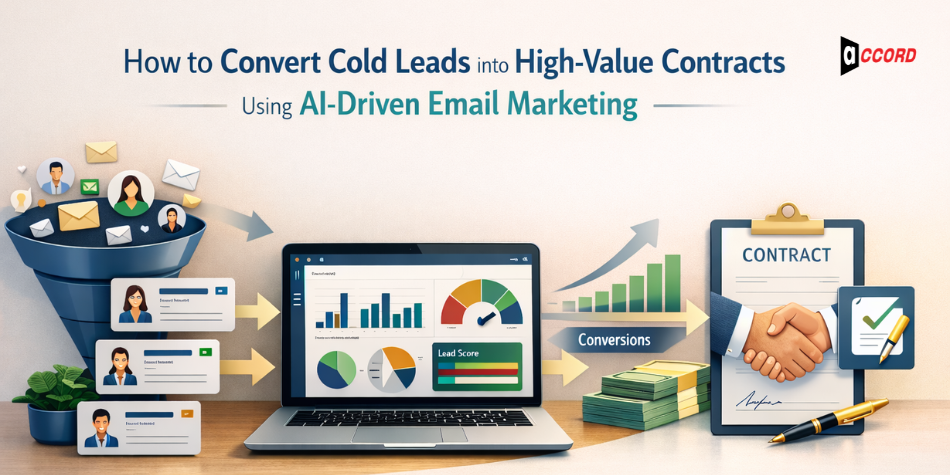
This level of depth is what separates campaigns that convert from ones that get deleted. For a full breakdown of how AI email marketing helps convert cold leads into high-value B2B contracts, the mechanics are worth understanding before you build your next sequence.
2. Smart Automation and Predictive Send Timing
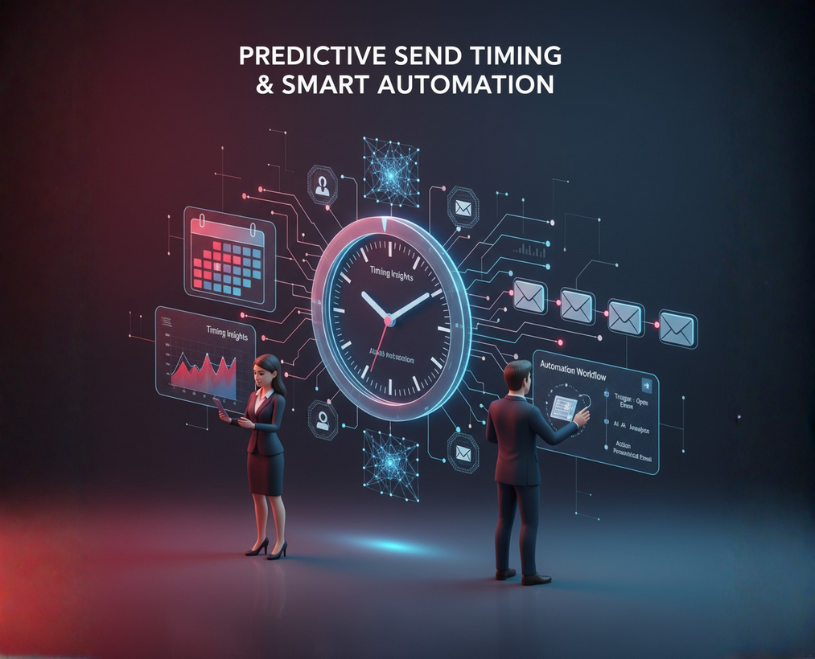
No more blasting emails at random times.
By AI-based send-time prediction, platforms like Instantly, LemList, and HubSpot Smart Send analyze historical data to identify when your prospects are most active.
Result: 2026 campaigns report 40% higher engagement when using predictive timing and workflow-based automation. To see how these tools fit into a broader revenue strategy, the guide on lead generation and AI email marketing for ROI in 2026 connects the dots clearly.
3. Smarter Deliverability - Goodbye Spam Folder

Deliverability has become the new battleground.
Google and Microsoft's 2026 algorithms now detect abnormal sending volumes, repetitive duplication, and cold domain patterns faster than ever before.
To ensure inbox placement:
Warm up your domains (2–3 weeks minimum).
Make sure that the DNS records are setup currently. Send messages that looks like a person.
Tip: Tools like Mailreach, Warmbox, and Folderly 2.0 now use neural learning to get more positive interactions, which helps your domain's reputation. For a practical checklist on improving inbox placement, the B2B email deliverability checklist for 2026 covers every step in detail.
4. Interactive Emails Are the New Click Magnets
In 2025, plain text are control cold emails.
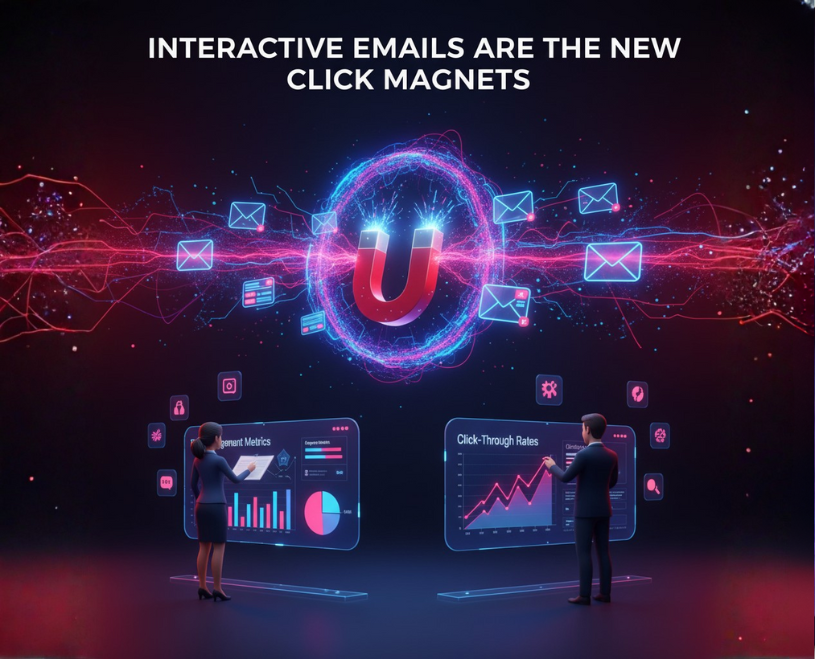
In 2026, interactive micro-experiences - like as polls, quizzes, and instant booking snippets - are taking center stage. Example:
"Would you like a 10-minute audit or a free performance report?" (2 CTA buttons)
These interactive CTAs increase engagement up to 50% compared to static links.
Tools are Mailmodo and Stripo AMP make it possible to set this without hurting deliverability.
5. Voice-Assisted Email Reading (AI Voice Integration)
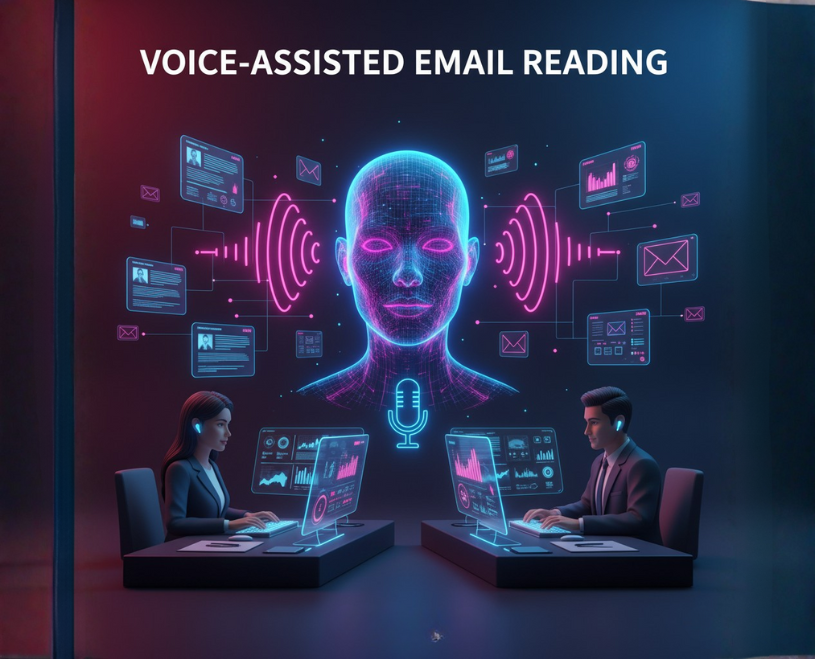
Yes - your emails might be read out loud in 2026.
Voice assistants like Google Voice, ChatGPT Voice, and Siri Mail can now summarize or play back messages.
That means:
Short, conversational emails are better performs.
Avoid long introductions; focus on value in the first 3 lines.
Test the subject lines that sound natural when read aloud.
6. The Rise of Trust Signals & Email Credibility
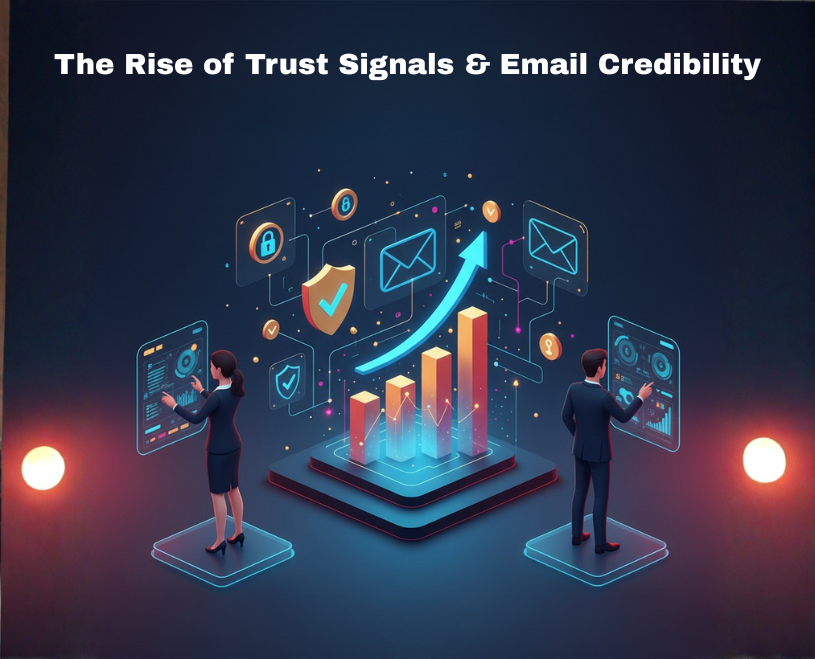
Modern users don't just read - they verify.
That's why credibility elements (social proof, logos, reviews, or star ratings) now play a key role in every email footer.
A clean, branded signature improves trust and reply rates by 18%.
Include:
Full name & title
Verified domain email (no Gmail/Yahoo)
Company logo & case study link
Google Reviews or rating badge
Building trust in email is closely tied to the broader question of why emails aren't getting replies in 2026 — and what the real fix looks like.
7. Continuous optimization and advanced A/B testing
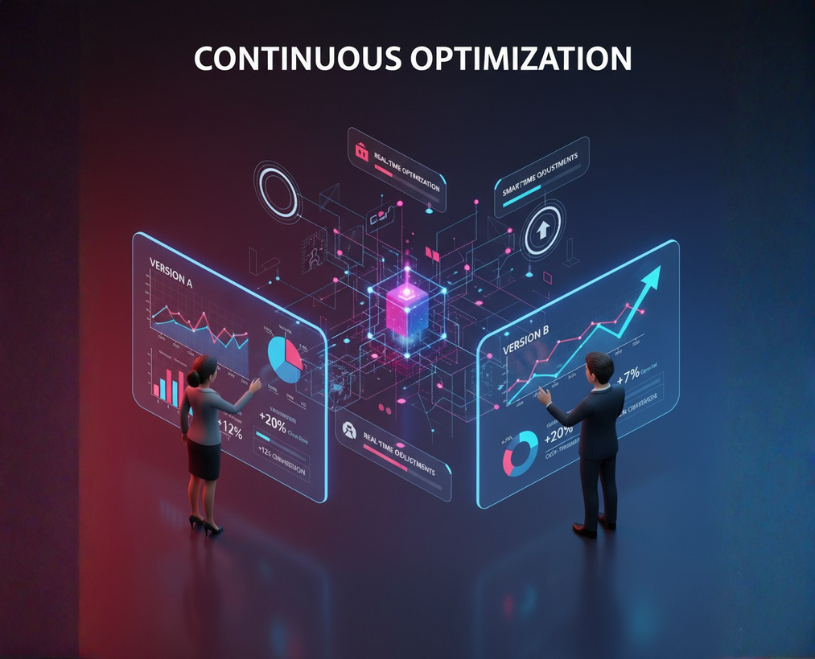
AI systems now do multi-factor testing, which means they test more than one thing at a time, and they automatically improve based on how many people are using them.
Now you can test:
The CTA tone (friendly or formal)
The AI keeps the greatest performers alive by using real-time adaptive optimization. This is based on things like opening style (data-driven vs. personal insight), email length (short vs. mid-level), and more. For teams wanting to build this into a complete system, the guide on the best email marketing practices for 2026 covers the full framework.
8. Hyper Segmentation: From Lists to Micro-Audiences
Forget "one big list,"
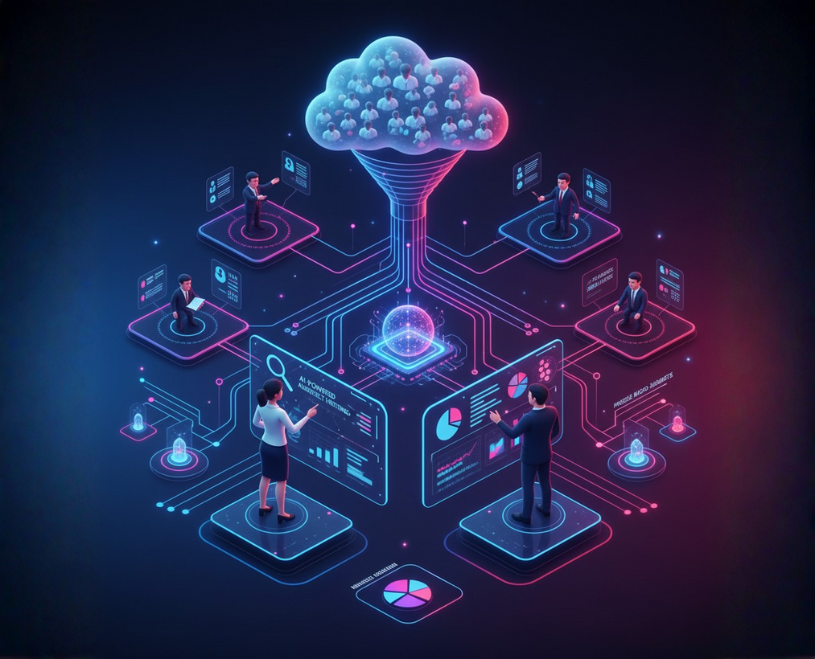
2026 segmentation splits down audiences by intent level (research vs. ready to buy), engagement history and location or language choice.
Customer lifecycle stage, Apollo AI, and Clay can now build micro-segments of 50 to 100 people, offering precise messaging that feels completely relevant. This kind of targeting is at the core of what makes professional email marketing services deliver measurable results instead of just sending volume.
9. Data-driven follow-ups (no more guesswork)
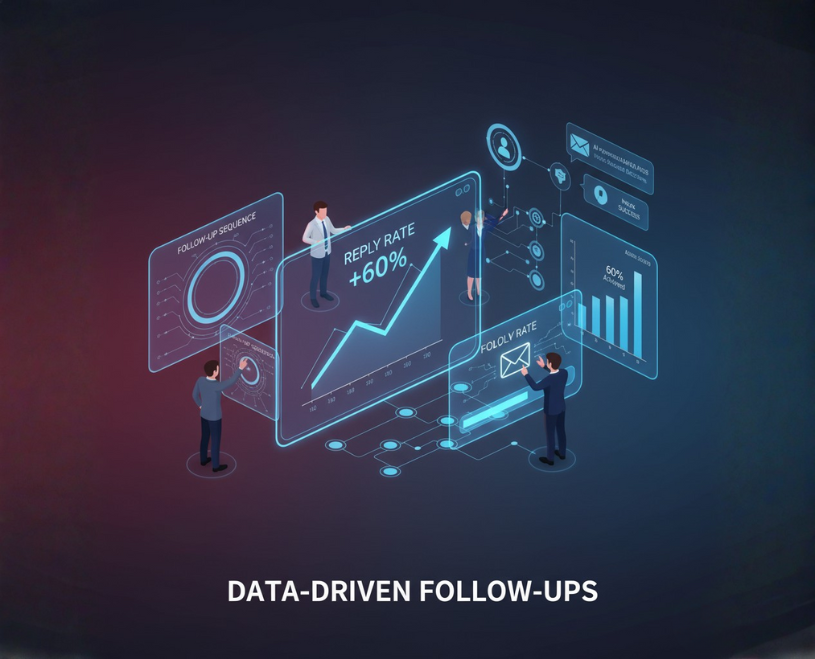
Follow-ups still make up 60% or more of total responses, but they are more educated.
AI can recognize when a prospect opens your message many times or clicks a link but does not respond, and send targeted, non-pushy follow-up sequences.
Like the one below:
"Hey {{firstName}}, noticed you checked our case study twice - would it make sense to share a short walkthrough?"
Isn't that smart? For a complete look at how cold email outreach and content marketing work together as a growth system, the guide on cold email outreach combined with content marketing is a strong next read.
10. Integrating Email and Social Media: "Omni-Channel Outreach"
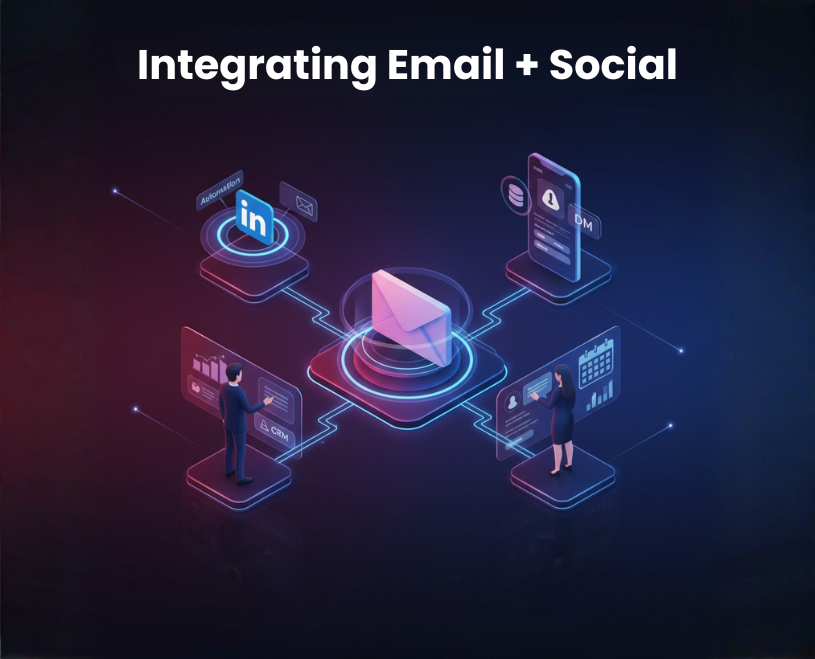
The future of cold outreach is cross-platform.
In 2026, top marketers combine cold email with:
LinkedIn DM Follow-ups
Retargeting ads
Automated email reminders
CRM notifications for SDRs
This multi-touch method promotes familiarity and trust, making your emails feel like continuations of a conversation rather than intrusions. This is also why multi-channel lead nurturing is the secret to scaling your service business in 2026 — the channel alone is never enough.
What Will This Mean for You in 2026?
If you're still sending out one-size-fits-all cold emails, 2026 is the time to change.
Here is your Email Marketing 2026 Checklist:
AI-powered Personalization
Domain Warmup and Reputation Tracking
Predictive Send-Time Automation
Interactive content integration and trust-building email signatures.
Multi-channel coordination.
Conclusion
In 2026, email marketing will focus on insight rather than volume.
AI and automation have changed outreach, making it smarter, faster, and more human than before.
Those who mix data, personalization, and credibility will dominate the inbox.
So stop sending emails and start sending experiences. If you need expert help building this kind of system for your business, Accord Tech Solutions Email Marketing Services can help you get there with a strategy built around your goals.