
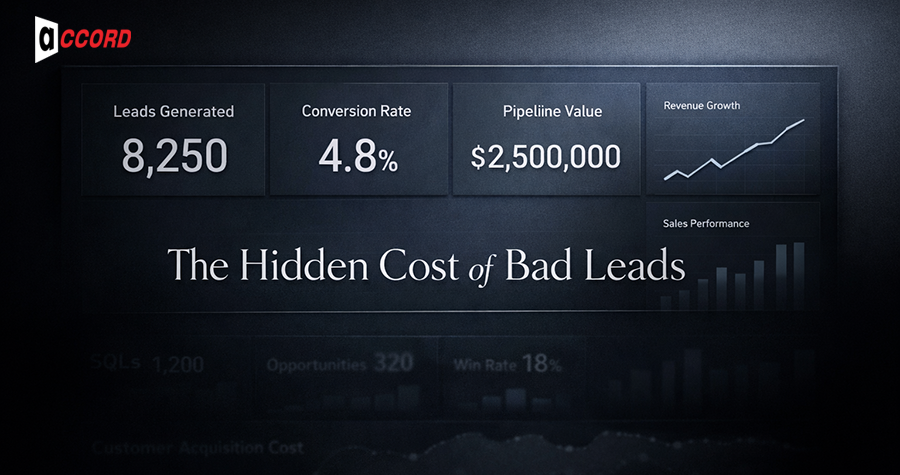
Why does our pipeline look full, but our income doesn't seem to be moving?
Because volume without relevance is slowly eating up budgets, time, and trust. The hidden cost of bad leads is no longer hidden in 2026. It is showing up in slow growth, sales teams that are burned out, and higher costs for getting new customers. Gartner and Forrester are two companies that do ongoing research on the industry. They say that B2B teams are getting more leads than ever, but they are closing fewer deals for every dollar they spend. That space is where growth goes to die.
When More Leads Don't Mean More Money
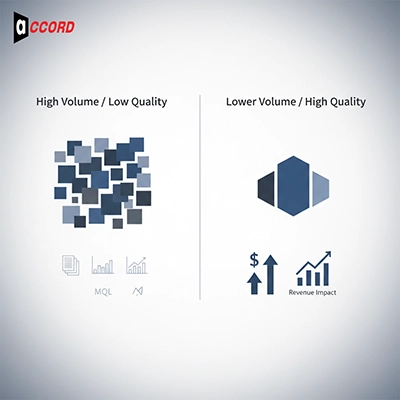
For a long time, B2B teams had a simple belief. More leads meant more money. It made sense. Fill the funnel and let sales handle the rest. Growth would come. That reasoning worked in 2016. It didn't work very well in 2020. It is hurting businesses right now in 2026.
I have talked to CMOs who are proud to show off dashboards with thousands of new contacts every month. Then, when things are quieter, they admit that sales haven't changed much. Sales leaders have a different story to tell. Their teams are overworked, doubtful, and more and more likely to ignore marketing leads altogether.
This is where the talk about B2B lead generation strategy has changed. The argument is no longer about how many leads you can get. It's about lead quality vs quantity and how the wrong balance slowly destroys trust in the whole revenue engine. Data is what makes this moment so important. It's easier than ever to find the right buyers with modern tools, intent platforms, and analytics. But a lot of businesses still go after volume because it looks good on reports. That disconnect is costing money right now.
Getting to the Bottom of the Problem
The Main Problem: Quality vs. Quantity of Leads
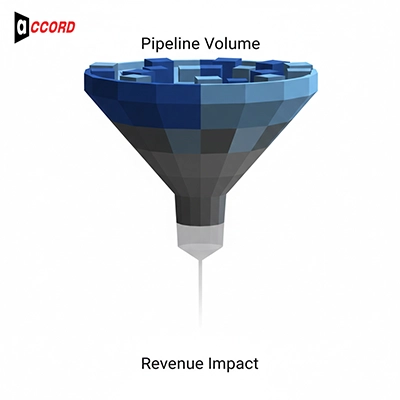
At its heart, the question of lead quality versus quantity is not a philosophical one. It is a practical one. High-quality leads fit your ideal customer profile, show real signs that they want to buy, and have the right amount of money to spend. High-volume leads just fill up a database.
B2B buying cycles are longer and more complicated and involve more people in 2026. A random mid-level manager downloading an ebook doesn't make a difference anymore. Sales teams need to know what's important, when to do it, and why.
The market has changed more quickly than most teams thought it would. Paid channels bring in a lot of traffic, but that traffic often doesn't have any purpose. It's easy to get emails with automation, but it's not easy to check for real demand. The end result is pipeline inflation that seems useful but doesn't work well.
That's why experienced teams are changing their B2B lead generation strategy to focus on results instead of activities. They are asking harder questions sooner. Who is this for? Why now? What problem are they trying to solve right now?
The Unseen Costs of Bad Leads
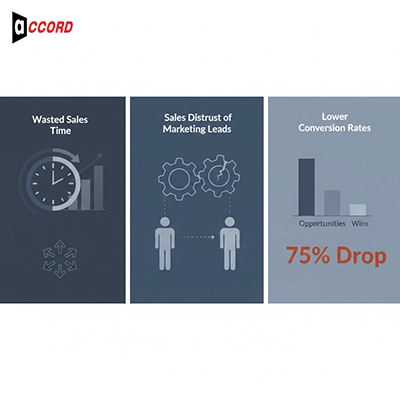
Bad leads do more than just not convert. They hurt performance on purpose. Salespeople waste hours trying to get in touch with people who never wanted to buy. They eventually stop trusting leads that come in.
There is also a cost in terms of money. Every low-quality lead costs money to get, platform fees, enrichment costs, and time from people. That waste turns into lost revenue when multiplied at scale.
It's hard to measure brand damage, but it's easy to feel. People who get outreach that isn't relevant remember it. That memory is important in crowded B2B markets. A lead generation strategy that focuses on revenue understands that reputation builds up over time, just like revenue does.
Bad Leads vs. Revenue Effect (A Quick Look)
Bad leads cause little problems that get bigger and bigger until they cost you a lot of money. This short table shows in very real terms how bad leads hurt B2B growth, without getting bogged down in numbers or theory.
How low-quality leads create cascading damage across your B2B growth engine
|
Lead Quality Issue |
Affected Team |
Immediate Effect |
Long-Term Revenue Impact |
|
Wrong ICP fit |
Sales |
Hours wasted on outreach that goes nowhere |
Lower close rates, rep burnout, high turnover |
|
No purchase intent |
SDR / BDR |
Zero response rate, empty call queues |
Inflated pipeline, missed quota, bad forecasting |
|
Budget mismatch |
AE |
Deals stall at pricing, late-stage drop-off |
Longer sales cycles, wasted deal cycles |
|
Wrong decision-maker |
Sales |
Champions with no authority, multi-month loops |
Deals die at legal/finance; CAC spikes |
|
Low engagement signals |
Marketing |
MQL targets met, but SQL rate collapses |
Marketing-sales misalignment, trust breakdown |
|
Irrelevant outreach |
Brand / All |
Prospects unsubscribe, mark as spam |
Reputation damage, domain blacklisting, lost future deals |
|
High enrichment cost, low ROI |
RevOps |
Platform fees stack up with no conversion |
Wasted budget, poor ROAS, reduced future spend |
Making a Strong B2B Lead Generation Plan
Why Data Is Now the Most Important Thing
Growth teams today don't make guesses. They look. You can't avoid data-driven lead generation anymore. It is the base.
Inputs that are clean are important. Even the best targeting won't work if the B2B data isn't clean. Job titles change. Businesses change course. Buying groups change over time. Teams that use static lists are always behind the times.
A good B2B lead generation strategy starts with data sources that have been checked, regular cleaning, and clear responsibility for making sure the data is correct. This doesn't mean getting bigger databases. It means using fewer records in a smarter way.
I have seen that the best teams treat data like stock. They check it, update it, and throw away anything that doesn't fit anymore. That one discipline can often double conversion rates without costing more.
Making sure leads are in line with revenue goals
At one point, marketing qualified leads sounded advanced. In 2026, they are often the cause of problems. Marketing qualified leads once sounded advanced. In 2026, they are often the problem. Sales-ready leads tell a clearer story. They reflect timing, intent, and fit. They show timing, purpose, and fit.
When marketing and sales agree on what "readiness" really means, things go smoothly. There are fewer failed handoffs. Deals don't stall as often at the beginning.
This alignment makes things clear. Who do we really sell to? What signals are important? And what makes a lead not good enough right away? These talks help shape a B2B lead generation strategy that focuses on real metrics that help the business make money instead of just looking good.
Scoring and Qualifying Leads
Making the Lead Qualification Process Real
A clear lead qualification process helps sales teams focus on prospects with real intent and decision-making power. Too many frameworks look good on paper but don't work in real life.
Effective qualification is based on how relevant the role is, who owns the budget, and how urgent it is. If a lead can't change a decision, pay for the solution, or explain a problem, it's not a priority.
This doesn't mean you should ignore early interest. It means putting an honest label on it. Sales teams value honesty more than hope.
Strong teams look over their qualification rules every three months. The markets change. Signals change. Static definitions cause contamination in the pipeline.
Building a Lead Scoring Framework That Sales Trusts
Sales should find a lead scoring framework easy to understand. Reps won't trust a lead if they can't tell them why it scored high.
The best models blend behavior, firmographics, and buying signal analysis. Visits to a page are important. But the situation is more important. Looking at a blog post after a funding announcement is different from reading a pricing page.
Intent-based targeting strengthens scoring when used carefully. It brings attention to accounts that are already looking for answers. If you use it wrong, it makes noise. When used correctly, it helps you focus and shortens cycles.
Finding the Right Decision -Makers
Decision-maker identification has become harder and more important. Buying groups are bigger. Power is shared.
Teams that work well look at more than just titles when they map out who has power. They know who starts research, who controls the budget, and who stops deals at the last minute.
Outreach gets better when it understands this complexity. Messages go from being general to being specific to the role. This is when the difference between lead quality and quantity shows up in daily work.
A small list of the right people always does better than a huge list of random contacts.
Advanced Tips for Getting High-Quality Leads
Prospect Validation Workflow in Practice
A prospect validation workflow may sound technical, but it's really just people. It only asks one thing. Is this person real, important, and easy to get in touch with?
Validation includes checking data, looking at behavior, and sometimes doing a manual check. It slows down volume a little but makes results much better.
Teams that offer this as a service often see sales right away that build trust. Fewer unexpected things. Not as many dead ends.
Intent-Based Targeting That Works
When you combine intent-based targeting with patience, it works best. Not every signal means you should buy now. Some mean to learn more. Compare is what others mean.
Smart teams change their messages based on how strong the signal is. Soft intent gets an education. Strong intent gets direct outreach. This small difference makes the difference between good programs and spam.
Clean Data as a Way to Get Ahead of the Competition
Clean B2B data is boring until it is missing. Duplicate records, old roles, and dead emails quietly hurt performance.
Regular audits, policies for adding new features, and policies for letting systems go bad keep them usable. Teams that put money into this area win quietly and consistently.
Important Metrics for 2026
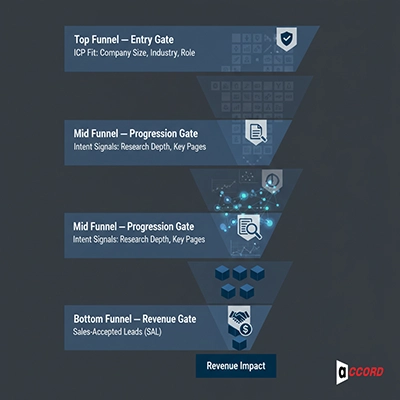
The number of leads alone doesn't mean anything. Revenue-focused lead generation tracks contribution.
Lead to opportunity conversion, opportunity to close rate, and revenue per lead are some of the most important metrics. These numbers show the truth quickly.
Behavior changes when leaders look at these numbers. Campaigns get sharper. The targeting gets better. You can see the trash.
This change makes B2B lead generation strategy a way to grow, not just a way to report on it.
My Personal Experience
In 2025, I helped a mid-market SaaS company get more than 40,000 leads in a year. The money barely changed. Sales didn't pay attention to most of the people who contacted them.
After changing their scoring, making qualifications stricter, and focusing on finding decision-makers, the number of leads dropped by 60%. In just two quarters, revenue went up by 28%.
Another company put money into generating leads and analyzing intent based on data. They cut their paid spending in half and doubled the rate at which sales were accepted. There was nothing magical that happened. Focus did.
Common Mistakes and How to Stay Away from Them
It feels safe to chase quantity. It fills up dashboards. It fails without making a sound.
Not paying attention to intent wastes chances. Making scoring too complicated makes people less trusting. Not getting the difference between quality and quantity of leads causes endless stress.
Another firm invested in data-driven lead generation and intent analysis. Take measurements of what matters. Disqualify with force. Align without stopping.