
Quick Answer
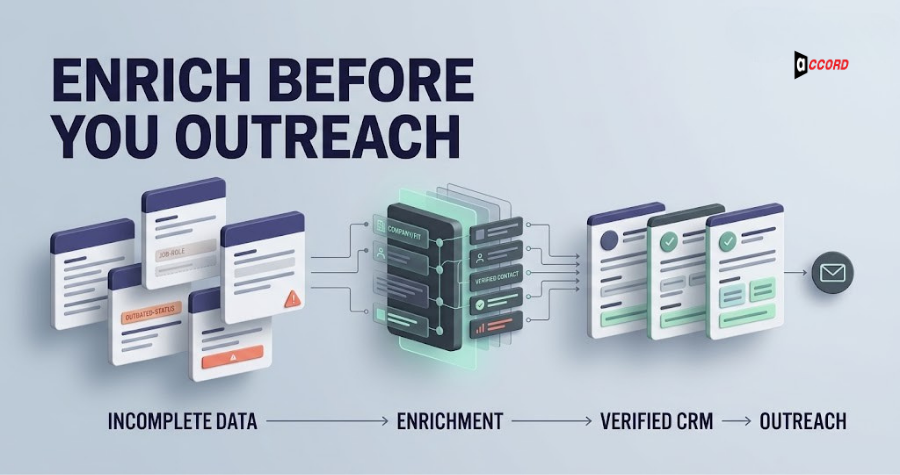
CRM enrichment should happen before a sales campaign because outreach performance depends on data quality before any message is sent. If a CRM has outdated contacts, missing job titles, wrong company details, weak segmentation, or unverified emails, the campaign starts with avoidable risk. Enrichment helps sales and marketing teams know who they are contacting, why the account matters, which message fits, and whether the contact can be reached safely.
For B2B companies, CRM enrichment is not just admin work. It supports deliverability, personalization, sales prioritization, SEO-informed account targeting, answer-ready content planning, and AI-search visibility when account insights are turned into useful market pages or sales assets.
What CRM Enrichment Means
CRM enrichment is the process of improving existing CRM records with accurate, current, and useful business data. That can include contact names, verified email addresses, job titles, LinkedIn profiles, company size, industry, location, technology usage, funding signals, hiring activity, website URLs, and buyer-role notes.
The goal is not to fill every field possible. The goal is to add the fields that help a sales team make better decisions.
A clean CRM should answer basic questions quickly:
- Who is this account?
- Who is the likely decision maker or influencer?
- Is the company still a fit?
- Is the contact still at the company?
- What segment does the account belong to?
- What problem or trigger makes outreach relevant?
- What channel should the team use first?
If those answers are missing, a sales campaign becomes guesswork.
Why Enrichment Should Happen Before Outreach
Many teams treat CRM enrichment as something to fix after a campaign underperforms. That usually means the damage has already happened. Emails bounce, inbox reputation weakens, sales reps waste time, and prospects receive messages that do not match their situation.
Before a campaign, enrichment gives the team a cleaner starting point. It helps remove bad contacts, identify better-fit accounts, group leads by segment, and write outreach that feels specific without becoming over-personalized.
This matters because campaign success is rarely caused by copy alone. Copy works when it is sent to the right person, at the right company, with the right context. CRM enrichment improves that context.
The Hidden Cost Of Weak CRM Data
Bad CRM data quietly affects every part of a B2B revenue workflow.
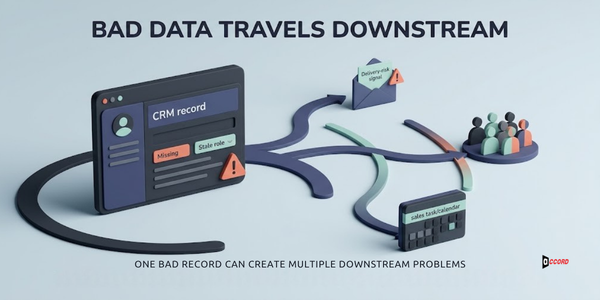
Sales reps spend time checking basic facts instead of talking to qualified buyers. Campaign managers build segments that mix different company sizes, roles, and needs. Marketing teams create generic nurture sequences because the data does not support useful personalization. Leadership reviews campaign numbers without knowing whether the audience was clean enough to judge the strategy.
Weak CRM data can also hurt email deliverability. If a campaign includes old addresses, role-based inboxes, risky domains, or contacts who no longer work at the company, bounce rates and negative engagement can rise. That makes future campaigns harder even when the message is stronger.
What To Enrich Before A Sales Campaign
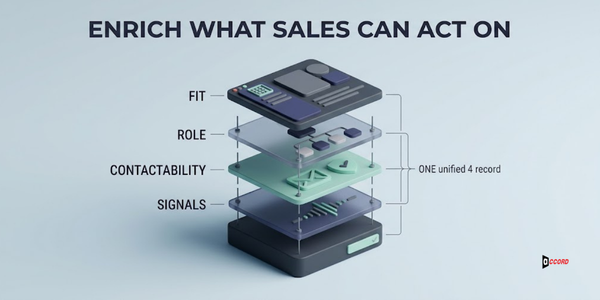
Start with fit data. This includes industry, company size, location, revenue range if available, business model, website, market served, and whether the account matches the offer. Fit data helps decide whether the account belongs in the campaign at all.
Then enrich role data. Job title, department, seniority, function, LinkedIn URL, and decision-making relevance help sales teams choose the right contact path. A CFO, founder, marketing director, and operations lead may all care about different outcomes.
Next, enrich contactability data. Verified work email, domain status, phone availability where appropriate, and suppression checks help protect deliverability and reduce wasted sends.
Finally, enrich timing and signal data. Recent hiring, funding, product launches, technology changes, location expansion, website changes, and content activity can make outreach more relevant. These signals should be used carefully. The point is to connect a real business context to a clear reason for outreach.
CRM Enrichment And Segmentation
Segmentation is where enrichment starts turning into campaign strategy. A database with 5,000 contacts is not automatically useful. A database with 500 well-matched accounts grouped by industry, role, problem, and readiness can produce better learning.
Useful campaign segments might include:
- SaaS companies with small sales teams and hiring signals.
- Local service companies with weak website conversion paths.
- Ecommerce brands with inconsistent product listings.
- B2B companies publishing content but missing answer-ready pages.
- Founder-led companies that need LinkedIn visibility and lead generation support.
These segments allow teams to write sharper emails, build better landing pages, and create content that matches buyer questions.

How CRM Enrichment Supports SEO, AEO, And GEO
CRM enrichment can inform SEO when account and market patterns reveal what buyers are searching for. If many target accounts ask about CRM cleanup, cold email deliverability, product listing SEO, or AI visibility, those themes can become keyword-informed blog topics and service-page sections.
It supports AEO because enriched account data shows the questions buyers ask before they speak to sales. Those questions can become answer-first headings, FAQs, and quick definitions.
It supports GEO because AI search systems need clear entity relationships and consistent service context. When Accord Tech Solutions connects CRM enrichment to lead generation, cold email, SEO, AEO, and GEO, web design, and social media content, the brand becomes easier to understand as a B2B growth partner. The content should still stay factual and useful, without forcing claims or pretending AI citations are guaranteed — a principle also reflected in Google's guidance on creating helpful, reliable, people-first content.
What To Avoid
Do not enrich data just because a tool can find it. Too many fields can make the CRM harder to use. Avoid collecting irrelevant personal details, unverified assumptions, or data that the sales team cannot act on.
Do not use enrichment as an excuse to send robotic personalization. Mentioning a prospect's job title or company name is not enough. The message should connect the account context to a relevant business problem.
Do not launch a large campaign immediately after enrichment. Test a smaller segment first. Watch bounce rate, reply quality, spam complaints, meetings, and sales notes. Then adjust the data model and message before scaling.
A Practical CRM Enrichment Workflow
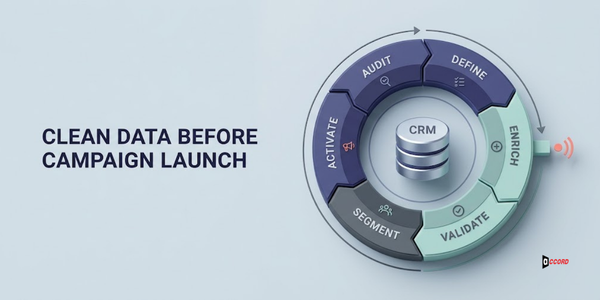
- Audit the current CRM. Check duplicate records, missing fields, invalid emails, outdated job titles, unclear account ownership, and old campaign tags.
- Define the campaign goal. A lead generation campaign for booked calls needs different data than a reactivation campaign or newsletter nurture.
- Choose required fields. Keep the field list focused: company fit, contact role, verified email, segment, source, trigger, and next action are often enough for the first pass.
- Enrich and validate. Use reliable sources, human review for priority accounts, and email verification before sending.
- Segment and score. Separate good-fit accounts from research-only accounts, partner accounts, customers, and suppressed contacts.
- Connect the enriched data to messaging. Sales copy, landing pages, SEO pages, and FAQ content should reflect the same buyer problems.
Where Accord Tech Solutions Fits
Accord Tech Solutions helps B2B teams connect CRM enrichment with practical growth execution. That can include lead list building, data cleanup, account research, verified contact sourcing, cold email preparation, SEO content planning, AEO-friendly blog structure, GEO-focused entity clarity, website conversion support, and social media content that builds trust before outreach.
The useful part is the connection between services. Clean CRM data helps outreach. Outreach insights help content. Content supports search visibility. Website pages convert more visitors when they answer the same questions sales hears every week. To discuss a campaign-ready enrichment workflow, contact Accord Tech Solutions.
CRM Enrichment QA Checklist Before Launch
Before a campaign goes live, run a practical QA pass. Check a sample of high-priority accounts manually. Confirm that company domains open, contacts still appear connected to the company, job titles match the intended buyer role, email validation status is present, and suppression rules are applied.
Also check whether the segments make sense from a message perspective. If a segment cannot support a specific pain point, it is probably too broad. The campaign should not need a vague email to cover messy data. The data should be clean enough to support a clear message.
A useful QA review should include:
- Duplicate account and contact checks.
- Required field completion.
- Domain and website validation.
- Email status review.
- Source URL review.
- Segment consistency.
- Suppression and opt-out checks.
- Sample account notes for priority records.
- CRM import formatting.
- Owner and follow-up routing.
This step keeps enrichment connected to sales execution. A spreadsheet can look complete but still fail if fields do not map cleanly into the CRM or if sales cannot tell what action to take next.
Compliance And Sender Reputation Notes
CRM enrichment should also protect email quality. Gmail's sender guidelines require authentication basics such as SPF or DKIM for all senders, and Gmail's requirements for bulk senders add stronger thresholds once a sender crosses a daily volume level. The FTC's CAN-SPAM compliance guide also makes clear that commercial email must avoid misleading headers and subject lines, include a valid physical address, provide opt-out handling, and honor opt-out requests promptly.
Production teams should verify the current legal and platform rules before launch. From a content standpoint, the article should avoid promising deliverability, replies, meetings, or revenue. CRM enrichment improves the inputs. It does not control the market, the offer, the buyer's timing, or inbox-level filtering.
Frequently Asked Questions
What Is CRM Enrichment?
CRM enrichment means improving existing CRM records with accurate company, contact, role, fit, and signal data so sales and marketing teams can use the records more effectively.
When Should CRM Enrichment Happen?
It should happen before campaign planning and again before launch. A light refresh before each major campaign helps remove outdated contacts and sharpen segmentation.
Does CRM Enrichment Improve Cold Email Results?
It can support better results by reducing bad contacts, improving segmentation, and giving sales teams stronger context. It does not guarantee replies or meetings.
What Fields Matter Most For B2B CRM Enrichment?
The most useful fields usually include company name, website, industry, size, location, contact name, job title, seniority, verified email, LinkedIn URL, segment, trigger, and source.
How Does CRM Enrichment Help AI Search Visibility?
CRM enrichment can reveal buyer questions and market patterns. Those insights can be turned into answer-ready pages, FAQs, and structured content that makes a company's services easier for search engines and AI systems to understand.