

Marketing owns a lead until sales accepts it, and sales owns it from the moment it is assigned. One senior person owns the result: the founder in an early-stage company, or the head of sales in a growth-stage one. That person holds the meetings-held number and can change the rules. Marketing and sales should write those rules together: what counts as a good lead, how fast someone must reply, and why a lead gets rejected. Once those rules exist, each step has one named owner. A team without a RevOps role cannot afford "we both own it," because in practice that means a lead sits untouched while each side assumes the other has it. You need one hour from each leader and access to the CRM.
What is a marketing-to-sales handoff, and why does it fail?
A handoff is the moment one person becomes responsible for a lead that someone else found. A form fill that lands in a CRM is not a handoff. A handoff happens when the receiving person takes a recorded action: a reply, an accept or reject decision, or a booked call. Until then, the lead is in transit, and nobody is responsible for it.
Handoffs fail for three ordinary reasons:
- Each side is measured on a different number. When marketing is measured on leads created and sales on deals closed, the days between those two moments belong to nobody's scorecard.
- "Good lead" is not written down. Marketing sends what it believes is qualified. Sales ignores what it believes is not. Neither side hears why.
- Nobody can change the process. Both teams complain about a stuck handoff. Neither has the authority to change routing, required fields or rules.
Larger companies often solve this with a revenue operations role. If you have no such role, the job falls between two busy leaders, and each of them has a reason to assume the other one is handling it. The method below works without a new hire.
Who should own the handoff, marketing or sales?
Some teams choose joint ownership, with shared targets and shared service levels. Sharing the definitions is right. Co-owning the action is where it breaks. A lead needs one person who answers for it today.
Use this split:
- Marketing owns the lead until sales accepts it. That includes the quality of the source, the data on the record and the note that explains why this person asked.
- Sales owns the lead from the moment it is assigned. That includes the first reply, the accept or reject decision and the booked meeting.
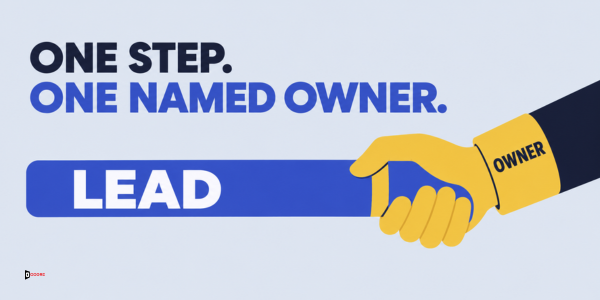
- One senior person owns the result. In an early-stage company this is the founder. In a growth-stage company it is the head of sales or a revenue leader. This person does not run every step. They hold the meetings-held number, and they have the authority to change routing, required CRM fields and the rules in the agreement below.
The senior owner is the part most teams skip. Without that person, a disagreement between marketing and sales has no place to end.
Which four handoffs need a named owner?
Most B2B teams without RevOps have the same four handoffs. Write them down, and put one name in each row, not a department.
| Handoff | Owner | What "done" looks like in the CRM | Clock to agree on |
|---|---|---|---|
| Form fill or demo request to first human reply | Sales rep or SDR on duty | A person, not an automatic message, has replied | Hours, in business time |
| Marketing lead to accepted or rejected lead | Sales manager | An accept or reject decision with a reason code | One to two business days |
| Cold email reply to booked meeting | The rep who sent the sequence | A meeting is on the calendar, or the reply is closed with a reason | Same business day for a positive reply |
| Booked meeting to held meeting | The person who will run the meeting | The meeting happened, or was rebooked within a week | Reminders sent 24 hours and one hour before |
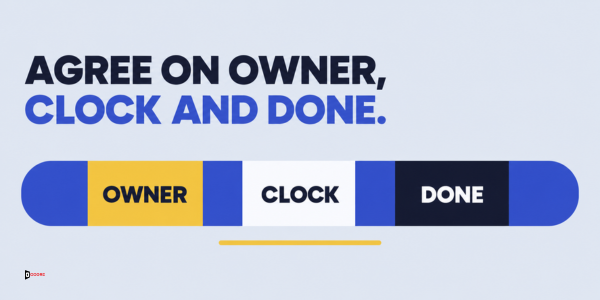
You choose the clocks. Start with numbers your team can actually keep, measure for a month, and tighten them later. A clock nobody meets teaches everyone to ignore clocks.
Two more handoffs are easy to forget. The first is closed-lost feedback: when sales loses a deal because the lead never fit, that reason should return to whoever sourced the lead. The second is the sending domain. If marketing email and sales outreach share a domain, a spike in spam complaints from one can damage the other, so someone should be allowed to slow sending down.
What goes in a one-page handoff agreement?
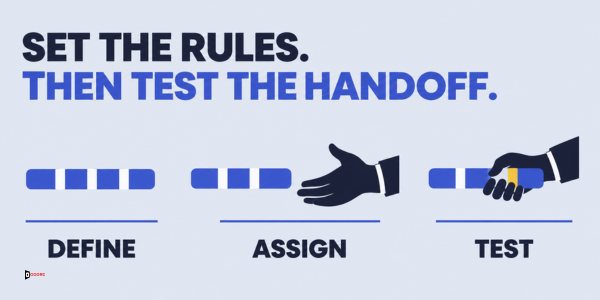
Write the agreement in plain language, put it where both teams can see it, and get the head of sales and the head of marketing to sign it. Use this template and fill in the brackets:
- A qualified lead is a person in the role of [role] at a company with [size range] employees in [industries]. A lead missing any of these three is nurtured, not passed to sales.
- Marketing passes a lead with a note: what the person did, what they asked for, and the page or message that brought them.
- Sales replies within [hours or days], using a person, not an automatic message.
- Sales accepts or rejects within [days], and every rejection carries one reason code from the list below.
- The senior owner is [name]. They can change routing, required fields and this agreement, and they can pause a campaign that produces leads nobody can follow up.
- We review stuck leads every week in a 15-minute check. Marketing brings the new leads. Sales brings the rejections.
If nobody is willing to put a name in the brackets, you have found the real problem, and no tool will fix it.
How should the handoff differ by lead source?
One agreement can cover every source, but the clock and the note change with the source. A person who asked for a demo is further along than a person who attended a webinar, and the first reply should reflect that.
| Lead source | Owner of the first reply | Starting clock | What the note must include |
|---|---|---|---|
| Demo or contact request on the website | Rep or SDR on duty | A few business hours | The page, the form text and the date |
| Positive reply to outbound email | The rep who sent the sequence | Same business day | The reply copied exactly, plus which email step it answered |
| Webinar, event or social conversation | SDR or the person who ran the event | One to two business days | What the person did, such as attended live or asked a question |
| Referral or introduction | The account owner or founder | Same business day | Who made the introduction and what they said |
Treat these clocks as a starting point and adjust them after a month of real data. The point of the table is the pattern: the closer a person is to a decision, the shorter the clock and the more specific the note.
What about weekends, holidays and time zones?
A clock written in business hours still breaks when the person who owns it is away. Decide three things in advance. First, name a backup for every owner, and write the backup in the table. Second, say which time zone the clock uses. A firm with a rep in one country and leads in another needs one answer, or two people will measure the same lead differently. Third, decide what happens on a holiday: either a named person covers the inbox, or the automatic reply states the next working day honestly. An automatic reply that promises a response "shortly" teaches buyers to wait, and an honest date lets them plan. Add the backup and the time zone to the one-page agreement, so the rule is visible on the day it is needed.
Which rejection reasons should sales record?
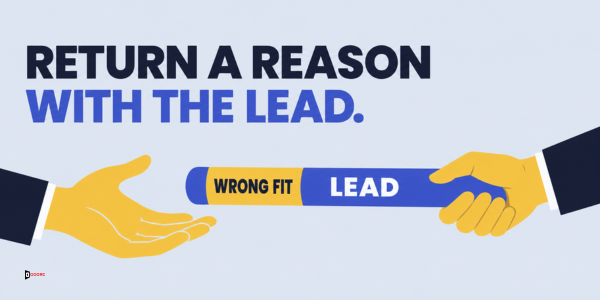
A rejection without a reason teaches marketing nothing. A free-text reason is hard to count. Use a short drop-down in the CRM with a fixed list, and let the reps pick exactly one:
- Not our target customer (wrong size, industry or region)
- Wrong person (right company, no buying role)
- No need or no budget right now
- Already a customer, or already in a conversation with sales
- Duplicate, junk or test submission
- Could not reach the person after the agreed number of attempts
Count the reasons once a week. If most rejections say "wrong person", marketing should change who it targets or what the form asks. If most say "could not reach", the lead data or the follow-up speed is the problem, and sales owns half of that. The list turns an argument into a count.
How do you check that a handoff is really owned?
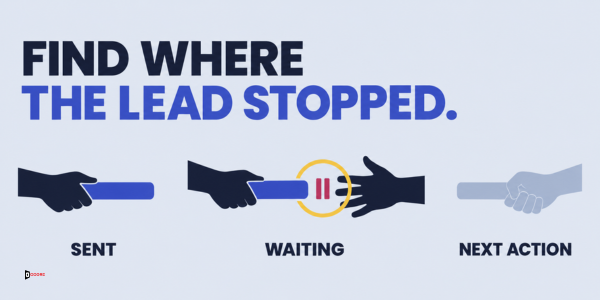
Run a lost-lead trace every week. Pick five leads from the last two weeks that did not become meetings. For each one, answer five questions:
- Where did the lead come from?
- Who touched it first, and when?
- Where did it stop moving?
- According to your table, who should have moved it at that point?
- Did that person know the lead was theirs?
If question five gets "not really" more than once, the table exists on paper only. Tighten the definition of "done" for that handoff and tell its owner directly. The trace takes 15 minutes, and it finds problems that a summary count will not show. Clean CRM records make the trace much faster, so our guide on what dirty CRM data costs a sales team is a good companion. For a wider look at keeping the pipeline honest, read sales pipeline hygiene for cleaner forecasts.
What should a handoff note say?
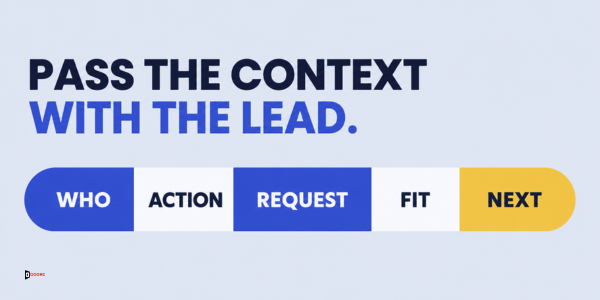
A lead without context forces the rep to start from zero. Require a short note on every lead that marketing passes, and keep it to five lines:
- Who: name, role, company and size.
- What they did: the form, page, download or reply that created the lead, with the date.
- What they asked for: their own words, copied exactly if they wrote a message.
- Fit: which of the three definition points (role, size, industry) the lead meets and which it does not.
- Suggested next step: reply with times, send a resource, or nurture, with one reason.
Two rules keep the note useful. Copy the buyer's words instead of paraphrasing them, because the rep's first reply sounds far better when it answers the question the buyer actually asked. And store the note in a CRM field, not in a chat message, so the weekly trace can find it later. A note takes two minutes to write and saves the rep a research step. If marketing cannot fill in the "what they asked for" line, the lead is probably a download and not a request, and it belongs in nurture.
How do you roll this out in two weeks?
- Days 1 to 3: Write the qualified-lead definition and the rejection list with both leaders. Argue about it now, not after a lead is lost.
- Days 4 and 5: Name the owner for each of the four handoffs, and name the senior owner. Send a short message to the whole team so nobody learns their role by accident.
- Days 6 to 14: Add the reason-code drop-down and a "first reply sent" field to the CRM. Run the first 15-minute check on Friday and trace five lost leads.
After two weeks you have an agreement, owners, a reason list and a first trace.
What if sales rejects most of the leads marketing sends?
Do not argue about it in a meeting. Run a joint review of ten rejected leads, with both leaders in the room and the lead records open. For each lead, ask whether a reasonable person would call it a fit. There are only two outcomes.
If most of the ten are clearly not a fit, marketing changes the source, the form or the targeting, and the agreement stays the same. If most of the ten look like a fit, the definition in point one of the agreement is wrong or too vague, and the leaders rewrite it together. Either way, the senior owner records the decision and the date. A lead scoring model can help once the definition is stable, and our guide to a B2B lead scoring model sales teams can trust explains how to build one without hiding the rules.
Imagine: the webinar leads nobody called
The details of this example are invented. Imagine a 60-person IT services firm that hosts a monthly webinar for operations managers. Marketing counts every registrant as a lead and reports strong numbers. The sales team sees a long list each month, notices that many names are junior coordinators, and quietly stops calling.
After three months the founder asks why the webinar budget has produced no meetings. Marketing points to registrations. Sales points to lead quality. Both are telling the truth.
The founder names the head of sales as the senior owner and asks both leaders to write the one-page agreement. They agree on one rule: registrants who attended live and work at companies above a set size go to a rep within one business day, and everyone else receives a follow-up email series. Sales records an accept or reject reason on every lead. At the next weekly check, the team looks at one short list instead of a long argument, and the first rejection counts show where the webinar invitation reaches the wrong audience.
What about a founder-led team or an outsourced SDR?
A founder is the only salesperson. The founder is both the sales owner and the senior owner. Keep the agreement anyway. It protects the best lead of the month from sitting in an inbox during a travel week, and it gives the first marketing hire a written rule to work from.
An agency or outsourced SDR handles part of the path. The partner owns its rows in the table and does the work. A person inside your company still owns the whole path, checks the partner's rows weekly and has the final word on routing. Contracts should say who owns the data, the sending accounts and the reply inbox.
Frequently asked questions
Who should own the marketing-to-sales handoff at a startup?
The founder or the first sales leader. What matters is that one person holds the result and has the authority to change how leads are routed. Name that person in writing.
What is the difference between a lead handoff and a meeting handoff?
A lead handoff moves a contact from marketing to sales for a decision. A meeting handoff moves a booked call from the person who set it to the person who will run it. Both need an owner, and they are often different people.
How fast should sales respond to a new lead?
Pick a clock you can keep and measure it for a month. A reasonable starting point is a few business hours for demo requests and one business day for replies to outreach, then tighten the numbers once you see your real response times. A clock that nobody meets does more harm than no clock.
How do we know a lead has really been handed off?
When the receiving owner has taken a recorded action: a reply, an accept or reject decision with a reason, or a booked call. Assigning a lead in the CRM is only a label.
Next step
If you would like help filling in the handoff table and the one-page agreement for your team, book a 30-minute working session with the Accord team: book a 30-minute working session. Bring five leads from last month that never became meetings, and trace them together.