
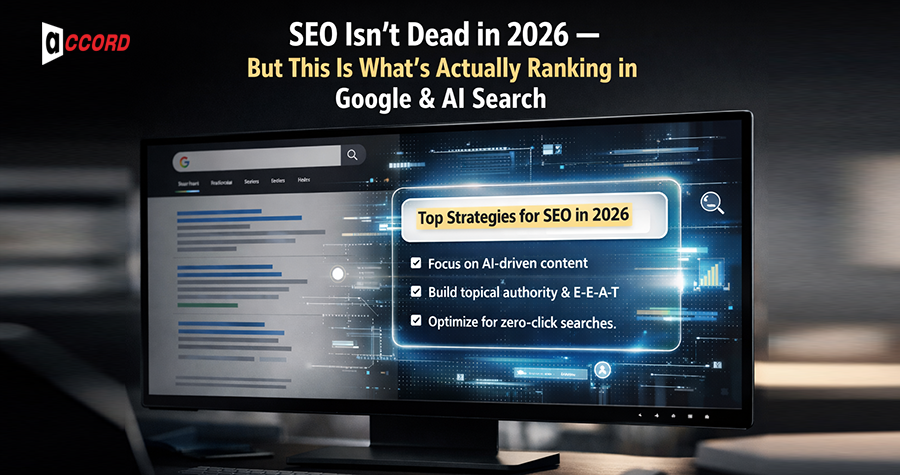
SEO is not dead, but search is no longer the same as it used to be. People no longer click on links as they used to; instead, they ask Google, ChatGPT, and utilize tools like Gemini and Perplexity. These tools read many pages, summarize them, and choose the best answers, so most people get what they need without visiting a website.
This change has shifted the rules of search completely. Your site may still rank on Google, but if these tools do not reference your content, you remain invisible to the people who matter. That means fewer visitors and fewer leads, even if your rankings look fine.
In this article, I’ll show you how things will look in 2026, how Google AI will impact SEO, and what you get cited in ChatGPT and Gemini’s answers. You will learn why many high-ranking pages lose traffic, and how to make sure your content is not just indexed but actively used by these AI-driven search tools.
If you want your business to stay visible, trusted, and chosen in this new search landscape, understanding AI search optimization is where it begins.
Why Your Rankings Are Stable but Your Traffic Is Falling
Your Google rankings might look good, but your traffic can still drop. This is happening because most people do not click on links like they used to. In 2025, around 60% of Google searches ended without a click, and on mobile, it can go up to 77%. Now users get answers directly from the AI overview without visiting any websites.
Even if your page is at the top, it can be invisible if it is not shown in these answers. Only about 8% of users click links under AI summaries. That means ranking alone is not enough anymore.
This is why AI search optimization and zero-click search optimization matter. They help content find, trust, and cite on AI tools. If you want traffic, leads, and visibility in 2026, you need to look at new methods.
What “Ranking” Means in the Modern Search World
Ranking today is different from what it used to be. Being number one on Google does not always mean people will see or use your content. Now, there are three ways your content can be visible.
The first is your Google SERP position, the classic ranking you already know. The second is being included in answer summaries, where search tools show your content directly in the results. The third one is a brand or content mentioned.
To stay relevant, you need to focus on all three. Just aiming for Google rankings is not enough anymore. You need content that is easy to read, trusted, and referenced. This is where Google AI SEO and a strong LLM SEO strategy help. They make sure your brand shows up in search results and in direct answer summaries.
Google Rankings vs Answer Visibility
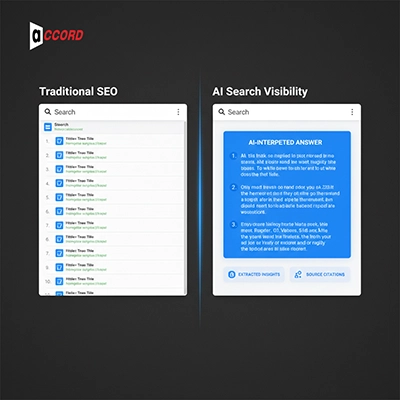
Many people think that ranking #1 on Google is enough. It is not. Tools like Google Overviews, ChatGPT, and Gemini do not just pick the top page. They choose content that is clear, trustworthy, and easy to understand.
Here is a simple comparison:
|
Feature |
Google Ranking |
Answer Visibility |
|
Purpose |
Show your page at the top of the search results |
Show your content in direct answers or summaries |
|
User Action |
Users must click the link |
Users see the answer without clicking |
|
Content Style |
Keyword-focused, optimized for search engines |
Clear, structured, and easy to read |
|
Measurement |
Impressions, clicks, position |
Citations, references, and inclusion in summaries |
|
Traffic Impact |
Drives clicks to your site |
Builds trust and influence even without clicks |
Even if your page ranks #1, it may never be referenced in answer summaries. That is why AI search optimization matters. Your content must be readable, trustworthy, and well-structured. This helps it get included and keeps your brand visible as search changes.
What Is a ChatGPT or Gemini Citation
A citation is when your content is mentioned as a trusted source. Tools like ChatGPT and Gemini choose what to cite based on authority, clarity, and relevance. Being cited builds trust and visibility, even if users do not click your page.
Optimizing for citations is part of ChatGPT citation SEO. It ensures your brand is recognized and included in answers. When combined with a strong LLM SEO strategy, citations keep your content visible, relevant, and chosen by people looking for it.
How Search Tools Decide Which Websites to Cite
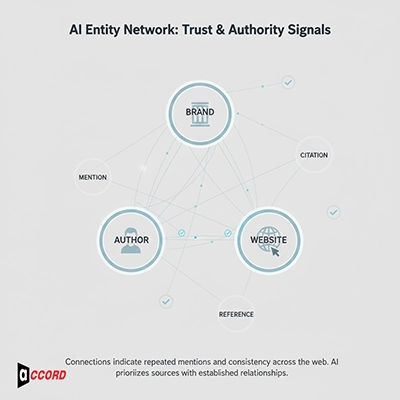
Search is different now. Tools do not just look at pages or keywords. They check brands, people, and companies. They want to know which ones can be trusted.
It is not enough to have one page that is well-optimized. Your brand must appear in blogs, reviews, guides, and mentions. The more your brand is seen and referenced, the more tools trust it. Brands with consistent mentions are more likely to be cited than brands that appear only once.
Why Entity-Based SEO Works Better Than Keyword SEO
Old SEO focused only on keywords. That is not enough anymore. Tools now check your brand across the web. They look at how often your brand is mentioned, linked, and referred to.
A company that shares knowledge in blog posts, appears in industry guides, and is mentioned on other websites builds trust. Entity-based SEO connects all these signals and shows that your brand is credible. Using brand mention optimization makes sure every reference strengthens your authority.
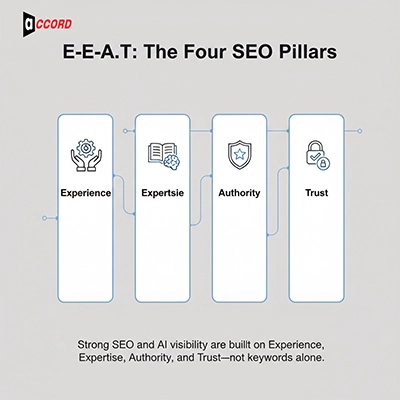
How Experience, Expertise, Authority, and Trust (E-E-A-T) Work
E-E-A-T stands for Experience, Expertise, Authority, and Trust. Search engines use this information to determine the authenticity of your content. They look at who created it, whether the artist or logo is reputable, and whether they are recognizable to others.
Information from experts or trusted authorities is best. Sharing your knowledge and branding online builds authority. Optimizing for E-E-A-T with AI search optimization helps your content get noticed, cited, and trusted.
What Type of Content Wins in AI Answers
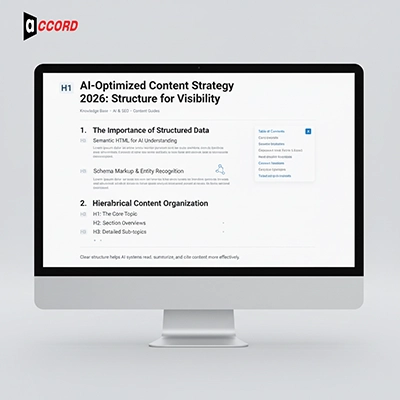
Content that gets noticed today is not just long or keyword-rich. Clean, organized, and easy to understand. Search tools and answer systems need data that can be quickly scanned and summarized. If your page is messy or hard to read, it will be skipped.
This is why AI content structure matters. When your content is well-organized, it becomes easier for tools to extract facts, quotes, and definitions. This improves your chances of appearing in summaries or answer boxes.
Optimizing your content in this way is part of answer engine optimization, which focuses on making your content ready to be pulled and cited.
Structure Matters More Than Long Articles
Length alone does not make content effective. Tools now favor content that is broken into clear sections. Headings, lists, short paragraphs, and tables make content readable. Each heading signals a topic. Each list or table provides quick facts.
A page with a 3,000-word block of text might rank on Google, but it is less likely to be included in an answer summary. A well-structured page of 1,200 words with headings, bullet points, and clear definitions is far more likely to be used.
Using schema markup for AI can further help search tools understand your content and increase its visibility. Structured content is easier to extract, cite, and reference, which is the ultimate goal in today’s search landscape.
FAQs, Definitions, and Lists Win
Question-answer formats, FAQs, and definitions perform extremely well. Tools scan pages for content that directly answers common questions. When your content provides clear answers, it becomes easy to include in summaries.
Lists and definitions also work because they highlight facts. They reduce reading time and make your page scannable. If someone asks a question, content formatted in this way has a higher chance of being chosen. Using answer engine optimization (AEO) techniques ensures that your content is not only found but also picked up and cited.
Combining this with AI search optimization strategies, like linking relevant pages and highlighting key terms, gives your content the best chance of being included in answers.
If your content is messy, long, and complex, it will be ignored. The goal is to make it easy for bots and users to read, understand, and trust.
How to Optimize Your Website for Search Engine AI in 2026
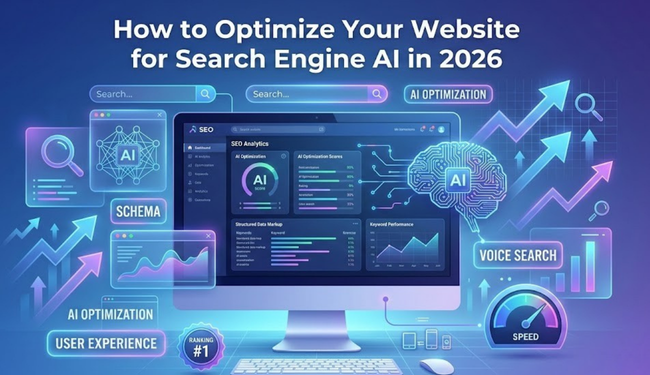
SEO in 2026 is about much more than just keywords and links. Your website should be AI-powered. This makes it easier for search engines to understand, trust, and use your data. AI search optimization is about improving quality in search results and search engines, not just rankings.
There are a few things you can do today to prepare your website for this new search engine.
Use schema tags to help search engines understand your data.
Schema markup is a way to label your content so that search engines can easily understand it. It explains the content of your page, highlights facts, and shows the relationships between topics. Pages with proper schema markup are easier to read, navigate, and index with search engines.
For example, marking up articles, FAQs, events, products, and reviews gives tools the structure they need to extract information correctly. Google AI SEO works better when your pages are labeled clearly. Schema does not just help rankings. It increases your chance of being cited in answer summaries.
Build Topical Authority Instead of Random Posts
Posting random articles will not make your brand trusted. Search tools now look for depth, consistency, and authority across a topic. This is why topical authority clusters are crucial. A cluster is a collection of relevant content about an important topic that shows your expertise.
If your content addresses a topic from multiple perspectives, links together, and answers questions effectively, users will take your brand seriously. This is part of entity-based SEO, which helps your brand get recognized and cited. Consistent clusters are more powerful than irrelevant posts shared on your website.
Turn Brand Mentions into Ranking Signals
Mentions of your brand on other sites are more than just backlinks. They are trust signals. When search tools see your brand repeatedly referenced, your credibility grows. Optimizing this process is called brand mention optimization.
High-quality mentions increase your E-E-A-T optimization. They show experience, expertise, authority, and trust. This helps your brand get picked up in answers, even if users do not click your site. Modern search engines rank brands that appear consistently across articles, guides, and reviews. The more your brand is mentioned, the more people will engage with your page.
Why are more SEO agencies failing in the AI Era?
Many SEO agencies still use traditional strategies. They focus only on keywords, links, and Google rankings. That used to work. But things have changed. Today, ranking high does not mean people will visit your site. Many get answers directly from summaries. If your pages are not referenced, your traffic quietly drops.
Old SEO does not track this. Agencies may say your rankings are strong. But your traffic and leads can still fall. This silent loss is happening in many industries. Companies can rank #1 for top keywords and still see fewer visitors.
Here is why old-school SEO is not enough:
-
Pages rank but are not referenced in answers.
-
Content is long and messy without headings, lists, or tables.
-
Traffic can drop slowly, even if your rankings seem fine.
To stay safe, you need a new way to get noticed in search and keep your visitors coming. Focus on:
-
Clear, structured, and easy-to-read content.
-
Building authority through topical clustering and brand mention.
-
Use schema markup to make your pages understandable.
In 2026, SEO isn’t just about the first page. It’s about being seen, trusted, and cited where people are looking for answers. To stay ahead, you need an open-minded partner. AI search optimization is no longer optional. It’s essential to increase visibility, leads, and profits.
What Smart Companies Are Doing
Smart companies don’t just follow trends. They take action and stay ahead of the game. They are adapting the way people search and how content is consumed. They are focusing on preparing their websites for AI so that their data can be understood, trusted, and shared.
Success isn’t just about ranking on Google. It is about clear, structured content, consistent authority, and being included in answers. Companies that act now use AI search optimization and answer engine optimization to stay visible and grow leads.
Here’s what they do differently:
Audit Content for Readability
The first step is to review your content. Many pages are hard to read or poorly structured. These pages may rank on Google, but get ignored in answers.
Smart companies audit their content to find:
-
Pages with long blocks of text and no headings.
-
Articles are missing clear definitions, lists, or tables.
-
Pages without proper schema markup
Aligning these issues will make your content simple, straightforward, and cited. A professional Google AI SEO service can help you identify and fix problems so your content can work in search results and the AI overview.
Add an AI-friendly answer section.
In addition, companies reformat their pages for answers. They contain commonly asked questions, forms, and short answer sections, making it easy for readers and search engines to understand.
This is called answer engine optimization (AEO). It includes:
-
Clear question-and-answer blocks.
-
Highlighting key facts for faster understanding.
-
Structuring pages so tools can reference and cite your content.
-
Using these methods increases visibility and trust.
-
Build an AI-Optimized Content Hub
The most successful companies group related content into clusters. This shows expertise and builds trust across the web.
A topical cluster is a group of pages that share a common topic. These pages are linked to your main hub. This will help search engines rank your content accurately.
The clearer, concise, and more concise your content is, the more likely it is to be seen, shared, and accepted.
Smart companies don’t wait. They audit, structure, and cluster their content today. They combine answer engine optimization, AI content structure, and brand authority. The result is content that is seen, cited, and trusted.
Conclusion
Just ranking on Google is not enough anymore. People get answers directly from summaries and quick results. If your content is messy, unclear, or not trusted, it will be ignored.
Using AI search optimization and answer engine optimization helps your content show up, build trust, and get noticed by the right people. Checking your pages, adding clear answer sections, building content hubs, and boosting brand mentions all work together to make your content visible and reliable.
Successful brands today focus on transparency, purpose, and authority. Without them, your website may rank but stay invisible. AI search engine optimization ensured that your brand is seen, trusted, and chosen by customers.