
Introduction
Technical SEO QA for B2B websites matters because a page can look correct while carrying an unintended noindex directive, an incorrect canonical URL, or a broken internal link. Teams often discover these defects after launch, when the same template rule has already affected many URLs. A visual review should therefore be paired with checks of crawl access, indexing controls, metadata, rendering, performance, and enquiry tracking.
The useful outcome is a risk-based QA process that tests both representative pages and business-critical exceptions before release. That does not mean replacing professional judgment with a score, template, checklist, or channel. It means giving judgment better inputs and giving the next person enough context to act. When the process is clear, teams can identify what is known, what is uncertain, and what needs a human conversation. That makes the work more honest as well as more efficient.
This guide treats the subject as an operating problem. It explains how to define the working unit, create shared language, design a manageable workflow, use evidence, protect the human handoff, measure quality, and improve the system over time. The aim is a process that can be used by a real B2B team with limited time, changing priorities, and imperfect data.
Define the business problem before choosing the tactic
The first step in technical SEO QA for B2B websites is to define the release risk in operational terms. Name the change, the templates it affects, the business-critical pages, and the expected behavior. For example, a service-template release should preserve public access, appropriate canonical signals, visible service content, and a working enquiry route. A B2B website audit can identify existing issues; release QA tests whether the specific change meets these requirements and introduces regressions.
Start by writing a one-sentence outcome and a one-sentence boundary. The outcome explains what should become more reliable; the boundary explains what the system will not attempt to solve. For this topic, the working unit is a page template, route, component, or data rule that can affect many URLs. That choice matters because it determines which data belongs in the process, which team owns the next action, and which results should be reviewed. A narrow, observable problem produces better operating rules than a broad ambition such as “improve marketing” or “get more leads.”

Create a shared vocabulary
Different teams can interpret the same SEO warning differently. Define crawlability as whether a crawler can access a resource, and indexability as whether technical signals permit indexing. Canonical signals indicate a preferred version of duplicate or very similar content; they do not guarantee that Google will select the declared URL. A technically eligible page is not guaranteed to be indexed. Agree on what counts as a confirmed defect, an intentional exception, or an unresolved observation before approving a release.
Keep these definitions in the website quality assurance checklist or issue tracker. The important signals are status codes, indexability, canonical signals, headings, links, structured data, rendering, speed, and analytics continuity. Give each test an expected result, evidence source, and owner. A robots.txt disallow rule controls crawling, whereas noindex controls indexing when the crawler can access and read the directive. Check both meta tags and X-Robots-Tag headers rather than treating these controls as interchangeable.

Design the operating model
A good strategy becomes useful when it is translated into a sequence of actions. Decide what happens first, what evidence is collected, who reviews it, and what the next step looks like. In this case, the working model is built around a page template, route, component, or data rule that can affect many URLs. That gives the team a stable object to inspect instead of asking people to act on a vague category. Map the process from initial input to final decision, and identify the points where information can be lost, duplicated, delayed, or misunderstood.
Run the model for each relevant release. First inventory affected templates and URL groups using the CMS, sitemaps, and crawl data. Select representative examples from each group, then add critical organic landing pages, enquiry routes, and custom components. Run automated checks across the affected URLs where practical and manually inspect exceptions. Record failures, assign fixes, retest the intended build, and document the release decision. Expand the sample when a failure points to a shared template rule.

Use evidence instead of assumptions
SEO testing needs evidence that identifies the failing behavior. A page missing from search results does not by itself prove a noindex problem. Inspect its response status, crawl restrictions, indexing directives, and canonical destination. For public production URLs, use Search Console inspection when appropriate. For private staging, inspect the response and rendered output with tools that can access that environment.
For every defect, record the URL or pattern, environment and build, expected result, actual result, reproduction steps, and supporting evidence. Save response headers for access or indexing issues, HTML or DOM extracts for missing tags, and screenshots for visible behavior. Compare the HTML response with rendered content when JavaScript changes important elements. Do not rely on JavaScript to remove a noindex directive from the initial response, because Google may skip rendering after encountering it.

Build the workflow around people
A developer needs a reproducible defect and a clear retest condition. The QA lead records evidence and severity, developers own implementation fixes, content owners correct page-level wording, and business owners approve unresolved release risk. Treat a critical access failure, unintended noindex across an important template, or a broken primary enquiry route as a proposed release blocker. The team should agree on this policy before testing; it is an internal risk decision, not a Google severity standard.
Give each role a small set of actions that can be completed without translation. Show the input, the expected decision, the next step, and the escalation path. Avoid forcing people to reconstruct the meaning from a score, status, or label. When a handoff fails, ask whether the receiver lacked context, authority, time, or confidence. Those are different problems and require different fixes. A workflow that respects real working conditions will outperform a theoretically perfect process that nobody can maintain.
Measure quality and learning
Measure technical SEO QA for B2B websites through checks that help the team decide whether a release is ready. Track coverage of affected templates, unresolved blockers, failed retests, and defects discovered after launch. Check status codes, indexing controls, canonicals, headings, internal links, structured data, rendered content, performance, and analytics continuity against their expected results. Avoid treating a tool’s overall score as evidence that all critical requirements passed.
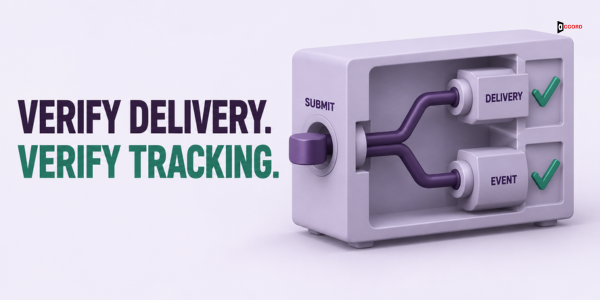
Review the results alongside the underlying examples. Inspect whether important internal links reach the intended destinations and whether structured data accurately represents visible content. Valid markup does not guarantee a rich result. Compare performance under consistent test conditions and investigate regressions. Use field data when available for real visitor experience; laboratory results help diagnose an unpublished release but cannot establish a field-data pass. Separately verify enquiry delivery and the agreed conversion event, including duplicate firing and consent behavior.
Avoid common failure modes
The most common failure modes in this area are testing only the homepage, relying on visual review, ignoring edge cases, and treating a green tool score as release approval. They usually appear because a team optimizes for convenience or volume before it has agreed on quality. Another cause is silent scope expansion: a process designed for one segment is gradually used for every account, page, market, or situation. Document the conditions under which the method applies, and make it acceptable to mark an item as unknown rather than forcing a confident but unsupported answer.
When the process produces a poor result, review the chain rather than blaming the last person who touched it. Was the input incomplete? Was the definition ambiguous? Was the owner overloaded? Did a tool hide an important exception? Did the team receive feedback too late to change behavior? Record the failure as a system lesson, update one rule, and test the change on a small sample. Repeatedly adding fields or steps without removing confusion only makes the process heavier.

Create a practical implementation plan
Implementation should begin with a representative template and its important exceptions. Consider an illustrative example, not a client case: a service template outputs the parent service URL as the canonical for distinct service pages. Inspect the generated tags, reproduce the incorrect destination, and assign the template logic fix. Retest several affected pages, an unaffected page, and any related template sharing the same helper. QA must inspect shared patterns as well as individual URLs.
A simple rollout can happen in four stages. First, record the current configuration and baseline examples. Second, agree on expected results, severity, and required evidence. Third, test the release with named owners, fix defects, and retest related components. Fourth, verify production access, canonical destinations, important links, enquiry delivery, and measurement after deployment. Record accepted risks, rollback responsibility, and follow-up timing. Search reporting is delayed, so immediate traffic changes alone do not prove the release caused a problem.
A practical checklist
Before release, use the following checklist for representative pages and business-critical exceptions. Adapt the expected results for private resources, retired pages, and other intentional exceptions. A sample pass does not prove that every URL is correct; use broader automated checks where possible.
| Test | Expected result | Evidence | Owner |
|---|---|---|---|
| Response and redirects | Public pages return the intended response; redirects reach the correct destination without loops | Response headers and crawl export | Developer |
| Crawl and indexing controls | Intended public pages have no accidental crawl block or noindex directive | robots.txt, meta tags and response headers | SEO lead and developer |
| Canonical signals | The preferred destination matches the page’s purpose and URL policy | HTML or rendered tag extraction | SEO lead |
| Content and metadata | Relevant title, description, main heading and service content appear correctly | Source and rendered output | Content owner and developer |
| Internal links | Navigation, breadcrumbs and contextual links reach intended URLs | Link crawl and manual checks | SEO lead and developer |
| Structured data | Markup matches visible content and applicable type requirements | Validator results and content review | SEO lead |
| Performance | No unaccepted regression against the agreed baseline or budget | Comparable lab tests and available field data | Developer |
| Enquiry and measurement | Approved test enquiry is delivered and the agreed event records correctly | Delivery confirmation and event inspection | Business owner and analytics owner |
| Regression and production | Original failure and related components pass on the tested build and production | Retest record and deployment checks | QA lead |
Record each result with its URL or pattern, environment, evidence, owner, and retest status. Confirm that blockers are resolved and that accepted risks have a named approver. After deployment, repeat the critical checks on production, where caching, security rules, and environment settings may differ. Retain a short change log so future releases can reuse the tests that caught real defects.
Questions teams often ask
Is a more detailed process always better?
No. Detail is useful when it clarifies a decision or prevents a repeatable error. Detail becomes harmful when it creates fields, approvals, or reports that nobody can maintain. Start with the minimum information needed for the next decision, then add detail only when a real failure shows that it is necessary.
How often should the process be reviewed?
Review the relevant checks for every release that changes templates, routing, navigation, indexing controls, scripts, or measurement. Repeat critical tests immediately after deployment, then follow search and conversion data as it becomes available. Set any ongoing review cadence according to site risk and change frequency. A calendar review alone should not replace testing the actual release.
What should happen when the data is incomplete?
Mark uncertainty clearly, assign an owner, and define the next evidence-gathering step. Do not force a precise label simply because a system requires one. Honest uncertainty is easier to improve than a confident record built on an assumption.
Can this be automated?
Automate repeatable assertions such as response codes, missing tags, canonical patterns, and broken links. Human review remains important for intended behavior, content relevance, exception handling, severity, and release approval. A green automated report is only evidence for the checks it actually ran.
Conclusion
Technical SEO QA for B2B websites works best when teams map templates and critical URL groups before selecting test cases. Define expected results for crawlability, indexing controls, canonicals, content, links, structured data, rendering, speed, and analytics continuity. Capture reproducible defects, assign ownership, and verify shared fixes before release. Repeat the critical checks on production after deployment. This risk-based approach makes website quality assurance more useful by testing both representative pages and business-critical exceptions.
Technical references
- Google Search Central — Block Search indexing with noindex
- Google Search Central — Canonical URLs
- Google Search Central — JavaScript SEO basics
- Google Search Central — Structured data guidelines
- web.dev — Web Vitals