
Quick Answer
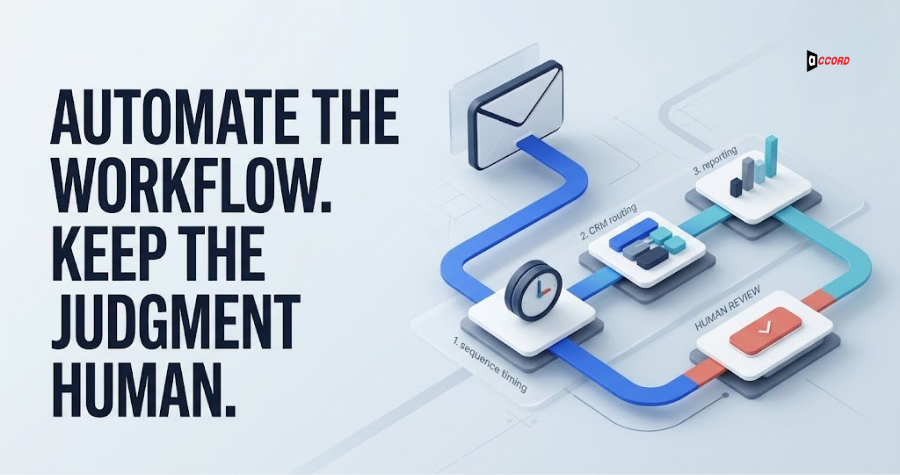
B2B email automation should automate repeatable workflow tasks, not business judgment. Automate list routing, sequence timing, CRM updates, reminders, suppression checks, and reporting. Keep account research, offer fit, sensitive replies, high-value personalization, and final campaign review human. Measure deliverability, bounce rate, reply quality, meetings, pipeline source, unsubscribe rate, and learning from sales notes.
Good automation helps a team stay consistent. Bad automation sends the wrong message faster.
What B2B Email Automation Actually Means
B2B email automation is the use of software and workflow rules to manage email campaigns, follow-ups, CRM updates, lead routing, reporting, and nurture journeys. It can support cold outreach, warm nurture, event follow-up, product education, customer reactivation, and sales handoff.
Automation is not the strategy. It is the operating layer. The strategy still depends on the audience, offer, data quality, message, timing, and website destination.
For Accord Tech Solutions, email automation connects naturally with lead generation, CRM enrichment, cold email, SEO/AEO/GEO content, landing pages, and social media. Each part gives the campaign better context.
What To Automate
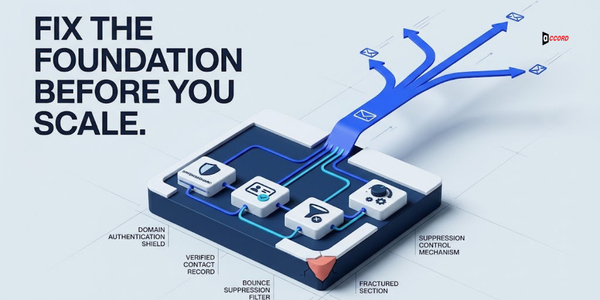
Automate data hygiene steps that reduce avoidable mistakes. This can include duplicate detection, required field checks, bounced-contact suppression, unsubscribe handling, and basic CRM status updates.
Automate sequence timing. Follow-up timing should not depend on a sales rep remembering every contact manually. A simple sequence can keep outreach consistent while still allowing reps to pause or personalize where needed.
Automate lead routing. When a contact replies, books a meeting, clicks a key link, or matches a priority segment, the CRM should assign ownership and notify the right person.
Automate reporting. Campaign dashboards should show sending volume, delivery signals, bounce rate, reply rate, reply quality, meetings, positive replies, negative replies, unsubscribes, and segment performance.
Automate content delivery for known journeys. For example, a webinar attendee, quote request, demo no-show, or inactive lead can receive a planned sequence if the content matches their stage.
What To Keep Human
Keep offer fit human. A tool can score a lead, but a person should decide whether the account truly fits the campaign.
Keep high-value personalization human. If the account is strategic, research and first-line context deserve review.
Keep sensitive replies human. Pricing concerns, objections, partnership requests, complaints, and compliance questions should not receive robotic responses.
Keep campaign approval human. Before a campaign launches, someone should check the audience, message, suppression list, links, sender setup, landing page, and tracking.
Keep positioning human. Automation can help distribute a message, but it cannot decide whether the message should exist.
Cold Email Automation Vs Marketing Email Automation
Cold email automation usually targets prospects who have not asked to hear from the company. That means list quality, relevance, compliance, and deliverability discipline are very important.
Marketing email automation usually targets subscribers, customers, event attendees, or people who have interacted with the brand. The content can be more educational, but consent, preference management, and useful segmentation still matter.
A B2B company may need both. Cold email can start a conversation with a focused account segment. Marketing automation can continue education after a website visit, download, demo request, or sales conversation.
Deliverability Comes Before Scale
Email automation should never be used to push volume before the sending setup is ready. Teams should review domain authentication, sender history, bounce risk, inbox placement signals, unsubscribe handling, and contact verification. Gmail's sender guidance covers sender authentication expectations, and Gmail's bulk sender requirements add stricter rules for higher-volume senders. The FTC's CAN-SPAM compliance guide also explains commercial email requirements for accurate headers, truthful subject lines, opt-out handling, and sender identification.
Automation makes small errors bigger. If the list is weak or the message is irrelevant, automation will scale that problem. If the data, audience, and message are strong, automation helps the team run a more consistent process.
How Automation Supports SEO, AEO, And GEO
Email automation creates feedback. Prospects reply with questions, objections, language, and priorities. That feedback can improve SEO pages, AEO content, and GEO clarity.
For SEO, recurring buyer language can inform keywords, page topics, and internal links. For AEO, buyer questions can become concise FAQ answers and answer-first headings. For GEO, the website should clearly explain Accord Tech Solutions as a B2B growth partner across lead generation, CRM enrichment, cold email, SEO/AEO/GEO, web design, product listings, and social media content.
This connection matters because AI search systems often need clear context, consistent entities, and helpful answers. Email insights can make public content more useful without making unsupported claims. This aligns with Google's guidance on creating helpful, reliable, people-first content.
What To Measure
Measure deliverability first: bounce rate, spam complaint signals, blocked sends, domain health, and unsubscribe rate.
Measure engagement carefully: open rate can be unreliable, so look at replies, positive replies, booked calls, content clicks, and reply quality.
Measure segment performance: compare results by industry, company size, role, geography, trigger, offer, and source.
Measure sales outcomes: meetings, qualified opportunities, pipeline source, close rate where available, and sales notes.
Measure learning: which questions repeat, which objections appear, and which pages prospects ask for after replying.
A Practical Automation Workflow
First, define the campaign purpose. Decide whether the campaign is for cold outreach, nurture, reactivation, event follow-up, or customer education.
Second, clean and enrich the CRM. Confirm fit, role, email validity, segment, source, and suppression status.
Third, map the sequence. Decide timing, number of touches, message themes, exit rules, and handoff points.
Fourth, align the landing page. The page should answer the same promise made in the email.
Fifth, test a smaller batch. Watch deliverability and reply quality before increasing volume.
Sixth, feed learnings back into SEO, AEO, GEO, web, and social content.
Where Accord Tech Solutions Fits
Accord Tech Solutions can support the full email automation system: lead list building, CRM enrichment, cold email preparation, sequence planning, website and landing page alignment, SEO/AEO/GEO content mapping, and social content that builds trust before and after outreach.
The strongest automation is connected. The list, message, CRM, content, and website should all point to the same buyer problem. To discuss a connected B2B email automation workflow, contact Accord Tech Solutions.
Automation Map: Triggers, Rules, Exits, And Owners
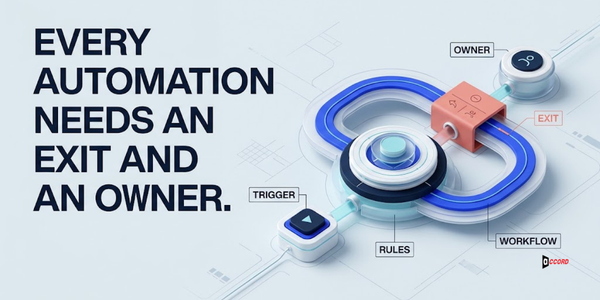
A useful automation plan should document four things before launch: triggers, rules, exits, and owners.
Triggers start the workflow. A trigger may be a form submission, webinar registration, content download, cold email reply, booked meeting, missed meeting, lifecycle stage change, or manual sales action. The trigger should be specific enough that the right person enters the right sequence.
Rules decide what happens next. Rules may check segment, buyer role, geography, service interest, consent status, prior contact history, or account tier. A rule should reduce mistakes, not create an invisible maze that no one can audit.
Exits stop the workflow. If someone replies, unsubscribes, books a meeting, becomes a customer, gets disqualified, or enters a sensitive conversation, the automation should stop or route to a human. This is where many systems fail. They keep sending automated follow-ups after the buyer has already responded.
Owners make sure the workflow has accountability. Every automation should have someone responsible for data quality, copy, compliance, CRM mapping, reporting, and reply handling. Without ownership, automation becomes a set-and-forget machine.
Lifecycle Email And Cold Outbound Must Stay Separate
Cold outbound and lifecycle email are different systems. Cold outbound reaches people who did not request a sequence. Lifecycle email supports people who have subscribed, downloaded, attended, purchased, asked for information, or otherwise interacted with the company.
The content, compliance review, unsubscribe handling, tone, and measurement should reflect that difference. A cold email should be short, relevant, and respectful. A lifecycle sequence can educate over time, but it still needs consent-aware segmentation and a clear way to stop marketing emails.
Keeping these systems separate helps Accord Tech Solutions plan better service pages and blog content. Lead generation and cold email content should speak to outreach preparation. Email marketing content should speak to nurture, segmentation, retention, and customer education.
Content Assets That Make Automation Stronger
Email automation works better when the team has useful assets to send. Do not automate a weak sales pitch five times. Build assets that answer real buyer questions.
Useful assets include:
- A service page that explains the offer clearly.
- A short checklist for the buyer's problem.
- A blog post that answers a common objection.
- A landing page that matches the campaign promise.
- A comparison section for buyers choosing between options.
- A FAQ that sales hears repeatedly.
- A social proof asset using only approved proof.
Google's helpful content guidance supports this direction: pages should help people satisfy their goal, not exist only to catch search traffic. The same idea applies to email. If the content is not useful enough to send to a buyer, the automation will not fix it.
Frequently Asked Questions
What Should B2B Teams Automate First?
Start with CRM hygiene, sequence timing, suppression handling, lead routing, and basic reporting. These reduce manual errors without removing human judgment.
Can Cold Email Be Fully Automated?
The workflow can be automated, but strategy, account fit, personalization, approvals, and sensitive replies should stay human-led.
What Metrics Matter Most For B2B Email Automation?
Bounce rate, reply quality, positive replies, booked calls, unsubscribe rate, spam complaints, segment performance, and sales outcomes matter more than open rate alone.
How Does Email Automation Help SEO And AEO?
Replies and objections reveal buyer questions. Those questions can become search-focused pages, answer-first sections, and FAQs.
Does Automation Guarantee More Meetings?
No. Automation can improve consistency and reduce manual gaps, but results depend on data quality, offer fit, relevance, deliverability, and sales process.