
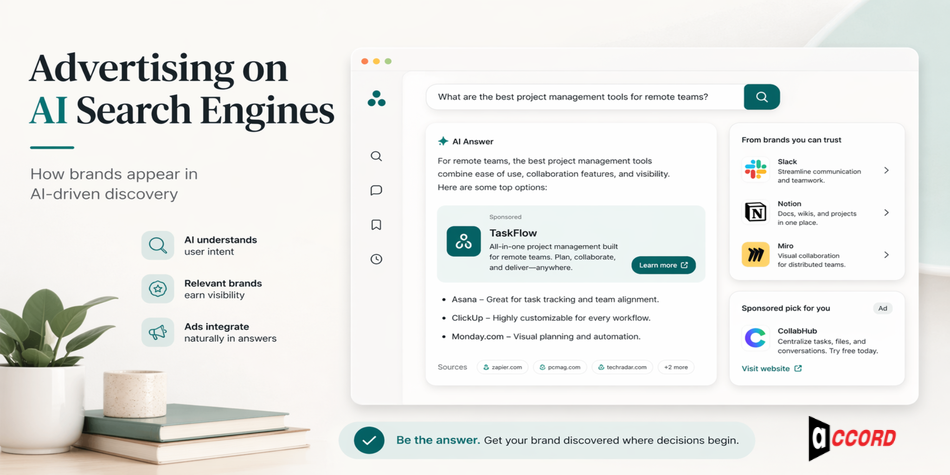
What is advertising on AI search engines, and why is everyone suddenly paying attention to it in 2026?
The short answer is this: advertising on AI search engines is changing how people discover brands, products, and ideas because search itself no longer looks like a list of blue links. It looks like a conversation. And that shift matters right now because platforms like Perplexity, ChatGPT Search, and Gemini are quietly rewriting how visibility, trust, and paid reach actually work.
📖 Related: 12 Biggest SEO Trends in 2026 | AI Search Optimization in 2026: Get Cited (Not Ignored) by ChatGPT and Google AI
Why This Topic Feels Different This Time
The first time you ask a long, complex question inside an AI search interface — not a keyword, but a real thought — and the answer comes back clean, confident, and calm, something shifts. No scrolling. No clicking. Just an answer.
Then comes the uncomfortable realization: if that answer does not mention your brand, you do not exist in that moment.
When you try to optimize an AI response the same way we once optimized search ads, the system ignores it completely. That is the moment it becomes clear this is not about tactics. It is about credibility. Advertising on AI search engines is not just a new ad placement. It is a new visibility economy — one that rewards clarity, usefulness, and trust more than raw budget.
What is Advertising on AI Search Engines?
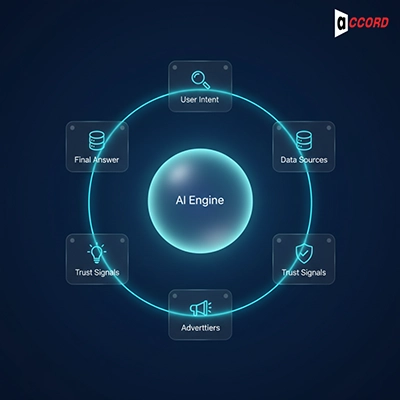
At its core, advertising on AI search engines comes down to one idea: paid visibility inside AI-generated answers instead of traditional search result pages. Unlike classic search ads that appear above or below blue links, AI search ads appear within conversational responses — sometimes cited as a source, sometimes summarized, sometimes suggested as a solution. The format is subtle, contextual, and deeply tied to intent.
AI engines like Perplexity, ChatGPT Search, and Gemini analyze the question, the user context, and historical patterns before deciding which sources or brands deserve attention. Ads are no longer interruptions. They are recommendations.
⚡ In AI search, trust is not a branding claim — it is a system response. Models surface brands that consistently reduce uncertainty, not brands that simply spend more. Visibility is earned through repeated usefulness, not bought through one-time placement.
Why Traditional Ads Are Losing Their Grip
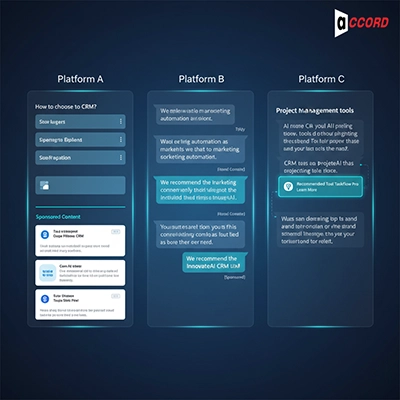
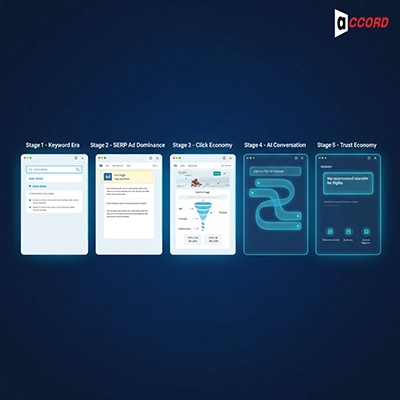
The difference between Google Ads and AI Search ads is not cosmetic — it is philosophical. Google Ads still rely heavily on keywords, bidding wars, and landing page optimization. AI search ads rely on relevance, semantic understanding, and trust signals.
In traditional search, you fight for clicks. In AI search, you fight for inclusion. Traditional ads assume curiosity. AI ads assume decision readiness. People using AI search engines are often closer to action — comparing, evaluating, deciding. That is why AI search vs. traditional search advertising requires a fundamentally different mindset.
How AI Search Engine Advertising Works Behind the Scenes
AI search engines ingest massive language models trained on patterns, not individual pages. When a user asks a question, the engine builds a synthesized response. Ads enter the system through relevance scoring, trust weighting, and contextual alignment — not simple keyword matching.
Paid placements are evaluated against user intent, conversational flow, and factual usefulness. This is where AI Engine Optimization (AEO) for ads becomes essential. Instead of trying to get more clicks, advertisers focus on improving the quality of the answers their brand contributes to.
How Ads Show Up in AI Search Results
Ads can appear as sources, recommended tools, or branded mentions within a response — depending on the platform. Perplexity often labels sponsored citations clearly. ChatGPT Search experiments with contextual recommendations. Gemini integrates paid placements alongside organic AI summaries.
This blend of AI-generated content and advertising is still evolving. Early platform behavior suggests that brands cited repeatedly across similar question types gain durable visibility, while one-off mentions fade quickly. In practice, answering a category of questions consistently matters more than winning a single placement.
📖 Related: Are AI Ranking Factors 2026 Changing How People Search? | From Rankings to Revenue: How SEO Success Is Measured Differently in 2026
Advertising on AI Search Engines as a Strategic Shift

This channel rewards brands that sound like humans solving problems — not brands shouting slogans. Conversational search advertising works best when it answers real questions with real clarity. A hard sell feels awkward inside a calm, intelligent AI response. Useful, specific guidance feels natural. This is where helpful, honest storytelling quietly wins.
The Rise of Generative AI Search Ads (GSA)
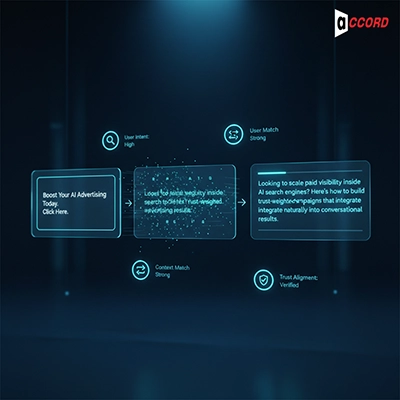
What makes Generative AI Search Ads (GSA) different? These ads are dynamically generated based on the specific question — not prewritten templates. Messaging adapts in real time. Tone, length, and framing shift based on user context.
This flexibility explains why paid search solutions for LLMs require completely different creative thinking. You are not writing slogans. You are designing answer fragments — short, useful, structured pieces of content that AI can extract and include in its responses.
Why GSAs Demand Trust Over Tricks
Because AI responses feel authoritative to users, misleading content backfires fast. AI systems actively downgrade unreliable sources. This is why many companies now look for AI-native ad management approaches rather than retrofitting traditional Google Ads logic onto a completely different system.
The Role of AI Engine Optimization (AEO) for Ads
SEO still feeds the AI model. But AEO shapes how your brand is described and cited within AI responses. Language clarity, factual accuracy, and consistent positioning all influence whether an AI system trusts you enough to include you. This is not manipulation — it is alignment between what your brand says and what AI systems can confidently recommend.
AI Search Ads vs Traditional Ads
Factor |
Traditional Search Ads |
AI Search Ads |
|---|---|---|
| Placement | SERP positions above/below links | Within AI-generated answers |
| User intent | Mixed — curiosity to decision | High intent — evaluation and decision stage |
| Creative format | Static copy and images | Dynamic — adapts to question context |
| Trust signals | CTR and Quality Score focused | Authority and usefulness focused |
| Optimization | Keywords and bids | Meaning, structure, and credibility |
Real Example
A consulting team at Accord Tech Solutions observed how clients struggled with visibility despite high ad spend. The insight was simple: their messaging answered keywords, not questions. When they shifted focus toward explanation-driven content aligned with AI search advertising, impressions stabilized and trust measurably improved. No hype. Just relevance.
Impacts on Businesses and Marketers
Many agencies are now repositioning themselves as specialists in AI search — not because of tools, but because of mindset. Execution now blends strategy, language clarity, and ethical data use. Brands that educate consistently outperform brands that interrupt. In an AI search world, demonstrated understanding matters more than confident claims.
📖 Related: AI SEO Performance Measurement: Is Your Brand Fading into the Shadows in 2026? | AI Search Optimization (AEO) in 2026: How Brands Get Cited in ChatGPT & Google AI
Future of Advertising on AI Search Engines
We will see clearer labeling, stricter accuracy standards, and deeper personalization. AI search engine monetization will evolve toward sustainable funding models that maintain user trust. Regulation will come. Transparency will improve. But conversational discovery is here to stay — and it will only become more central to how brands reach buyers.
People Also Ask
💡 Important Suggestions:
- Focus on usefulness over persuasion — AI rewards helpful content
- Invest in AI Engine Optimization (AEO) for ads early in your strategy
- Think of ads as answers, not banners or interruptions
- Monitor factual accuracy continuously — errors damage AI visibility quickly
Last Thought
The future of advertising on AI search engines is not about hacking systems. It is about earning a place in conversations that people trust. If your brand helps someone think more clearly, it belongs there. If it does not, no budget will save it.
Continue Reading
- → 12 Biggest SEO Trends in 2026
- → AI Search Optimization in 2026: Get Cited (Not Ignored) by ChatGPT and Google AI
- → Are AI Ranking Factors 2026 Changing How People Search?
- → From Rankings to Revenue: How SEO Success Is Measured Differently in 2026
- → AI SEO Performance Measurement: Is Your Brand Fading into the Shadows in 2026?