
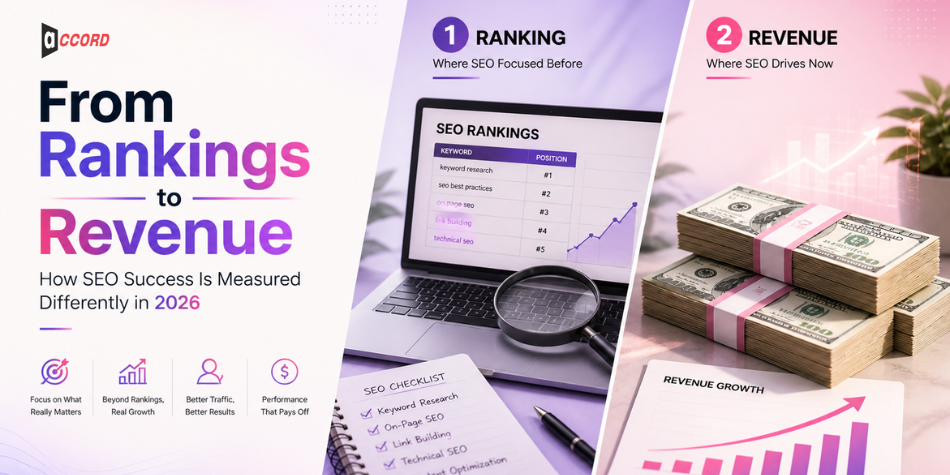
In 2026, what do SEO performance metrics really mean by "success"? Why don't rankings alone tell the whole story?
In 2026, SEO performance metrics don't care as much about where a page ranks as they do about whether organic visibility leads to real demand, real revenue, and long-term business growth. Rankings are still important, but they are no longer the end goal.
📋 Table of Contents
- How SEO Performance Metrics Have Changed Over Time
- What does SEO really do for the business?
- Why traffic and rankings don't mean success anymore
- The Move to Revenue-Driven SEO
- Measuring Search Visibility Growth
- Mapping Search Intent and Aligning Keywords with the Journey
- Strategy for Creating Demand Through Content
- Growing Organic Demand and Brand Search
- Attribution Modeling for SEO and Tracking Revenue
- Long-Term SEO Scalability in 2026
- People Also Ask
How SEO Performance Metrics Have Changed Over Time
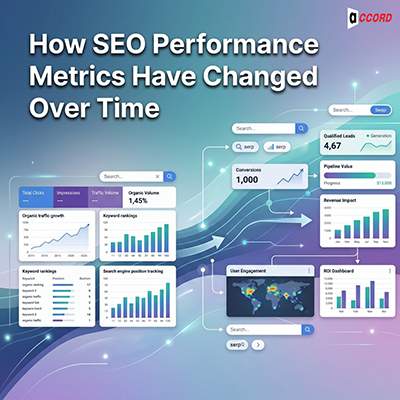
Not too long ago, success with SEO seemed straightforward. You ranked first. Traffic came. Everyone was happy. But at some point, something went wrong. Pages performed well in rankings but poorly in sales. Visitor counts rose while revenue stayed flat. Dashboards looked great, but leadership kept asking the same uncomfortable question.
What Does SEO Really Do for the Business?
That question is at the heart of SEO performance metrics in 2026. People no longer judge SEO by how many "vanity wins" it generates. Visibility, intent, and revenue now matter more than position tracking alone. This change didn't happen overnight — it evolved as search engines became smarter and user behavior became less predictable.
AI-influenced search results changed what success looks like. Featured answers, summaries, zero-click experiences, and conversational interfaces altered how people interact with search. A high ranking no longer guarantees a visit — or a purchase. In this environment, SEO performance metrics need to reflect what is actually happening, not what happened in the past.
To understand how AI is reshaping search, read: Are AI Ranking Factors 2026 Changing How People Search?
📖 Related: 12 Biggest SEO Trends in 2026 | SEO Isn't Dead in 2026 — But This Is What's Actually Ranking
Why Traffic and Rankings Don't Mean Success Anymore
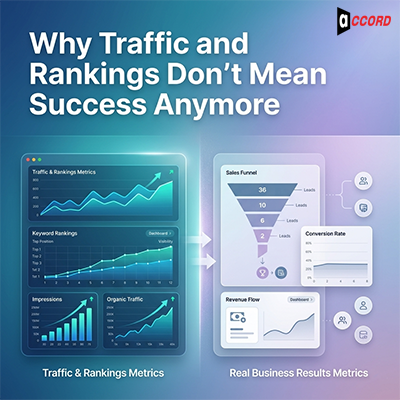
Rankings are still useful. The problem is treating them as a final score rather than a signal. Modern SERPs are crowded with ads, AI summaries, product carousels, videos, and local packs. A page ranked third may get fewer impressions than one ranked sixth. A page in first place may get fewer clicks than expected.
This is where SERP behavior analysis becomes critical. Smart teams don't ask where a page ranks — they ask how people behave after seeing the results. Do they click? Do they search for the brand directly? Do they refine their query? These behavioral patterns tell a deeper story than rank position ever could.
Traffic tells a similar half-truth. High traffic with low intent creates noise. It inflates reports but consumes resources without delivering results. Many teams learned the hard way that publishing high volumes of content without intent alignment leads to poor conversion outcomes. In 2026, what traffic does matters far more than how much of it arrives.
The Move to Revenue-Driven SEO
Revenue-driven SEO did not replace traditional optimization — it evolved it. Teams no longer optimize pages purely to rank; they optimize journeys to convert. SEO is no longer just a top-of-funnel awareness play. It is a measurable growth channel tied directly to pipeline, revenue, and customer retention.
This shift means SEO teams now collaborate closely with sales, product, and analytics teams. Organic traffic is evaluated against lead quality, deal velocity, and customer lifetime value. When leadership asks what SEO delivered this quarter, the answer must include business impact — not just impressions.
This thinking also changes prioritization. Content decisions are no longer driven solely by keyword volume — they are driven by revenue potential. The technical improvements that get funded are those with the clearest impact on conversion rates. Revenue-driven SEO turns optimization into a business discipline rather than a traffic game.
See how this connects to pipeline growth: From Leads to Revenue: Marketing-Generated Pipeline
Measuring Search Visibility Growth
Search visibility growth is now one of the most reliable indicators of SEO health. Unlike rankings, visibility captures how often a brand appears across relevant searches, across devices, and across formats. It measures presence — not just position.
In 2026, teams track both branded and non-branded search volume. Brand visibility signals trust and recognition. Non-branded visibility demonstrates demand capture from new audiences. Together, they provide a complete picture of market footprint.
Visibility also works better with AI-influenced results. Even when click-through rates decline, consistent visibility signals relevance and authority. Over time, brands that appear frequently in organic search earn trust — and that trust eventually generates demand, even when the path is indirect.
Related: AI SEO Performance Measurement: Is Your Brand Fading into the Shadows in 2026?
📖 Related: Zero-Click Search & Featured Snippets: How to Still Get Traffic in 2026 | AI Search Optimization (AEO) in 2026: How Brands Get Cited in ChatGPT & Google AI
Mapping Search Intent and Aligning Keywords with the Journey
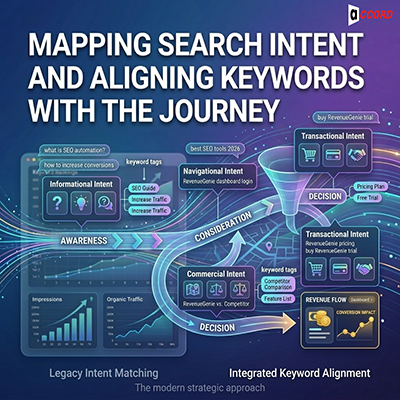
Search intent mapping is central to effective SEO performance metrics. Every query reflects a stage in the buyer's journey. Some users are exploring. Others are evaluating options. A few are ready to buy. Treating all keywords the same is a reliable path to poor performance.
Keyword-to-journey alignment closes that gap. Informational queries need educational content. Commercial queries need clear, credible comparisons. Transactional queries need friction-free, trustworthy pages. When content matches intent precisely, conversion friction disappears.
Intent alignment can double conversions without changing rankings. The traffic stays the same — but the outcomes are completely different. That is the practical power of accurate intent mapping in 2026.
This also shapes how lead nurturing works: Why Multi-Channel Lead Nurturing is the Secret to Scaling Your Service Business This Year
Strategy for Creating Demand Through Content
Content-led demand creation goes beyond capturing existing search intent. It focuses on shaping what audiences will search for next. Instead of asking "what are people searching for?" it asks "what should they be thinking about next?" This forward-looking approach is what separates average brands from recognized category leaders.
The best SEO programs in 2026 create demand before users know how to articulate it. They publish original ideas, frameworks, and perspectives that generate curiosity and further research. Over time, this content reshapes how entire audiences search — and who they search for.
Content-led demand creation also builds lasting trust. Brands that teach markets, answer unasked questions, and publish genuinely useful insights become the default reference point. When users eventually search, they search for the brand by name.
Read more on what is actually ranking today: SEO Isn't Dead in 2026 — But This Is What's Actually Ranking in Google & AI Search
Growing Organic Demand and Brand Search
Organic demand generation goes beyond capturing existing searches — it creates new intent through consistent visibility, education, and relevance. This is where SEO and brand building converge into a single strategy.
Brand search growth is now one of the strongest indicators of SEO effectiveness. When more users search for a brand by name, it reflects accumulated trust built through repeated organic exposure. It also improves conversion rates across every channel — paid, email, and direct.
Companies that invest in organic demand generation compound their returns over time. Content published today fuels brand searches months later. Those branded searches convert at higher rates, cost less to acquire, and build customer relationships with far more durability than most paid channels can achieve.
Also see: The Hidden Cost of Bad Leads in 2026: Why Volume Alone Is Killing B2B Growth
Attribution Modeling for SEO and Tracking Revenue
SEO attribution modeling clarifies how organic search contributes to revenue across the full customer journey. Organic search rarely closes deals on its own — it creates awareness, builds trust, and influences decisions across multiple touchpoints before conversion.
Modern attribution models account for this complexity. They assign value to organic touchpoints at all three journey stages: awareness, consideration, and conversion. This reveals how SEO actually drives revenue — not just how it drives sessions.
When teams implement proper SEO attribution modeling, the conversation with leadership changes permanently. SEO is no longer questioned at budget reviews — it is defended by data showing real business impact, not last-click bias.
📖 Related: How to Create an Effective SEO Strategy in 2026 | AI-Powered SEO Strategy: How Small Businesses Can Compete in 2026
Long-Term SEO Scalability in 2026
Short-term SEO wins are achievable for almost anyone. Sustainable, long-term SEO scalability is far harder. In 2026, scalable SEO means reaching the right audiences consistently, generating content that genuinely engages, building a recognizable brand, and proving measurable impact on sales. It's not about getting clicks — it's about getting customers.
The teams that scale SEO successfully treat it as a long-term investment rather than a short-term campaign. They build systems: content frameworks, internal linking structures, authority-building strategies, and performance dashboards that compound in value over time.
If your website isn't converting visitors into leads, read: High-Converting Websites in 2026: What Businesses Must Include to Boost Leads & Sales
People Also Ask
SEO performance metrics now measure what actually matters: how well content serves users, how effectively it guides them to take action, and how clearly it contributes to business growth. Rankings remain relevant, but they are now evidence of something deeper — not the destination itself.
In 2026, real SEO success means building search visibility that grows steadily, generating organic demand that compounds over time, and creating content strategies that serve user needs while also delivering measurable commercial returns. You can't just be visible anymore — you have to be chosen.
Key Takeaways:
- Focus on SEO performance metrics tied directly to revenue, not just traffic.
- Invest in keyword-to-journey alignment and accurate search intent mapping.
- Track brand search growth as a leading indicator of long-term SEO health.
- Implement proper SEO attribution modeling to prove business impact.
- Build for long-term scalability — not just short-term ranking wins.
What We Think: The teams that will win in 2026 are not chasing algorithms. They are building trust at scale — and measuring it properly.
📚 Related Articles You Might Like
SEO
Are AI Ranking Factors 2026 Changing How People Search?
April 8, 2026
SEO
AI SEO Performance Measurement: Is Your Brand Fading into the Shadows in 2026?
March 16, 2026
SEO
12 Biggest SEO Trends in 2026
April 13, 2026
SEO
SEO Isn't Dead in 2026 — But This Is What's Actually Ranking in Google & AI Search
March 4, 2026
Digital Marketing
From Leads to Revenue: Marketing-Generated Pipeline
March 12, 2026
Web Development
High-Converting Websites in 2026: What Businesses Must Include to Boost Leads & Sales
March 10, 2026