Most marketing teams are sitting on the wrong proof. They walk into budget meetings with click-through rates, impressions, and MQL counts — and wonder why finance still treats them like a cost center.
The problem is not effort. It is evidence. And the only evidence that moves decision-makers is pipeline data tied directly to revenue — not activity metrics that stop at the top of the funnel.
This guide is about fixing that. You will learn how to build a measurement system that connects your campaigns to closed-won deals, earn the trust of sales and finance, and make budget conversations feel like business conversations instead of arguments.
Table of Contents
- Why Activity Metrics Fail at the Executive Level
- What Pipeline Proof Actually Means
- Sourced vs. Influenced: Know the Difference
- The CRM Setup That Makes This Possible
- Attribution Without the Politics
- Five Metrics Executives Actually Respect
- Common Mistakes That Undermine Your Credibility
- A Four-Week Plan to Get Started
- Conclusion
- FAQs
Why Activity Metrics Fail at the Executive Level

There is nothing wrong with tracking website traffic, email open rates, or social impressions. Those numbers help you optimize campaigns. But they are internal metrics — useful for marketers, meaningless to a CFO who is trying to decide whether to cut or grow your budget.
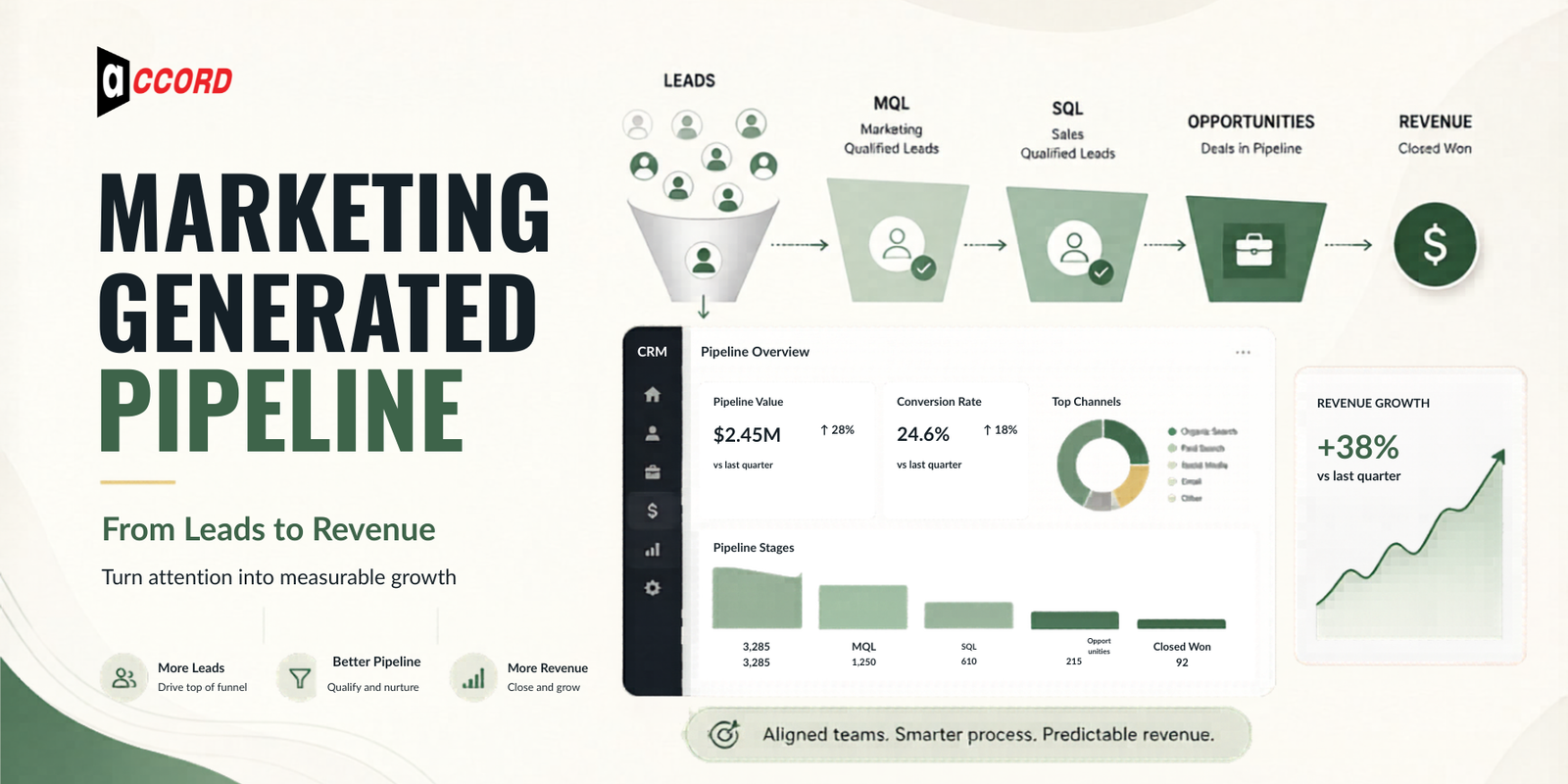
Executives think in terms of revenue, pipeline coverage, and growth rate. When marketing shows up with a slide full of clicks, the message received is: "We were busy." The message needed is: "We generated $2.4M in qualified pipeline last quarter, and here is exactly how."
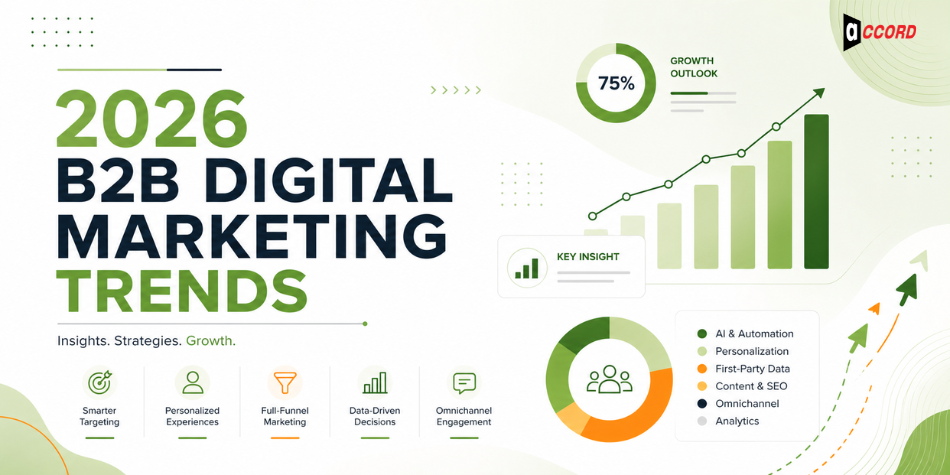
The shift from activity reporting to pipeline reporting is not just cosmetic. It changes how marketing is perceived, how budget is allocated, and how much trust flows between departments. Understanding the broader context of what is changing in B2B marketing in 2026 makes this shift even more urgent.
What Pipeline Proof Actually Means
Proving pipeline does not mean claiming credit for every deal that ever passed through your CRM. It means building a defensible, agreed-upon system that shows which opportunities were created, accelerated, or influenced by marketing activity — and what those opportunities were worth.

The key word is "agreed upon." Pipeline proof only works when marketing, sales, and finance are operating from the same definitions. Without that agreement, any number marketing puts in a deck will be challenged, questioned, or ignored.
Here is what that agreement needs to cover:
What qualifies as a marketing-generated opportunity
What lookback window applies (e.g., 30 days, 90 days)
Which fields in the CRM are required and enforced
How campaign association is tracked and maintained
Once those rules are written down and signed off, your pipeline number stops being a marketing claim and starts being a shared operating metric.
Sourced vs. Influenced: Know the Difference
One of the most common sources of confusion — and conflict — is the difference between marketing-sourced and marketing-influenced pipeline. Both matter. But they measure different things, and mixing them up destroys credibility fast.
Marketing-sourced pipeline means marketing created the original lead that eventually became an opportunity. The contact came in through a campaign, a content download, a paid ad, or an event — and that first touch is traceable.
Marketing-influenced pipeline is broader. It captures any opportunity where a marketing touchpoint occurred at some point in the journey — even if sales initiated the outreach or the lead came from another source.
Best practice: report both numbers side by side, with a clear note explaining the difference. Trying to pass off influenced pipeline as sourced pipeline is how marketing loses trust with sales leadership — permanently. The nuances of multi-stakeholder B2B journeys are covered well in the context of 2026 B2B digital marketing trends, which increasingly favor transparency over credit-claiming.
The CRM Setup That Makes This Possible

You cannot report what you do not track. And you cannot track what your CRM is not set up to capture. Before worrying about dashboards or attribution models, get your data infrastructure right.
At minimum, your CRM needs to store and enforce the following:
Lead source on every contact record
Campaign association on every opportunity
Timestamps for each lifecycle stage: MQL, SQL, opportunity created, close date
Opportunity amount and stage at each point in the funnel
The most common failure mode is not a technical one. It is a process one. Campaigns get created without proper naming conventions. Lead sources get left blank. Opportunities get created without a campaign linked. Over time, the data becomes unusable — and marketing ends up unable to prove anything, even when the results were genuinely strong.
If you work with an external lead generation partner, make sure they follow your CRM tagging standards from day one. Retroactively cleaning up campaign data is one of the most painful and expensive things a RevOps team can face.
Attribution Without the Politics
Attribution is where pipeline conversations most often fall apart. The moment someone asks "who gets credit," every department has a vested interest in the answer. Sales wants last-touch credit. Marketing wants first-touch. And finance just wants a number they can audit.
The solution is not finding the "perfect" model. It is picking a model that is transparent, consistently applied, and clearly labeled as an estimate — not a fact.
Here is a practical breakdown of your main options:
First-touch: Simple, easy to explain, but ignores everything that happened after the initial contact. Useful for measuring top-of-funnel campaign efficiency.
Last-touch: Credits the final interaction before conversion. Often over-weights sales activity and under-credits marketing's role in building awareness.
Linear multi-touch: Spreads credit equally across all tracked touchpoints. More honest for complex B2B journeys, but requires disciplined tracking to be meaningful.
W-shaped: Gives extra weight to three key milestones — first touch, lead creation, and opportunity creation. Works well when your team has clear stage definitions and consistent timestamps.
Whichever model you choose, add one line to every pipeline report: "This model estimates contribution, not ownership." That sentence alone has defused more budget arguments than any chart ever could. For a deeper look at how multi-channel lead nurturing fits into modern attribution, that connection is worth exploring before you finalize your model.
Five Metrics Executives Actually Respect

When you present to leadership, cut the noise. Five well-chosen metrics are more persuasive than fifteen half-explained ones. Here are the five that consistently earn respect in executive reviews:
Marketing-sourced pipeline value: The total dollar amount of open and closed-won opportunities that originated from marketing. This is your headline number.
Pipeline-to-spend ratio: For every dollar invested in marketing, how many dollars of pipeline were created? This reframes marketing spend as an investment with a measurable return.
MQL-to-SQL conversion rate: How many marketing-qualified leads are being accepted and progressed by sales? A low rate signals a qualification mismatch. A high rate signals alignment.
Pipeline velocity: How long does it take, on average, to move from MQL to closed-won? Shorter cycles mean more efficient pipeline. Longer cycles point to friction worth investigating.
Win rate by marketing source: Which channels produce opportunities that actually close? This is the metric that separates pipeline that looks good from pipeline that converts into revenue.
Pair these with a scalable lead generation approach that feeds quality contacts into the top of your funnel, and these numbers become self-reinforcing over time.
Common Mistakes That Undermine Your Credibility
Even teams with good intentions make errors that erode trust in their pipeline numbers. Here are the most common ones — and how to avoid them.
Overclaiming influenced pipeline. Including every deal where a marketing touchpoint occurred, even a single email open from two years ago, inflates your numbers in ways that sales and finance will immediately challenge. Set a clear lookback window and stick to it.
Changing definitions mid-quarter. If what counts as an MQL shifts between reporting periods, your trend data becomes meaningless. Lock definitions down in writing and change them only at the start of a new period — with full team notice.
Reporting pipeline without win rate context. A large pipeline number means nothing if those opportunities never close. Always show sourced pipeline alongside the win rate for those opportunities. Credibility comes from the full picture, not the flattering slice.
Skipping the data quality audit. Poor campaign mapping, missing lead sources, and inconsistent stage timestamps are invisible problems until someone tries to pull a report. Build a weekly data quality check into your RevOps routine — it takes thirty minutes and prevents months of cleanup.
A Four-Week Plan to Get Started

You do not need a six-month technology project to start reporting pipeline seriously. Here is a practical four-week plan that works with whatever CRM you already have:
Week 1 — Define and document: Write down your definitions for MQL, SQL, opportunity, and "marketing-generated." Get sign-off from sales and finance leadership before moving on.
Week 2 — Fix your CRM fields: Make lead source, campaign association, and lifecycle stage timestamps required fields. Audit the last 90 days of data and fill in what is missing.
Week 3 — Build your baseline report: Create a simple pipeline report that shows sourced pipeline, influenced pipeline, and conversion rates between stages. This does not need to be beautiful — it needs to be accurate.
Week 4 — Run your first joint review: Present the numbers to sales leadership. Document every objection. Use the feedback to tighten your definitions and improve your data hygiene going forward.
The goal is not a perfect system on day one. The goal is a consistent system that improves with every cycle. Teams that treat this as a living process — not a one-time project — are the ones that eventually earn finance-grade trust in their pipeline numbers. If you are exploring AI-powered tools to accelerate this process, the best AI lead generation tools available in 2026 are worth reviewing alongside your CRM setup.
Conclusion
Proving marketing ROI is not a technical problem. It is a trust problem. And trust is built through shared definitions, consistent data, and honest reporting — not through impressive-looking dashboards that nobody believes.
Start with the agreement. Define what counts. Track it in your CRM. Report it with a model you can explain in sixty seconds. Show conversion rates and velocity, not just top-line pipeline. And always put your numbers in the context of what they mean for revenue — not what they mean for marketing's reputation.
That is how marketing earns a permanent seat at the revenue table. Not by claiming more credit, but by making the contribution undeniable.
Accord Tech Solutions works with growth teams to build exactly this kind of measurement foundation. If you want a practical pipeline scorecard template or a CRM field checklist to pressure-test your current setup, reach out and we will share what works.