
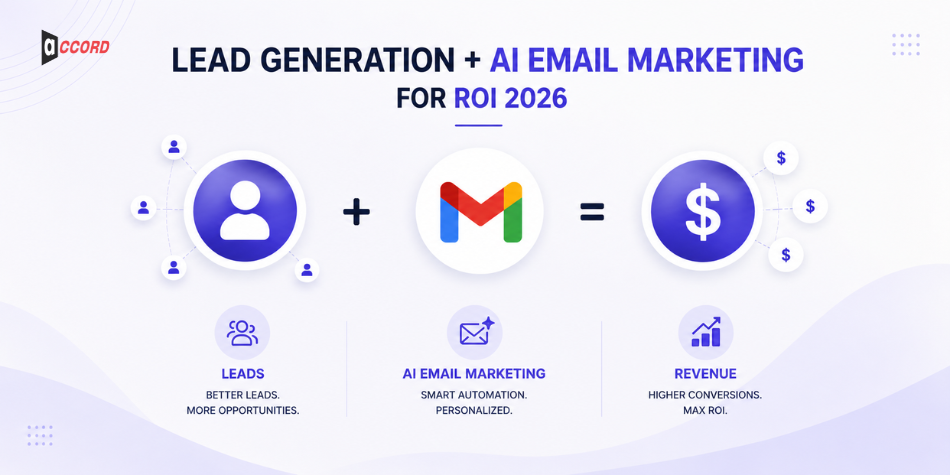
Can businesses significantly grow revenue in 2026 by combining lead generation with AI-powered email systems?
This question sounds simple on the surface but becomes complicated once real revenue enters the picture. Many companies already generate leads and run marketing campaigns. Many send emails at high volume. Yet results often feel underwhelming. Pipelines may be busy, but that doesn't always mean money is coming in.
People who want to buy things in 2026 are smarter, more careful, and much less patient. They can spot generic automation almost instantly. This is why AI-driven email marketing in 2026 has become such a critical piece of the puzzle. When email intelligence connects directly with lead behavior, conversations feel relevant instead of forced.
HubSpot research published toward the end of 2025 showed something interesting. Companies that aligned lead data with AI-powered workflows did not just increase conversions — they reduced unnecessary outreach and improved email deliverability. Fewer emails, better timing, and clearer intent made all the difference.
📖 Related: What to Look for in AI Email Marketing in 2026 | What are the Best Email Marketing Practices for 2026?
What AI-Driven Email Marketing Actually Looks Like in 2026
Moving Past Basic Automation Habits
A lot of marketers still think AI means automating email faster or generating subject lines automatically. That was true years ago. It is no longer enough.
Modern systems focus on outcomes. Instead of sending many random emails, AI first learns who the person is, what they do, and when they like to read messages — then it sends the email. This is where cold email automation becomes smarter and cold email outreach becomes more intentional.
Traditional tools follow instructions. AI systems keep track of what happens after you send an email — analyzing open behavior, replies, sales cycle movement, and response patterns. Over time, this makes campaigns more personal and more efficient.
This is where lead generation and email automation stop working separately and start working as one unified revenue system.
Where Most Revenue Leakage Happens
Disconnection is the biggest problem. Lead generation teams chase volume. Email teams focus on marketing campaigns. Sales reps focus on closing deals. Data falls through the cracks between all three.
When you don't integrate lead generation and email automation, context disappears. A prospect who reviewed your pricing page yesterday may receive a beginner-level cold email template today.
Many teams still struggle with how to convert cold leads without overwhelming potential customers. Traditional cold outreach often ignores what buyers actually want — sending the same messages repeatedly and ignoring optimal timing entirely.
Integrated systems fix this. Engagement affects scoring instantly. Messaging adjusts based on behavior. B2B sales automation then ensures marketing signals flow directly into the sales process without friction.
How AI Improves Email Marketing ROI in Everyday Scenarios
People frequently ask how AI improves email marketing ROI without making campaigns feel robotic. The answer lies in consistent learning. AI tracks patterns in email account engagement, reply timing, case study downloads, and verified email data — quietly replacing messages that underperform.
Instead of guessing, teams rely on predictive insight. This allows smarter cold email strategy development and better audience targeting. Over time, companies see something surprising: fewer emails sent, higher revenue generated. The point of a ROI-focused email marketing campaign is to use performance data, not vanity metrics.
Advanced sales email automation tools now use CRM data, deliverability tracking, and predictive scoring to improve results while saving teams significant time.
📖 Related: The Hidden Cost of Bad Leads in 2026: Why Volume Alone Is Killing B2B Growth | The Best AI Lead Generation Tools in 2026
Why You Need to Think Differently About AI Email Marketing for B2B Leads
B2B buying journeys are complex. Many people affect decisions. One email rarely closes a deal. AI email marketing for B2B leads works best when it respects this complexity — monitoring engagement across roles and adjusting content on the fly for everyone from engineers to executives.
This is where B2B email automation solutions outperform manual campaigns. Messaging shifts depending on engagement stage, job title, and decision-making authority. Well-designed B2B email marketing systems personalize messages automatically, ensuring that content matches intent instead of relying on generic email strategy frameworks.
Building a ROI-Focused Email Marketing Strategy That Feels Honest
Measuring What Actually Matters
A ROI-focused email marketing strategy in 2026 moves away from surface-level metrics. Open rates still matter, but they do not tell the full story.
Strong teams track how email affects pipeline quality, deal speed, and long-term customer value. AI helps connect those dots by tying engagement directly to outcomes. This approach requires discipline — not every campaign wins. But over time, clarity replaces confusion and ROI becomes consistently measurable.
How to Integrate Lead Generation with AI Email Systems Step by Step
Starting With Clean, Connected Data
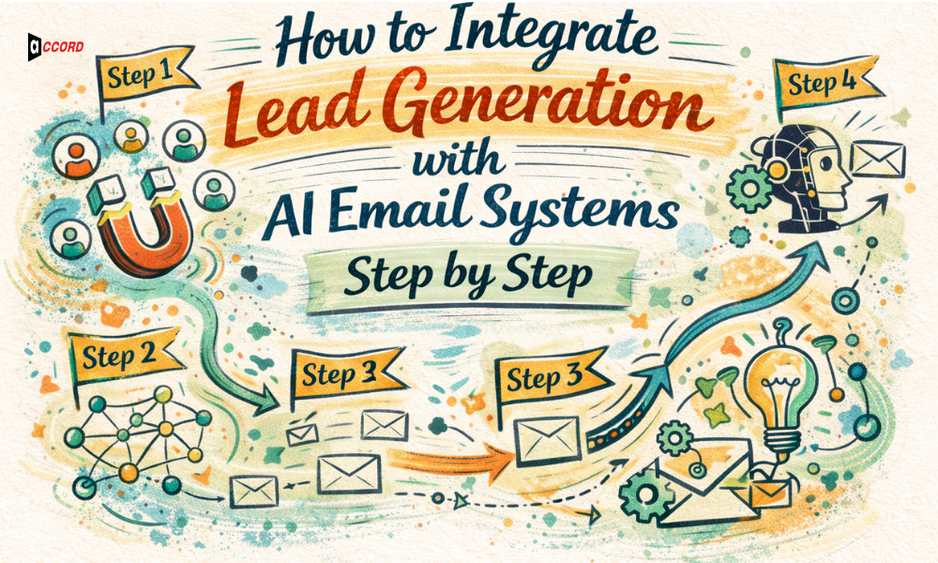
Integration always begins with data. All lead sources must feed into a single system — AI cannot learn properly from incomplete or disconnected information. When you centralize data, AI-based lead scoring replaces static point systems. Scores change dynamically based on what people actually do, not what you assume they will do.
This is where lead generation and email automation truly come together. Lead quality and priority shift in real time as email campaigns generate new behavioral signals.
Adaptive Workflows and Revenue Feedback
Next come workflows that adapt in real time. Messages change based on engagement, not fixed sequences. Silence is no longer automatically treated as disinterest or failure. Finally, revenue feedback closes the loop — wins and losses teach the system what actually drives conversions, campaign after campaign.
📖 Related: Why Multi-Channel Lead Nurturing is the Secret to Scaling Your Service Business This Year | Cold Emails Still Work in 2026 — But Only If You Stop Doing These 7 Things
Email Marketing vs Automation Tools in a Changing Landscape
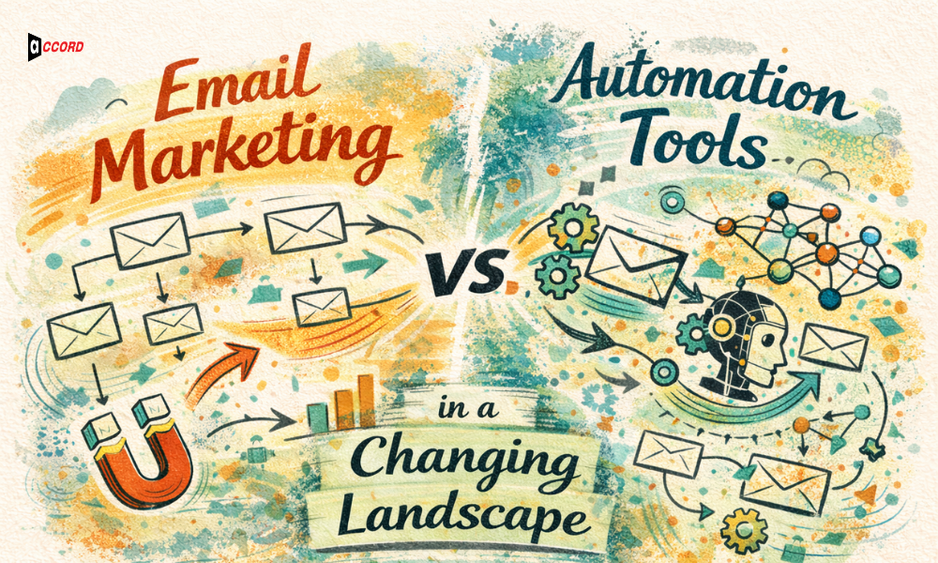
The debate around email marketing vs automation tools is no longer about features. Automation executes tasks. AI evaluates impact.
Legacy tools may send large batches of cold emails using a basic cold email tool. AI-powered systems focus on high-quality responses — delivering relevant answers quickly and helping shorten sales cycles. Learning is now more important than execution speed. The system that learns fastest wins.
How to Run AI Email Campaigns Without Losing Trust
💡 Best Practices for AI Email Campaigns:
- Personalize messages thoughtfully — avoid template-feel at all costs
- Avoid high volume spam behavior that damages sender reputation
- Monitor email deliverability continuously
- Maintain clean, verified contact information
- Keep human oversight active at every stage
Strong systems help automate email while keeping a real, authentic voice. AI can detect disengagement early, but teams still need to listen and respond responsibly. Automation without human judgment is just noise at scale.
Picking the Right Help and Services
To speed up adoption, many companies partner with providers offering AI email marketing services that businesses trust. A reliable lead generation and email marketing agency brings everything into one integrated system — cold email services, automation, and smart targeting in a single place.
When businesses work with Accord Tech Solutions, the setup process is clear, the reports are easy to understand, and performance keeps improving over time. Campaigns stay safe, follow compliance rules, and grow step by step without stress.
The Real Effect on Sales and Team Trust
When systems are fully integrated, everything becomes clearer. Marketing and sales teams stay aligned, and forecasting becomes more realistic. Businesses using AI email marketing for B2B leads in automated workflows often see smoother teamwork and shorter sales cycles.
The real long-term value of AI-driven email marketing in 2026 shows up when systems keep learning and improving. Over time, this reduces wasted effort and improves targeting accuracy — turning random outreach into predictable revenue growth.
Looking Ahead: The Future Beyond 2026
Zero-party data, contextual targeting, improved email deliverability, and stronger compliance standards will shape the next generation of email systems. Privacy will play a bigger role in design and data collection. Email is still a powerful tool — but only when intelligence takes the place of volume.
Questions That Are Commonly Asked
Final Reflection
Growth in 2026 is not about chasing tools. It is about alignment. When intelligent systems combine data, personalization, automation, and measurable revenue tracking, results become predictable.
The future belongs to companies that connect lead generation and email automation through a clear email marketing strategy focused on ROI — not volume. Today's right integration will deliver results tomorrow and compound every month after that.
Now is the moment to rethink your strategy and build a system that truly drives measurable ROI. Contact Accord Tech Solutions today to get started.
Continue Reading
- → What to Look for in AI Email Marketing in 2026
- → What are the Best Email Marketing Practices for 2026?
- → Cold Emails Still Work in 2026 — But Only If You Stop Doing These 7 Things
- → Why Multi-Channel Lead Nurturing is the Secret to Scaling Your Service Business This Year
- → The Hidden Cost of Bad Leads in 2026: Why Volume Alone Is Killing B2B Growth