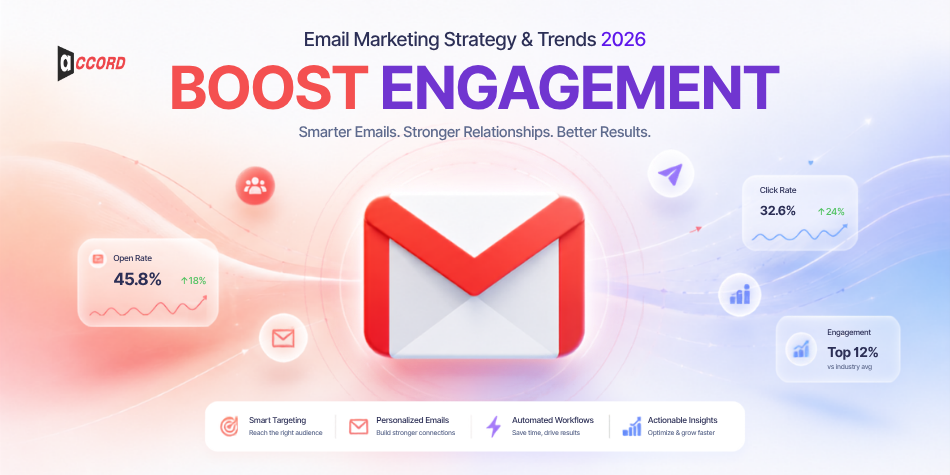
People claim to enjoy email, yet they often overlook the majority of marketing messages. Why is that?
Recent research on consumers gives an answer that is surprisingly honest. Email is still the most popular way for brands to talk to people, but the same inbox is often full of unread ads. The problem isn't the channel itself. The Email Marketing Strategy behind the messages is usually what goes wrong.
Email is still the most important way to communicate online. About 60% of people say that email is their favorite way to hear from brands, according to research.
Still, a lot of people say they don't read or respond to a lot of promotional messages. This gap between what people want and what they do is changing Email Marketing Trends 2026 and making businesses rethink how they talk to customers.
The lesson is clear for business leaders, digital strategists, and marketing teams. Email works, but only if it takes into account what customers want and how they act.
This guide will show you how Email Marketing Strategy, consumer behavior patterns, and personalization are changing the way campaigns are run today.
Table of Contents
- What is the Strategy for Email Marketing?
- Email Marketing Statistics That Show How People Really Act
- Why It Is Getting Harder to Get People to Read Your Emails
- What the Data Says About Email Marketing Trends in 2026
- Why Email Still Works Even When People Are Tired of It
- How Email Marketing Strategy Really Works in Real Life
- Why People Unsubscribe from Emails
- B2B Email Marketing Strategy
- Email Marketing Best Practices
- The Future of Email Marketing
- FAQs
- In Short
What is the strategy for email marketing?

Before we move on, let's make sure we know what "clear" means.
A strong email marketing strategy is the planned way that businesses use email campaigns, newsletters, promotional messages, and automated customer journeys to talk to customers.
It has a number of parts:
• dividing the audience
• customizing messages
• When to run the campaign
• analytics and automation
Modern strategies use data to figure out who gets what message and when, rather than sending the same message to everyone.
In the past, email marketing was just a way to send out simple messages. A business made one campaign and sent it to everyone who had signed up. That strategy worked when there wasn't much competition in the inbox.
Things changed very quickly.
Every day, people get dozens of marketing messages. If you don't have a good email engagement strategy, people will ignore even real messages.
Companies now use behavioral data, purchase history, and patterns of interaction to make communication flows that are smarter. This change explains why email marketing still works even though people are tired of getting emails.
Email is still one of the most measurable and profitable channels in digital marketing when done right, delivering strong email marketing ROI for many businesses.
Email marketing statistics that show how people really act as customers

Email is still the most popular way for brands to talk to customers. Surveys show that about 60% of people prefer email for brand updates, but a lot of promotional messages go unopened because they contain information that isn't useful or is too similar to other messages.
When we look more closely at Email Marketing Statistics, we can see the bigger picture.
Research on how people like to talk to businesses found that email is still better than many other ways. About half of the people who answered said they would rather get ads by email than on social media. Push notifications and SMS came in last.
But there is another interesting pattern that shows up.
Email is also the most likely way to be ignored.
Most people who buy things say they have a lot of marketing emails that they haven't read yet. Some have dozens. Some have hundreds.
This difference between preference and engagement reveals an important truth about Consumer Email Engagement and how people interact with marketing emails.
People are not saying no to email itself. They are turning down communication that isn't useful.
This information should change how you plan your Email Marketing Strategy in the future.
Why it is getting harder to get people to read your emails
People are less likely to open and read emails from businesses because they get too many of them, the same promotions over and over, and the emails aren't personalized enough. People still like getting useful emails, but they quickly ignore messages that don't interest them.
Sometimes, marketing teams think that sending more emails will make more money.
The truth is different.
People are always being marketed to through many different channels. When inboxes get full, people only pay attention to certain things. People skip messages that don't seem useful right away.
Surveys of consumers show three patterns that keep coming up:
• repeated deals on goods and services
• content that doesn't matter
• messages that are too general
Each of these signs means weak email campaign optimization.
Many businesses still think of email as a way to send out messages instead of having conversations. As subscribers get the same discount message week after week, they slowly lose interest.
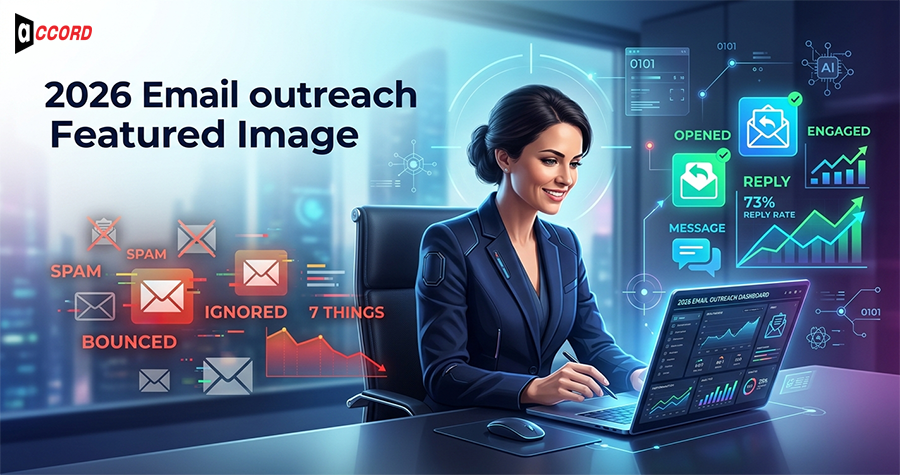
Timing, personalization, and real value are the keys to a better email engagement strategy. Understanding why your emails aren't getting replies in 2026 is one of the first steps toward fixing this problem for good.
What the Data Says About Email Marketing Trends in 2026

Email Marketing Trends 2026 show that instead of big promotional campaigns, people want more personalized messages that are based on their behavior.
A number of trends are changing how modern email programs work.
First, personalization is no longer optional. More and more, people expect emails to show their preferences and purchase history through a stronger email personalization strategy.
Second, marketers are trying out preference centers. A lot of people want to be able to choose how often they get messages and what kind of content they see.
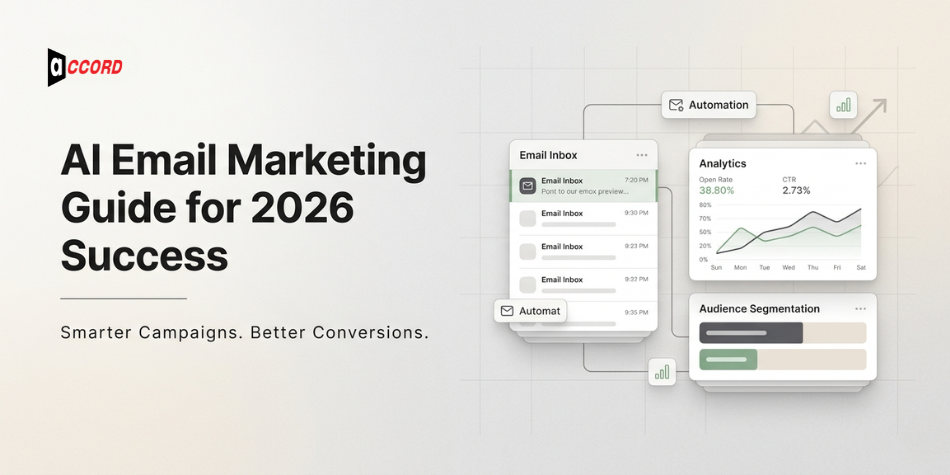
Third, automation platforms are helping brands respond to what customers do in real time. If you look at a product category today, you might get useful suggestions tomorrow. To understand how automation is reshaping this space, the AI Email Marketing Guide for 2026 covers exactly how intelligent systems are being used to drive better results.
These changes reflect larger consumer email behavior trends that are shaping the future of digital marketing.
Companies that don't pay attention to these changes could see less engagement and more people who unsubscribe.
Why Email Still Works Even When People Are Tired of It
Email is still useful because it lets people talk to each other directly, lets you track your performance, and gives you a high return on investment when messages are relevant and sent at the right time.
There are a lot of channels that want your attention.
Algorithms on social media choose what content people see. Paid ads often go away when budgets run out. Text messages can seem pushy.
Email acts differently.
Users are in charge of their inbox. Messages stay available until you delete them. This persistence explains the consistent email marketing ROI reported across industries.
With a well-planned Email Marketing Strategy, businesses can build relationships over time instead of relying on one-time campaigns.
Trust is another thing.
People often think of email as a way for brands to talk to them in a real way. Email is how you get receipts, account updates, and service notifications.
This familiarity makes the channel useful. For a deeper look at how email and lead generation work together to drive revenue, see how lead generation and AI email marketing combine for stronger ROI in 2026.
How Email Marketing Strategy Really Works in Real Life

A modern Email Marketing Strategy uses audience segmentation, automated workflows, behavioral data, and performance analysis to send messages that are relevant at the right time.
Let's make it easier.
The first step is to divide the audience into groups. Marketers don't send campaigns to everyone on their database. Instead, they group subscribers based on things like behavior, demographics, or purchase history.
Step two is all about making things personal. Messages include product suggestions, changing content blocks, and offers that are specific to you.
The third step is to automate.
For instance, an online store might send a series of emails when someone leaves their shopping cart. The message comes soon after the person has finished looking at the product, so it's still fresh in their mind. Tools and platforms that power this kind of workflow are explained in detail in the guide to email marketing automation and how to implement it.
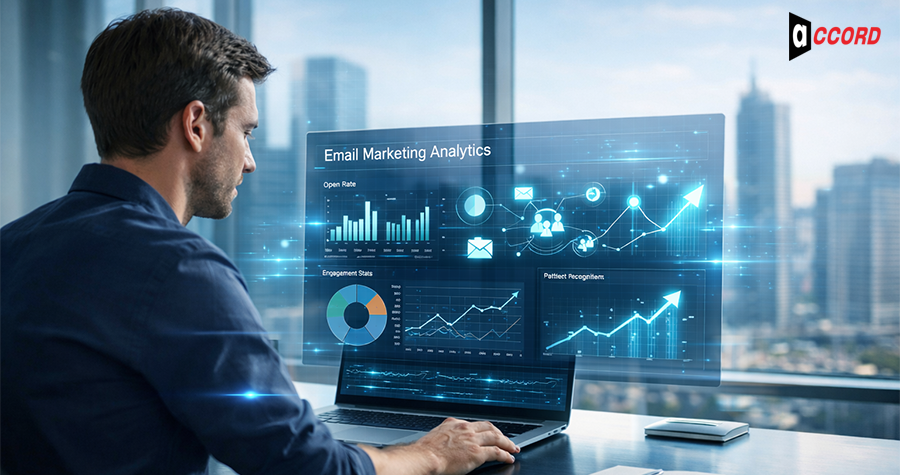
Analytics are the focus of step four. Marketers can improve campaigns by measuring metrics such as click-through rate, conversions, and email open rate improvement.
Without this cycle of testing and improving, engagement usually goes down.
Why People Unsubscribe from Emails

Understanding why consumers unsubscribe from emails helps marketers correct common mistakes.
People mostly unsubscribe because they get the same promotions over and over again, offers that don't apply to them, and messages that aren't relevant to their interests.
One of the biggest reasons people stop engaging is when they get the same promotion repeatedly.
Another issue is poor targeting.
Generic messages annoy subscribers, plain and simple.
Email campaign optimization effectively guarantees that each message offers something worthwhile. A practical place to start is reviewing the best email marketing practices for 2026 to make sure your campaigns are built on the right foundation.
B2B Email Marketing Strategy
A B2B email marketing strategy prioritizes education, cultivating trust, and navigating extended sales cycles, rather than pushing for instant sales.
A strong B2B email program often includes:
• thought leadership content
• webinar invitations
• product education
Companies that provide useful knowledge usually build stronger relationships with business buyers. For teams dealing with the specific challenge of low reply rates on outbound campaigns, the guide on why cold emails still work in 2026 — and what to stop doing is a useful companion read.
Email Marketing Best Practices
Several email marketing best practices can increase engagement.
First, use behavioral segmentation.
Second, strengthen your email personalization strategy through relevant content.
Third, experiment with campaign timing.
Fourth, continuously test subject lines to support email open rate improvement.
Organizations that apply these practices gradually increase Consumer Email Engagement.
Professional Email Marketing Partners
A lot of businesses end up asking specialists for help.
Companies in the US that want Email Marketing Services in USA – Accord Tech Solutions often need help with segmentation, automation, and campaign analytics.
A Professional Email Marketing Company in USA usually provides campaign management, strategic planning, and performance analysis.
Some businesses would rather work with a B2B Email Marketing Agency in USA that knows how to handle complicated B2B sales cycles.
Accord Tech Solutions Email Marketing Services USA is an example of a service that uses analytics and creative messaging to get better results.
The Future of Email Marketing
Email in the future will probably focus on better subscriber control and more personalized messages.
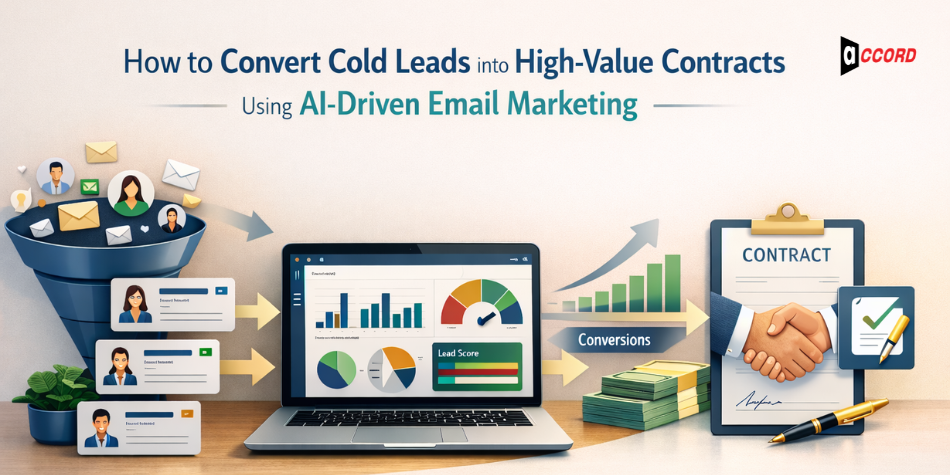
AI systems are already making email personalization better by suggesting content based on how people act. For a complete look at how AI is transforming email programs right now, the guide on how AI email marketing converts cold leads into high-value B2B contracts explains the mechanics clearly.
These changes reflect evolving consumer email behavior trends.
Brands that pay attention to their customers will have better relationships and more engagement.
Questions that are often asked
In short
Even though people often ignore it, this article explains why email is still one of the most popular ways to market.
It explores consumer behavior, Email Marketing Statistics, and emerging Email Marketing Trends 2026.
It also explains frameworks such as Email Marketing Strategy, B2B email marketing strategy, personalization, and email campaign optimization that improve campaign performance.
Organizations that combine data, creativity, and strong email marketing best practices can increase Consumer Email Engagement and achieve stronger email marketing ROI.
Professional partners like Accord Tech Solutions Email Marketing Services USA can help businesses design scalable campaigns that align marketing technology with customer expectations.