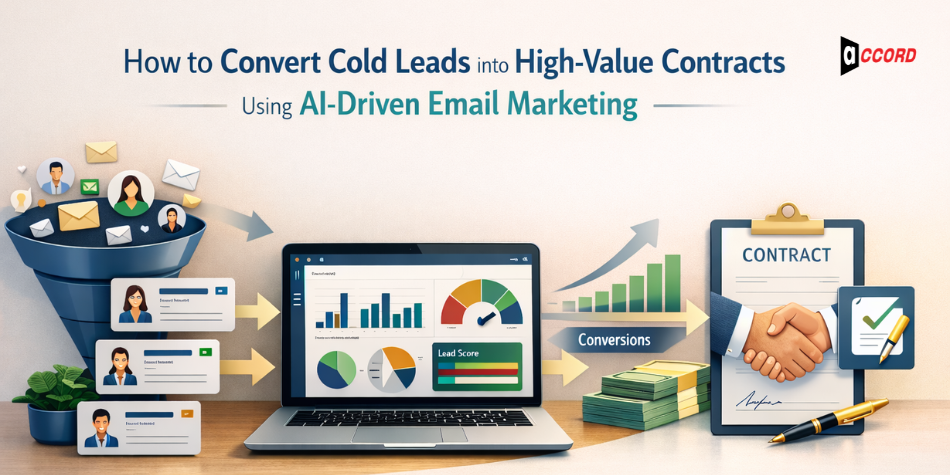
Cold leads are not always lost leads. In many cases, they simply do not know enough about your business yet.
That is why smart email marketing matters.
In 2026, businesses can no longer rely on generic cold outreach and expect strong results. Decision-makers receive too many emails every day, and most of those messages are ignored because they feel repetitive, irrelevant, or rushed.
If your goal is to turn cold leads into high-value B2B contracts, you need a better system. You need the right audience, the right message, the right timing, and a clear follow-up process.
This guide explains how AI email marketing supports that process. It helps businesses improve targeting, write more relevant emails, follow up in a structured way, and respond when interest starts to build.
The result is not just more email activity. The result is better conversations, stronger trust, and more qualified opportunities.
Article Overview
- A Practical Look at Converting Cold Leads with AI Email Marketing
- What This Approach Really Means
- How the Process Works
- Why It Matters in Today’s B2B Market
- A Better Framework for Conversion
- A Simple Real-World Example
- Common Misunderstandings
- What Businesses Should Do Next
- Frequently Asked Questions
- Final Thoughts
A Practical Look at Converting Cold Leads with AI Email Marketing
Cold leads are often treated the wrong way. Many businesses assume that if someone does not respond quickly, they are not interested. That is not always true.
In B2B sales, buyers usually take time. They compare options, do their research, speak with internal teams, and wait until the timing feels right. This is why thoughtful follow-up matters so much.
AI email marketing helps businesses manage this process more carefully. Instead of sending the same message to everyone, it supports better targeting, clearer messaging, and more useful follow-up sequences.
That does not mean AI replaces human communication. It means it helps your team work with more clarity and consistency.
If your outreach is relevant, well-timed, and helpful, cold leads can turn into meetings, qualified discussions, and long-term contracts.
What This Approach Really Means
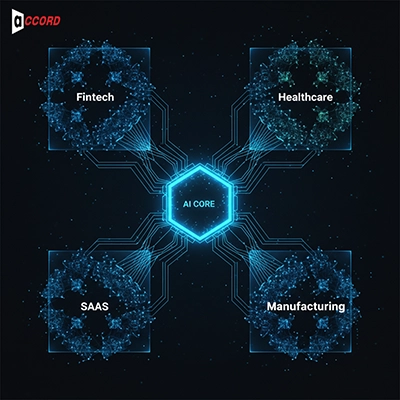
Converting cold leads with AI email marketing means using smart tools and a clear email process to move prospects from low interest to real business conversations.
In simple terms, it combines four important things:
1. Audience segmentation based on real company data
2. Message personalization based on prospect details
3. Structured email follow-up that builds trust over time
4. Engagement tracking that helps teams act at the right moment
This approach is different from traditional mass email outreach. Instead of focusing only on sending more emails, it focuses on sending more relevant emails.
That difference matters. When the message fits the person, the timing feels right, and the follow-up is useful, prospects are far more likely to respond.
If you want to build a stronger outreach system, it also helps to understand what features actually matter in modern email tools. Read this guide here: What to Look for in AI Email Marketing in 2026.
How the Process Works
A strong cold email system is not built on software alone. It depends on how you use the process.
Here are the core stages that make the biggest difference.
1. Better Audience Segmentation
Before sending any email, it helps to understand who you are reaching out to.
A good system reviews details such as:
Industry
Company size
Hiring activity
Technology use
Business growth signals
For example, a cybersecurity company reaching out to healthcare providers should not use the same message it sends to a fintech startup. Each market has different concerns, priorities, and language.
AI-supported systems help organize prospects in a smarter way so each group can receive messaging that actually fits their situation.
2. More Relevant Personalization
Personalization is more than adding a first name to the top of an email.
A stronger message reflects something meaningful, such as:
A company challenge
A role-specific need
A recent business change
A visible market trend affecting that company
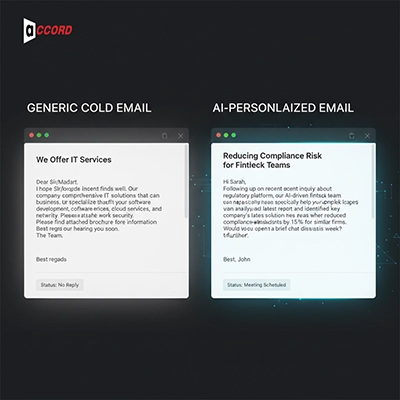
This kind of relevance helps the email feel more natural and less like a template. It also gives the reader a clear reason to keep reading.
When businesses send generic messages, prospects usually ignore them. When the message feels timely and useful, the chance of a reply becomes much stronger.
3. Structured Follow-Up
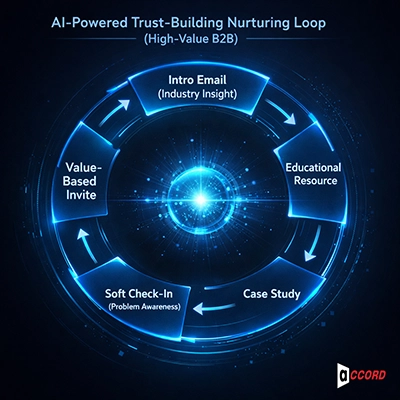
Many campaigns fail because the follow-up process is too weak. Some teams send one email and stop. Others keep following up, but every message feels the same.
A better approach is to guide the conversation step by step.
A simple follow-up flow may include:
A first email with a clear and relevant message
A second email that adds a useful idea or resource
A third message with a case reference or practical example
A final check-in focused on value, not pressure
In many B2B cases, momentum begins after the third or fourth touchpoint. Buyers rarely move forward because of a single email alone.
For a broader view on lead nurturing and how it supports long-term growth, you can also explore: Why Multi-Channel Lead Nurturing Matters for Business Growth.
4. Engagement Tracking and Timely Action
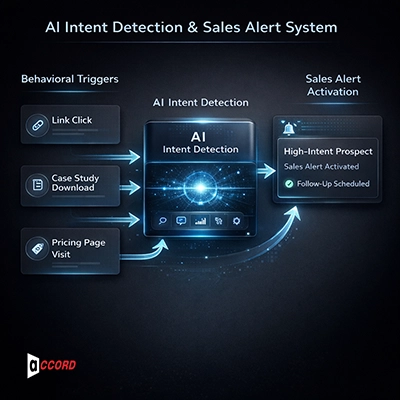
Good outreach also depends on timing. This is where tracking becomes useful.
A smart email system can monitor signals such as:
Link clicks
Repeated visits to a page
Content downloads
Replies or engagement patterns
When a prospect starts showing interest, the sales team can follow up at a more appropriate time. That creates a much better experience than pushing too early or responding too late.
Why It Matters in Today’s B2B Market
Customer acquisition has become more difficult in many B2B industries. Costs are higher, competition is stronger, and buyers are more selective than before.
Because of that, businesses need to be more careful with how they approach cold outreach.
If a company keeps sending outdated, generic email campaigns, it often runs into the same problems:
Low response rates
Weak trust from prospects
Poor sender reputation
Lost opportunities
Wasted time and budget
One of the biggest mistakes businesses make is confusing automation with scale. Automation should help improve relevance and consistency. It should not be used to send large volumes of weak messaging.
If your team is still relying too much on lead volume, this article explains why that approach often creates more problems than results: The Hidden Cost of Bad Leads in 2026.
A Better Framework for Conversion
Most cold email campaigns do not fail because email no longer works. They fail because the process behind the campaign is too weak.
A strong conversion framework needs more than a contact list and a message sequence. It should include a few essential things working together:
A clear understanding of buyer needs
Email copy that feels relevant and useful
Good sending practices that protect domain health
Consistent follow-up across the sales cycle
Clear measurement of progress and response quality
Businesses also need to respect compliance, sender reputation, and overall user experience. If those parts are ignored, even good messaging may fail to reach the inbox or build trust.
You can also review these practical email marketing tips here: Best Email Marketing Practices for 2026.
A Simple Real-World Example
Imagine a mid-sized cybersecurity consulting company that sends around 2,000 cold emails per week. Their open rates are low, replies are rare, and no meaningful meetings are being booked.
At first, the business may think the answer is to increase volume. But that usually creates more pressure without fixing the real problem.
Instead, they improve the process.
They divide prospects into more specific segments. Healthcare companies receive messaging connected to patient data and compliance concerns. Fintech companies receive messaging focused on data protection risk and infrastructure trust.
The result is not instant, but it is stronger. Over time, the outreach starts generating better replies, more relevant conversations, and higher-value business opportunities.
That is what happens when cold email becomes more focused and useful.
If you want to see how this connects with smarter prospecting and data-driven outreach, this article may help: The Best AI Lead Generation Tools in 2026.
Common Misunderstandings

Myth 1: AI Replaces Human Communication
It does not.
AI can help teams sort leads, improve timing, and support message writing, but real trust is still built by people.
Myth 2: More Emails Always Mean More Results
That is not true.
If the targeting is poor and the message is weak, sending more emails will only create more waste and more frustration.
Myth 3: Cold Email No Longer Works
Cold email still works when it is done thoughtfully.
What no longer works well is generic outreach that feels rushed, repetitive, or disconnected from the buyer’s needs.
And if you want to understand why many campaigns underperform, this breakdown covers the most common mistakes: Cold Emails Still Work in 2026 — But Only If You Stop Doing These 7 Things.
What Businesses Should Do Next
If your goal is to turn more cold leads into valuable B2B conversations, start with these steps:
Review your current cold email sequence
Improve your audience segmentation
Focus on more relevant messaging
Create a cleaner follow-up structure
Track engagement signals more carefully
Make sure sales and marketing act together
The strongest results usually come when businesses treat cold outreach as a process, not just a campaign.
The Future of Email Marketing for High-Value B2B Growth
In the coming years, email marketing for B2B growth will become even more data-driven and more focused on real buying signals.
We are likely to see improvements in:
Lead scoring
Intent tracking
Compliance checks
Relevant educational content
Even with better technology, one thing will stay the same. People still want clear communication, trust, and timing that feels right.
That is why the future of AI email marketing is not about replacing people. It is about helping teams communicate better.
Accord Tech Solutions Insight Box
Here are a few useful reminders for businesses building a better cold email process:
Use AI to support better decisions, not to replace strategy
Focus on relevant signals instead of vanity metrics
Never skip audience segmentation
Keep follow-up messages useful and clear
Protect domain reputation and compliance from the beginning
You can also explore more on this topic here: Lead Generation and AI Email Marketing for Better ROI.
Frequently Asked Questions
Related Articles
Email Marketing
Lead Generation and AI Email Marketing for Better ROI
April 18, 2026
Email Marketing
What to Look for in AI Email Marketing in 2026
March 24, 2026
Email Marketing
Best Email Marketing Practices for 2026
April 1, 2026
Email Marketing
Cold Emails Still Work in 2026 if You Avoid These Mistakes
March 15, 2026
Lead Generation
The Best AI Lead Generation Tools in 2026
April 4, 2026
Final Thoughts
Turning cold leads into high-value B2B contracts takes more than sending large numbers of emails. It requires good targeting, relevant messaging, steady follow-up, and timing that makes sense. AI email marketing can support that process by helping businesses stay more organized, more consistent, and more relevant in the way they communicate. But the real result still comes from clear human communication and trust. When those things work together, cold leads stop feeling cold. They start becoming real business opportunities.