You sit down to look at your pipeline. Last week, I got a few leads, but none this week. Sales don't seem to be steady. Some months look good, while others feel unsure. And no one on the team can explain why.
This happens more often than most businesses will admit.
The truth is, this is not easy to hear. Growth that doesn't follow a plan is hard to predict. And in today's market, things that are hard to predict cost a lot.
That's where B2B lead generation services come in.
In 2026, companies that grow don't always have the best products. They are the ones who build systems that consistently attract, qualify, and convert the right business clients. You don't just get leads if you understand this correctly. You make a pipeline that works even when you're not looking for it, creating a strong sales pipeline generation system.
Table of Contents
- Important Points
- In Short
- What are Services for B2B Lead Generation?
- What B2B Lead Generation Is
- Different Kinds or Types of B2B Lead Generation
- Things That Affect the Success of Lead Generation
- Signs That Your Lead Generation Isn't Working
- How to Get Leads Step by Step
- Safe Ways That Really Work
- Things to Avoid
- When You Need Professional Help
- Professional Treatments and Advanced Methods
- Ways to Stop It
- When to Expect It
- Questions That Are Often Asked
- The End
Important Points
• B2B lead generation services make it easier to get business clients on a regular basis.
• The best results come from using both inbound and outbound strategies.
• LinkedIn lead generation and cold email outreach are still the main ways to get new customers.
• In B2B settings, the quality of leads is more important than the number of leads.
• A good lead qualification process keeps salespeople from wasting their time.
• Focused outbound systems help small teams grow faster, especially in lead generation for small business cases.
• AI tools are changing how we target people, personalize messages, and build sales pipeline generation systems.
In short
B2B lead generation services are systems and processes that use email, LinkedIn, SEO, and paid campaigns to find, attract, and turn business prospects into qualified sales leads.
The best systems are those that combine the following:
• Targeting based on data
• Outreach through many channels
• Ongoing improvement
What are services for B2B lead generation?
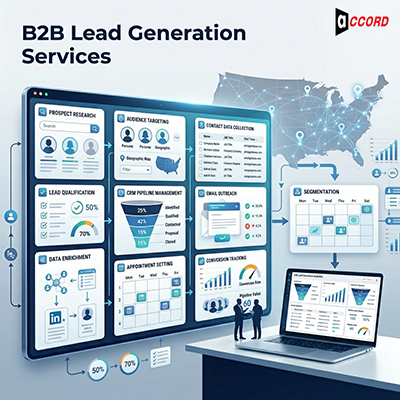
At its most basic level, B2B lead generation services are the steps you take to find businesses that might need your product or service and get them into your sales process and customer acquisition funnel.
But in real life, it's more complicated than that.
In B2B, a lead usually goes through two steps. First, a lead that is good for marketing. This person has shown interest, maybe by visiting your website, downloading something, or interacting with your content. The next step is the sales-qualified lead. This is when things get real. It means that the prospect has been checked out and is thought to be a real chance.
Most businesses have trouble with the space between these two stages.
It's easy to get leads. The real work starts when you get the right leads and help them make a decision. Understanding why volume alone is killing B2B growth in 2026 explains exactly why quality beats quantity in this stage of the funnel.
What B2B Lead Generation is
Companies don't fail because they don't work hard enough. They don't work because they aren't consistent.
In the past, a lot of businesses used referrals or only contacted people once in a while. That worked for a time. But it doesn't grow.
The way people buy things today is different. They do research. They look at both sides. They think about it before they even talk to a sales rep.
This change is one of the main reasons why B2B lead generation services exist.
Businesses need a way to
• Get to buyers earlier in their journey
• Keep your presence known while you research
• Make a lot of points of contact before making a choice
Without a structured system, growth happens in response to events instead of being planned. For a clear picture of what is actually causing most B2B lead generation efforts to fail right now, the guide on why most B2B lead generation is failing in 2026 covers the patterns that smart companies are already correcting.
Different kinds or types of B2B lead generation
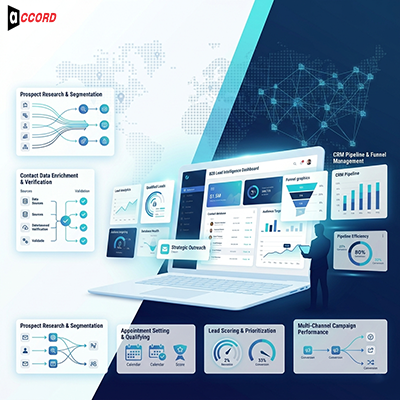
Getting Leads from Inbound Sources
Inbound is all about bringing in potential customers by giving them value.
Blogs, SEO pages, webinars, and case studies are all examples of this kind of content. It's a simple idea. You don't chase after leads; instead, you make content that answers their questions so they can find you.
The benefit is trust.
People already trust you when they find your business through useful content. But the bad thing is time. Inbound usually takes months to show real results.
Generating Leads Outbound
Outbound changes the way things are done as part of an outbound lead generation strategy.
You go straight to the prospect instead of waiting. This includes sending cold email outreach, finding leads on LinkedIn through LinkedIn lead generation, and sometimes paying for ads.
The benefit is speed. You can start talking to people in a few weeks.
But outbound needs discipline. You need to have accurate data, strong messages, and regular follow-ups. It doesn't work very well without it.
A mix of approaches
Most successful businesses don't pick one over the other.
They use both.
This balance between inbound vs outbound lead generation creates a system where inbound leads build long-term authority and outbound leads fill the short-term pipeline.
Things that affect the success of lead generation
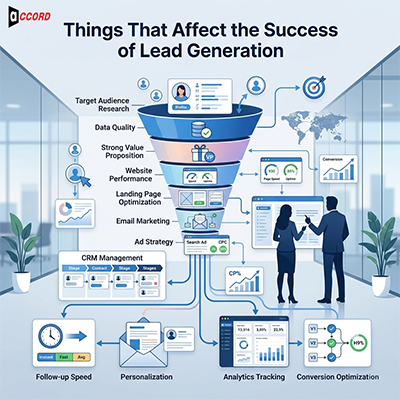
There is one big reason why lead generation almost never fails. It usually breaks down because of a few small problems that get worse over time.
Targeting is one of the most important things.
Your message becomes unclear if your audience is too broad. And messages that aren't clear don't work. Everything changes when you make a clear ideal customer profile.
Another thing to think about is the quality of the messages.
People often don't realize how quickly decision-makers get rid of communication that isn't useful. People won't pay attention to your message if it doesn't relate to a real business problem.
Another hidden problem is the quality of the data.
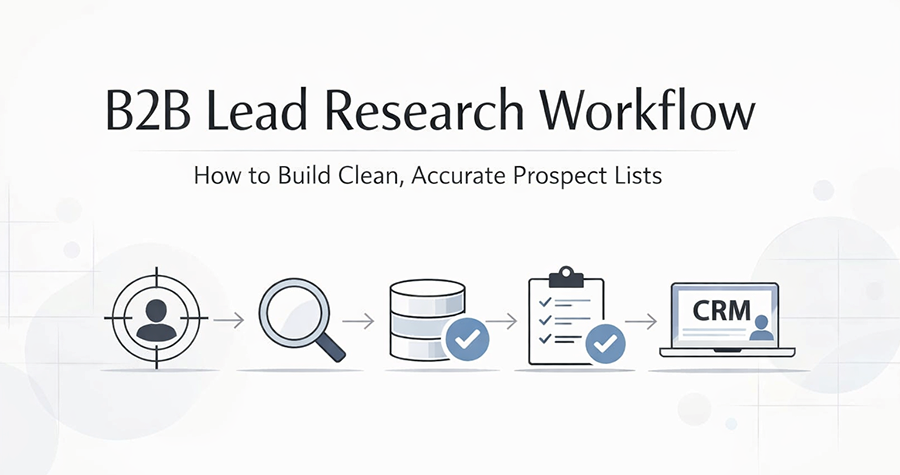
Incorrect or out-of-date contact information lowers response rates and hurts your campaign's performance. The guide on how to build clean, accurate B2B prospect lists covers the exact workflow that keeps data quality from killing good campaigns.
And then there's the follow-up.
A lot of businesses give up after one or two tries. In reality, most B2B conversations need more than one touchpoint before someone responds.
A strong lead generation system not only attracts prospective customers but also supports both sales and marketing teams in aligning their market strategy more effectively.
When your messaging is built around a clear ideal customer profile ICP, it becomes easier to identify different types of lead and focus on those who are actually ready to buy, which ultimately influences better purchase decisions.
High-quality blog posts and consistent communication help builds trust over time, improving the overall customer experience from the initial contact stage to conversion.
At the same time, nurturing both new leads and existing customers allows businesses to expand their customer base in a more sustainable way.
When executed properly, these lead generation efforts can be done cost effectively, ensuring long-term growth without unnecessary spending.
Signs that your lead generation isn't working
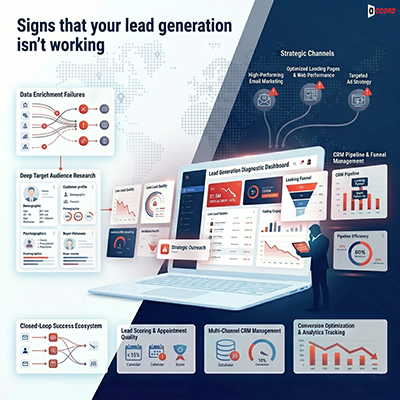
The system doesn't always break loudly. It goes away.
You might see that leads are coming in, but not many of them turn into sales. Or there are sales meetings, but no deals are made. Or worse, some months are full and others are completely empty.
These problems aren't random.
They usually show that there are problems with targeting, messaging, or the lead qualification process.
Another sign that something is wrong is when marketing and sales don't work together. Sales is about quality, while marketing is about quantity. Both sides are unhappy when things aren't in sync. For teams trying to connect these two departments around a shared revenue metric, the guide on building a marketing-generated pipeline from leads to revenue gives a practical framework for making that alignment stick.
How to Get Leads Step by Step
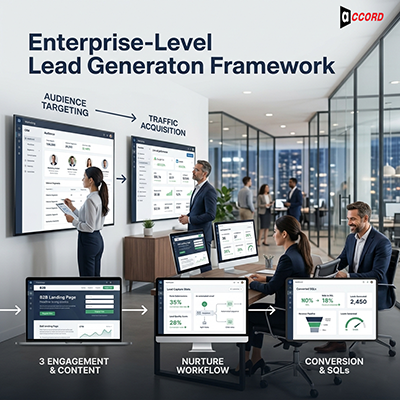
A clear flow is what makes a system strong.
First, you figure out who you want to reach. This includes things like the industry, the size of the company, and the people who make decisions.
After that, you use research or data tools to make a list of potential customers.
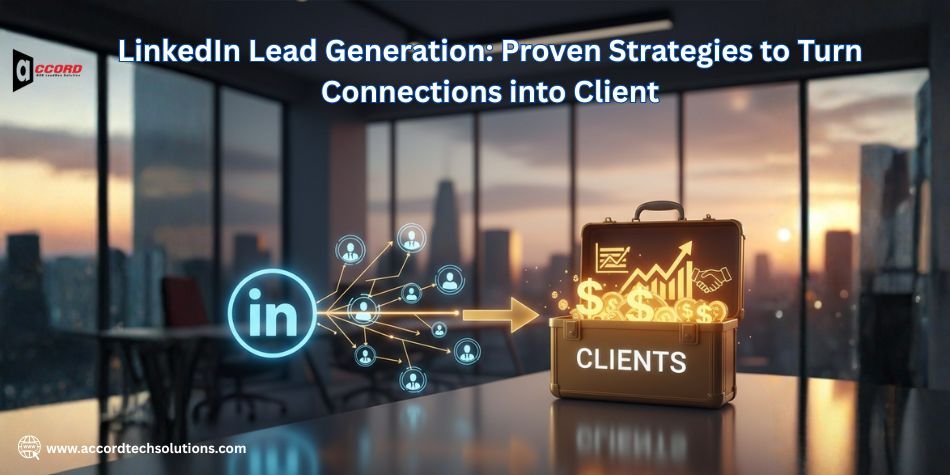
Then, you start outreach campaigns. This is where LinkedIn lead generation and cold email outreach come in, often supported by appointment setting services to book meetings. For a proven approach to LinkedIn specifically, the guide on LinkedIn lead generation strategies that turn connections into clients covers what actually works in 2026.
You qualify prospects once they show interest. Not every lead is worth your time. A good lead qualification process makes sure your team only works on real opportunities.
Finally, qualified leads go through the sales process, where deals are made.
Safe Ways That Really Work
There are a lot of ways to get things done online. But only a few of them always get results.
One of the best ways to reach people is still personalized outreach. People pay attention to messages that seem important.
Strategies that use more than one channel also work well. Getting in touch with someone through email and LinkedIn makes them more likely to see your message and respond. For teams building this kind of multi-channel outreach system, the guide on why multi-channel lead nurturing is the secret to scaling your service business explains how to sequence these touchpoints for maximum response.
Another good way to market is through content. Over time, it builds authority and brings in leads.
These ways are easy. But when done consistently, they work very well.
Things to Avoid That Are Wrong or Harmful

Some mistakes happen more often than you might think.
One of them is going after too many people at once. Most of the time, trying to reach everyone doesn't work.
Another mistake is depending on just one channel. Your pipeline is weak if it only gets its data from one place.
Not paying attention to data quality is also a problem. Bad data leads to bad results.
And finally, not measuring how well things are going. It's hard to know how to improve without keeping track of metrics.
When you need professional help
There comes a time when you can't do it all by yourself.
If your campaigns aren't always the same or your team doesn't have enough time or knowledge, it might make sense to hire a lead generation company USA.
A best lead generation agency doesn't just send out emails. It makes systems, improves targeting, and, over time, it makes things work better.
Professional Treatments and Advanced Methods
Lead generation is changing quickly in the modern world.
Using AI lead generation system tools is one of the biggest changes. These systems help you look at data, find promising leads, and even write messages. For a full breakdown of what the best AI lead generation tools look like in 2026, the guide to the best AI lead generation tools covers the options that are actually delivering results for B2B teams right now.
Intent-based targeting is another advanced method. Instead of guessing who might be interested, businesses focus on people who are actively looking for solutions.
Account-based marketing is also getting more popular. Companies don't try to reach a lot of people; instead, they focus on a few high-value accounts. For teams deciding between these two approaches, the guide on how to choose between inbound and outbound lead generation helps clarify which model fits your business stage and goals.
Ways to Stop It
The best way to fix problems with lead generation is to stop them before they happen.
Starting from scratch to build a system helps keep things consistent.
You need to keep track of performance on a regular basis to know what's working.
And by constantly improving your messaging, you make sure your outreach stays relevant.
When to Expect It
The way you do things will affect the results.
Outbound campaigns can get results in just a few weeks.
It usually takes a few months for inbound strategies to gain traction.
It can take three to six months for a fully optimized system to stabilize and give consistent results. For a full picture of what the current lead generation landscape looks like and what trends to prepare for, the guide on 10 lead generation trends to optimize your 2026 strategy is worth reviewing before you finalize your approach.
Questions that are often asked
Useful Advice
Don't just think about how much you have; think about how good it is. A smaller number of well-targeted leads often does better than a big list of contacts that don't matter.
Start with the basics. At first, you don't need complicated systems. Even a simple outreach setup can get things done.
Always test. What works today might not work tomorrow. The process includes making things better all the time.
The end
B2B lead generation services for businesses are more than just marketing. They are a way to grow.
When done right, they make pipelines that are easy to predict, raise conversion rates, and help with long-term growth.
The key is easy.
Make a system. Keep it up. Get better over time.
That's how real growth happens. If you are ready to build a consistent pipeline instead of chasing random leads, Accord Tech Solutions lead generation services are built to help you do exactly that.