Can BPO teams really hit harder 2026 targets without simply hiring more agents?
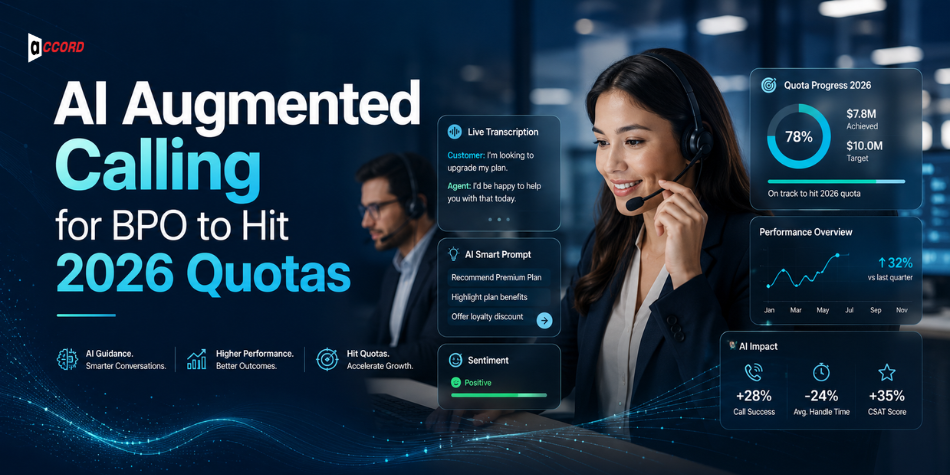
Yes, but not by replacing people. The shift is coming from AI augmented calling for BPO, where live agents get real-time guidance, faster data access, smarter routing, and better follow-up support.
That matters now because the BPO market keeps expanding, customer response expectations remain high, and contact center leaders are under pressure to improve both speed and quality at the same time.
Grand View Research estimates the global BPO market reached $328.37 billion in 2025 and projects 9.9% CAGR through 2033, while HubSpot’s widely cited service research shows 90% of customers rate an immediate response as important or very important.
The old way was simple, but messy. Hire more agents, train them fast, push call volume, and hope quality holds. The new way is different.
AI supports the agent during and after the conversation, automates repeatable steps, and surfaces the next best action while the human still owns the relationship. The result is usually better quota coverage, lower waste, and a more stable operation. That is the lens this article uses.
If you manage BPO sales, customer support, operations, training, or digital transformation, this matters to you. You are not just choosing software. You are deciding how your team will perform under tighter SLAs, tougher client scrutiny, and more complex buyer expectations in 2026.
Table of Contents
- What is AI Augmented Calling for BPO?
- Why BPO Buyers Are Rethinking Call Performance in 2026
- How AI Call Center Technology Works in a Live BPO Environment
- The Role of AI in BPO Industry Growth and Client Expectations
- Where AI Call Center Automation Fits and Where Human Agents Still Matter
- How AI Sales Calling Helps BPO Teams Close More Conversations
- Seven Practical Use Cases of AI-Augmented Calling in BPO
- What Changed from the Old Model to the New Model?
- How to Implement AI Augmented Calling for BPO Without Breaking Operations
- Executive Summary
- FAQs
What is AI augmented calling for BPO?

AI augmented calling for BPO is a model where artificial intelligence supports live agents before, during, and after customer calls.
It helps with routing, prompts, summaries, analytics, coaching, and next-step recommendations, while humans still handle judgment, empathy, and complex decisions.
In practice, this AI system combines artificial intelligence AI with natural language processing (NLP) to support agents during customer calls, delivering agent assistance, real-time insights, and a stronger human touch throughout the customer journey.
In plain English, it is not a robot replacing your team. It is a support layer that makes your team better at the exact moment performance matters. That distinction is important because too many articles blur the line between AI automation and AI assistance.
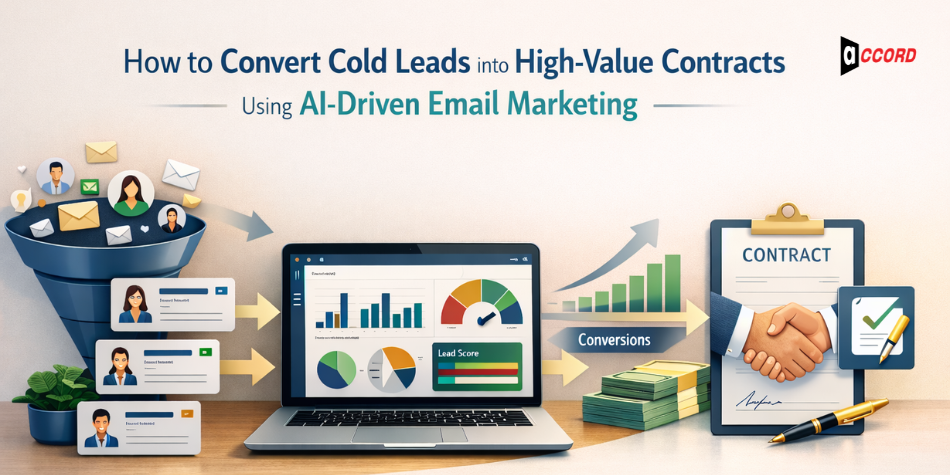
In practice, this model is used in outbound sales, inbound support, collections, appointment setting, lead qualification, renewals, retention, and multilingual service. For teams that also rely on outbound email as part of their outreach mix, understanding how AI email marketing helps convert cold leads into high-value B2B contracts is directly relevant to how calling and digital channels work together.
The strongest BPO environments use AI to reduce friction, not to remove human value. That may sound obvious. It is not. Many teams still buy isolated tools and then wonder why results stay flat.
Why BPO buyers are rethinking call performance in 2026

Buyers now expect BPO partners to deliver speed, consistency, transparency, and measurable outcomes. They want proof that quality can scale, not just promises that headcount is available.
The market conditions explain why. BPO growth is being driven by digital transformation, cloud platforms, analytics, and automation investments. At the same time, buyers are comparing vendors on response speed, resolution quality, compliance, and reporting maturity, not only on labor cost.
This is where the conversation shifts. Traditional outsourcing used to sell capacity. Now it increasingly sells performance.
For many business process outsourcing (BPO) providers, AI now helps streamline business operations, reduce operational costs, and create a measurable competitive advantage while improving the overall customer experience.
A buyer may still ask about seat count, staffing, and language coverage. But behind that, the real question is this: can your team hit numbers without losing consistency?
That pressure shows up everywhere. Support leaders want faster first responses. Revenue teams want more qualified conversations. Operations leaders want shorter ramp time for new hires.
Finance wants predictable cost per outcome. That mix is exactly why AI augmented calling for BPO has become more relevant than generic automation language. The same pressure is reshaping how companies think about why most B2B lead generation is failing in 2026 — and what smarter companies are doing differently.
How AI Call Center Technology works in a live BPO environment

AI Call Center Technology combines speech recognition, natural language processing, sentiment analysis, CRM integration, workflow automation, and analytics so the system can understand the call, support the agent, and record the outcome with less manual effort.
Think of it as a stack, not a single feature. One layer transcribes the conversation. Another identifies intent. Another checks the customer record. Another suggests a response or compliance-safe script. Another writes the summary back into the CRM. The strongest systems also score interactions for QA and coaching.
Top-ranking articles talk about these features, but often as separate tools. In live operations, the value comes from orchestration. If your transcription works but your CRM notes are still manual, agents still lose time.
If your routing works but your coaching is delayed by a week, supervisors still react too slowly. That is why some pilots look impressive in demos and then disappoint on the floor. The workflow never really changed.
This is also why many decision-makers now evaluate “production-grade” readiness instead of shiny features. Coverage, latency, governance, integrations, and reporting matter more than a long feature list. That theme shows up clearly in newer contact center AI discussions.
The role of AI in BPO Industry growth and client expectations
AI in BPO Industry growth matters because it changes what clients consider normal. Faster onboarding, stronger QA visibility, multilingual support, and self-service are increasingly seen as baseline capabilities, not premium extras.
The BPO model itself is not new. What changed is the technology layer buyers now expect around it. They want omnichannel consistency across voice, chat, and email. They want service to feel fast without sounding rushed.
They want reporting that proves what happened, not vague monthly summaries. Several current articles reflect this shift, especially around real-time guidance, self-service, and AI-enabled scalability.
There is also a credibility issue here. A BPO may already have experienced people and a solid reputation, but large buyers often look for evidence that quality can survive scale.
That usually means a more data-driven operation with auditable workflows, better summaries, faster training, and tighter compliance support.
This is where brand-level positioning becomes useful. Companies exploring AI Solutions for BPO in USA, AI Customer Support Solutions USA, or broader operational support models often compare not just software vendors, but also delivery partners that understand both marketing language and process design.
In that context, Accord Tech Solutions can be positioned naturally as part of a broader conversation around digital operations, workflow maturity, and scalable service systems, not just as a name-drop.
Where AI Call Center Automation fits and where human agents still matter

AI Call Center Automation is best for repetitive, structured, and rules-based work. Human agents still matter most in emotional, high-risk, high-value, or exception-heavy conversations.
This is one place where businesses still make expensive mistakes. They try to automate the whole journey. Then the experience becomes brittle. A simple billing question works fine. A messy complaint does not. The smarter approach is layered.
One reason AI augmented calling for BPO is gaining traction is that it solves several different operational problems at once.
AI handles obvious tasks first. That includes authentication prompts, routing, call tagging, note generation, knowledge surfacing, repetitive FAQs, basic order status checks, and follow-up triggers.
Humans step in where nuance matters. That includes negotiation, upsell judgment, frustration management, complaint recovery, retention saves, and complex cases.
This hybrid model appears repeatedly across current industry content for a reason. It is the setup that usually balances speed and customer trust best. Even strongly AI-forward pages still acknowledge that human-plus-AI collaboration remains the practical path in 2026. Understanding how the best AI lead generation tools work in 2026 gives helpful context for how these systems are being evaluated across sales and support environments.
How AI Sales Calling helps BPO teams close more conversations

AI Sales Calling improves calling outcomes by prioritizing leads, reducing dead time, guiding the rep in real time, and making follow-up more consistent after the conversation ends.
A lot of articles in this space focus only on support. That misses a major revenue angle. BPOs are not just answering calls. Many are booking demos, qualifying leads, running outbound campaigns, managing renewals, and rescuing churn-risk accounts.
This is when AI predictive dialer logic and AI sales call optimization start to make a difference. Instead of just calling a flat list in order, smarter systems can rank leads based on their score, previous interactions, local time, call history, and likely availability.
AI can bring up objections, suggested talking points, compliance prompts, and account data that is relevant during the call. After the call, it can write the note, tag the intent, give the next step, and let the right rep or workflow know.
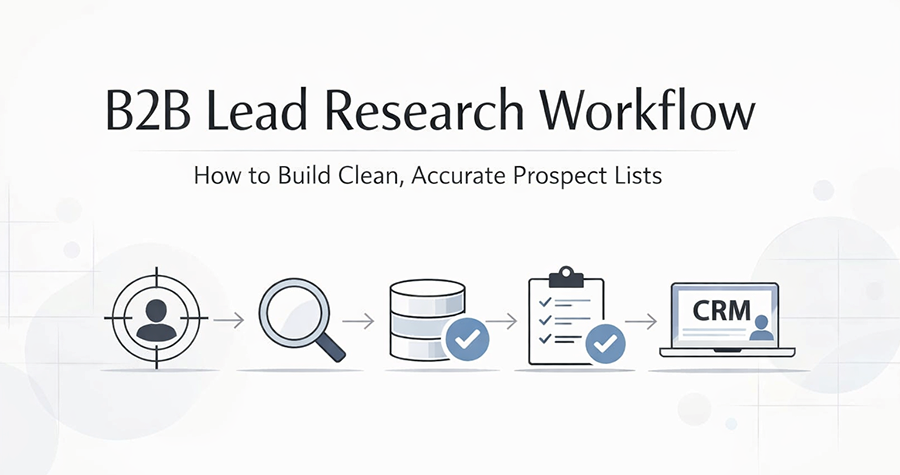
That does not magically make average reps elite. But it reduces the little losses that quietly kill pipeline performance. Missed callbacks. Weak notes. Slow follow-up. Bad routing. Wrong contact priority. In real sales operations, those small failures add up fast. For teams dealing with bad prospect data on top of this, the guide on building clean and accurate B2B prospect lists addresses one of the most common root causes of poor calling outcomes.
Seven practical use cases of AI-augmented calling in BPO

One reason AI augmented calling for BPO is gaining traction is that it solves several different operational problems at once.
First, agent assist. Real-time suggestions can reduce search time and help agents stay accurate under pressure. NiCE notes that AI can reduce Average Handle Time by predicting intent and streamlining repetitive work.
Second, coaching. Many call centers struggle with high turnover. Some industry content citing McKinsey places annual attrition around 60% in many contact center environments, which helps explain why live coaching and faster ramp-up matter so much.
Third, conversational self-service. AI-powered customer support can deflect routine requests before they hit the queue, especially on order status, billing basics, appointment handling, and standard troubleshooting.
That takes some of the pressure off the queue and keeps people able to handle tougher calls.
Fourth, escalation based on feelings. Instead of letting the call get worse, systems that can tell when someone is frustrated or confused can start a smarter handoff. Fifth, automation of CRM.
AI call analytics and auto-summaries reduce wrap-up time and create cleaner records. Sixth, multilingual support.
AI voice assistants for BPO can help standardize scripts, speed guidance, and support coverage models across regions. Seventh, workflow intelligence. This is where call center automation technology starts improving not just call handling, but the whole operating system behind it.
What changed from the old model to the new model?
The old model depended on people memorizing scripts, toggling between systems, typing summaries after calls, and waiting for delayed QA feedback. It worked, but only up to a point. Once volume spiked, quality tended to wobble.
The new model uses AI tools for call centers to move knowledge into the workflow itself. Instead of expecting the agent to remember everything, the system brings the right information forward at the right moment. Instead of reviewing a tiny sample of calls later, QA can work with wider coverage. Instead of treating training as a separate event, the work itself becomes part of training.
That is the core reason many leaders say how AI improves call center performance is less about replacing labor and more about reducing operational drag. You are shrinking the distance between information and action.
Common misconceptions
Several misconceptions still surround AI augmented calling for BPO and AI automation in customer service.
Common myths include:
AI calling means robots replacing agents.
In reality, most AI call center technology supports agents rather than replacing them.AI automatically improves results.
Without clean CRM data, updated scripts, and strong workflows, AI augmented calling for BPO may not deliver better outcomes.AI pilots fail because of weak technology.
Most failures happen when teams add tools without fixing workflows and governance.Automation only helps support teams.
Today AI automation in customer service also supports sales through AI sales calling, lead qualification, and follow-ups.
A realistic example
Imagine a mid-sized BPO handling outbound qualification for a software client and inbound service for an e-commerce brand. Before augmentation, new agents need two to three weeks to feel comfortable. Call notes are inconsistent. Supervisors review only a sample. Sales callbacks slip because CRM updates are late.
Now layer in AI augmented calling for BPO. The outbound team gets lead-priority cues, objection prompts, and auto-written notes. The inbound team gets account context, return-policy guidance, sentiment alerts, and post-call summaries. Suddenly, the floor feels less chaotic. Not perfect. Just more controlled.
That kind of shift may not make for flashy headlines, but it is exactly how quotas get less fragile. Fewer dropped details. Cleaner follow-up. Faster coaching. Better visibility. In my view, this is where the real benefits of AI in BPO industry show up. Teams that pair this with smarter multi-channel lead nurturing across email, calling, and digital touchpoints tend to see the strongest overall results.
How to implement AI augmented calling for BPO without breaking operations

Start small, but not randomly. Pick one workflow with enough volume to matter and enough structure to measure. Appointment setting is usually a decent candidate. So is order-status-heavy support.
Then set the baseline. Track AHT, FCR, conversion rate, wrap-up time, QA variance, ramp time, and cost per resolved interaction. Without that baseline, every AI conversation becomes vague and political.
Next, map where the system should assist. Routing? Prompts? Summaries? Compliance scripts? Follow-up triggers? You do not need everything first. You do need clarity.
This is where teams exploring AI Automation Services in USA – Accord Tech Solutions or similar service-led support models often need help. The real challenge is rarely “buying AI.” It is sequencing it correctly. For a useful parallel, the guide on 10 lead generation trends to optimize your 2026 strategy covers how to sequence AI-assisted outreach without disrupting what already works.
After that, test handoffs and governance. Review data accuracy. Make sure the AI knows when not to act. In practice, strong escalation logic is often more valuable than aggressive automation.
The future of AI in BPO
Several 2025 and 2026 industry pieces point in the same direction: more voice AI, deeper analytics, stronger orchestration, and better human-AI collaboration across the contact center stack. Some also point to broader enterprise AI adoption momentum beyond the contact center itself.
I would add one caution. The future is not just “more AI.” It is better fit. Buyers will likely care less about whether a vendor has AI and more about whether the system can show measurable gains in conversion, containment, ramp time, QA coverage, and compliance discipline.
That is also why AI in BPO Industry conversations are drifting toward operating models rather than tool lists. The winners will probably be the teams that make AI boring in the best possible way. Embedded. Measurable. Quietly reliable.
Practical lesson
The practical lesson is simple: do not treat AI as a layer of noise. Treat it as workflow design.
For BPO leaders, that means four recommendations. First, start with one measurable call flow. Second, fix knowledge and CRM discipline before scaling automation. Third, use AI to support agents, not corner them. Fourth, report outcomes in business language. Quota attainment, resolution time, QA consistency, and customer satisfaction are easier for decision-makers to trust than vague “innovation” claims.
That is the real value behind AI Customer Support Solutions USA and broader AI Solutions for BPO in USA discussions. Buyers do not just want a smarter call. They want a smarter operating model. The same logic applies to the hidden cost of bad leads in 2026 — volume without quality destroys the economics of any AI-assisted calling operation.
Executive summary
The strongest approach is not full replacement. It is a hybrid model where AI supports the call, the rep, and the workflow around the interaction.
AI augmented calling for BPO helps teams improve quota coverage, response speed, QA visibility, and follow-up consistency without simply adding headcount.
Accord Tech Solutions can be positioned naturally in this space as a partner that understands AI-led digital operations, workflow structure, and business-facing service delivery, rather than as a pure software seller.