Is Generative Engine Optimization replacing SEO in 2026?
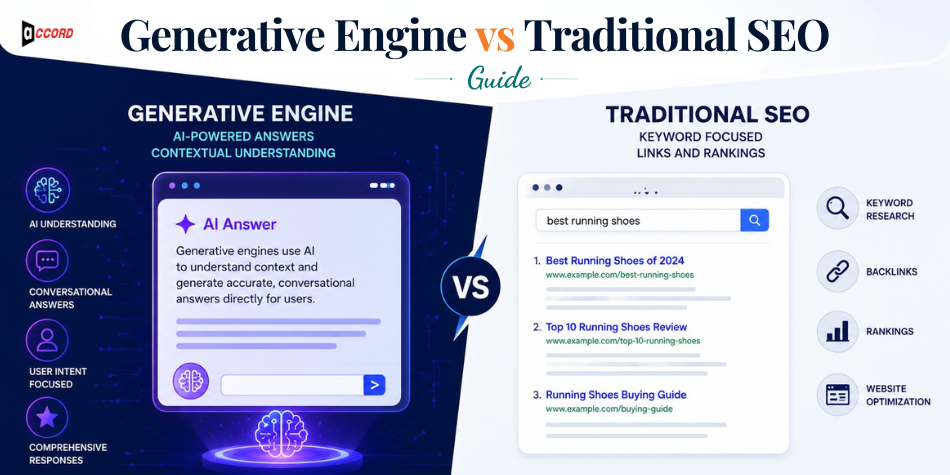
Not exactly. What appears to be happening is a shift in how visibility is earned. Traditional SEO still helps pages get indexed, ranked, and discovered. Generative Engine Optimization focuses on getting your information surfaced, cited, and trusted inside AI-generated answers.
In practice, the winners are usually the brands that combine both. Google says the same basic SEO rules still work for AI search. GEO research also shows that clear content and well-organized answers can help your content appear more often in AI results.
Search has changed before. Mobile changed query behavior. Voice search changed phrasing. This moment feels bigger because users increasingly get complete answers without clicking through ten blue links.
Google says AI Overviews and AI Mode are designed to help users explore complicated questions quickly. This shift is visible in features like google s ai overviews, which present synthesized answers directly in search results.
SparkToro’s 2024 study showed that many Google searches in the U.S. and EU ended without people clicking any website.
That does not mean websites are irrelevant. It means the rules of discoverability are getting more layered. Traditional search engine optimization still matters, but discovery now increasingly happens through ai assistants that summarize information for users.
For marketers, founders, content teams, students, and SEO leads, the real issue is simple. You are no longer optimizing only for ranking. You are optimizing for mention, citation, synthesis, and trust. That is where this guide will stay focused.
Table of Contents
- What is Generative Engine Optimization?
- Why Search is Changing
- GEO vs Traditional SEO: What Changed and What Still Matters
- AI Search Engine Optimization and the Rise of Answer-First Discovery
- How AI Builds Answers
- Why GEO Matters for the Full Marketing Funnel
- AI SEO Strategy 2026: A Practical Framework for Brands
- How to Optimize for AI Search Engines
- GEO Myths
- Real-World Example
- SEO in 2026
- FAQs
What is Generative Engine Optimization?
Generative Engine Optimization means writing content in a way that AI systems can understand, trust, and use when they create answers. Traditional SEO tries to win a place in search results. Generative Engine Optimization tries to win a place inside the answer itself.
If you are wondering what is generative engine optimization, the cleanest explanation comes from the shift in user behavior. A user asks a detailed question. The AI system retrieves supporting material, synthesizes multiple sources, and presents a direct response.
Your page still matters, but now it also matters because AI can quote it, mention it, or use it as proof. That is a different kind of visibility.
This is also why AI search visibility has become such an important concept. In the older search model, success often meant a higher ranking and better click-through rate.
In the newer model, success may also mean your expertise shapes the answer even when the visit happens later, or not at all. That can feel frustrating if you only look at sessions. From a brand influence perspective, though, it is a big deal.
Why Search is Changing
Google says AI Overviews and AI Mode may run many related searches across different topics before showing an answer.
That matters because it widens the pool of pages that may influence the final answer. It also helps explain why classic rank tracking alone does not fully describe modern search visibility. For a deeper look at how these ranking shifts are playing out, see how AI ranking factors in 2026 are changing how people search.
At the same time, the zero-click trend is real enough that marketers cannot ignore it. SparkToro’s 2024 study found that about 360 out of 1,000 Google searches in the U.S. led to clicks, and about 374 out of 1,000 in the EU.
These studies may not be perfect, but they clearly show that search engines are giving more answers directly on the results page. If you want to understand how to still capture traffic in this environment, the guide on zero-click search and featured snippets covers practical approaches.
Google says AI in Search is also helping people ask deeper questions and click on better results. That tension is worth keeping in mind. The landscape is not one clean story.
Both things can happen at the same time. Some quick searches may get fewer clicks, but deeper searches may still bring valuable visits.
GEO vs Traditional SEO: what changed and what still matters

GEO vs SEO difference comes down to the primary success mechanism. SEO is about search result visibility and traffic acquisition. GEO vs Traditional SEO is about whether your content is merely found or actually used in AI-generated responses.
Traditional SEO still matters because Google says the same basic SEO rules also work for AI Overviews and AI Mode.
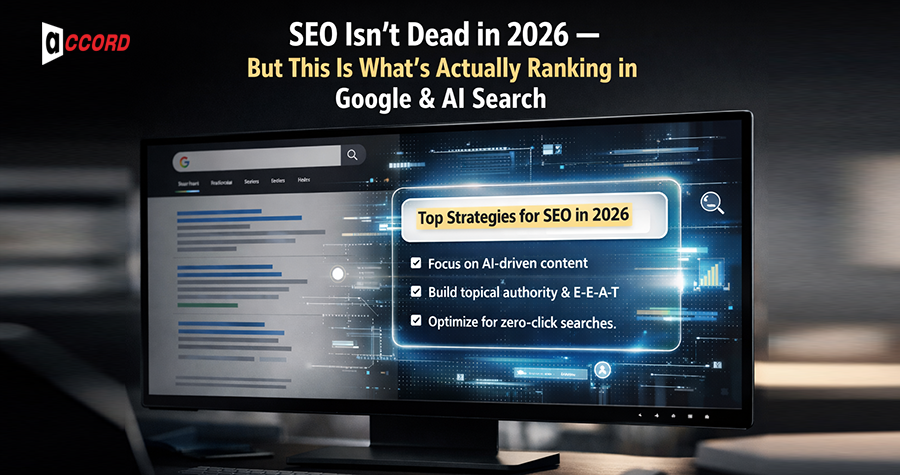
Your content still needs to be crawlable, indexable, text-accessible, internally linked, and useful. That point gets missed in a lot of shallow GEO content. Generative Engine Optimization does not erase SEO fundamentals. It builds on them. For a clear breakdown of what is still working right now, see what is actually ranking in Google and AI search in 2026.
The practical distinction looks like this:
• SEO optimizes for ranking, clicks, snippets, and site traffic
• Generative Engine Optimization optimizes for citations, answer inclusion, topic authority, and AI search visibility
• The best modern strategy blends both because a strong source page is more likely to rank and more likely to be referenced
That is also where Answer Engine Optimization (AEO) enters the conversation. Answer Engine Optimization (AEO) usually focuses on making content easy for systems to extract as direct answers.
Answer Engine Optimization (AEO) is close to AI Search Engine Optimization, but GEO is bigger because it also looks at brand authority and AI systems. For teams already thinking about AEO, the guide on how brands get cited in ChatGPT and Google AI is worth reading alongside this one.
AI Search Engine Optimization and the rise of answer-first discovery

AI Search Engine Optimization means preparing your website so AI systems like AI Overviews, AI Mode, ChatGPT-style search, and Perplexity can find and use your content.
A lot of teams assume this is only about formatting. It is not. Formatting helps, yes.
Clear headings, simple definitions, easy-to-read sections, and strong proof all help your content. They also improve your chances of showing in featured snippets.
But SEO for AI search engines and content optimization for AI search also depends on whether your site consistently demonstrates expertise across a topic cluster. One polished article is rarely enough. AI systems tend to perform better when they can connect the dots across a body of content.
If your site explains one topic in many helpful ways and links the pages clearly, AI systems can understand it more easily. Content that is easier to parse is often easier to cite.
How AI Builds Answers

A simple way to understand this is that many systems use LLM search optimization to read questions and create answers.
Many AI search systems follow four main steps: find information, check sources, build an answer, and show links or citations.
Google also says AI search may run several related searches to collect more information before creating the final answer.
So, how AI search engines rank content is not exactly the same as how traditional SERPs rank pages. In a traditional SERP, ranking is explicit.
For AI answers, your content may be included if it is clear, helpful, trustworthy, and easy for the system to understand.
Researchers created something called GEO-bench and found that some optimization methods improved AI visibility by up to 40 percent.
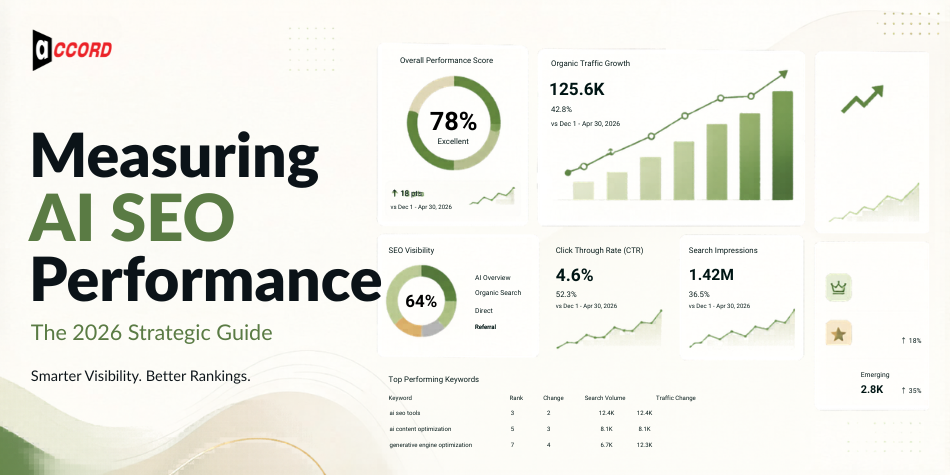
This does not guarantee results for every website, but it shows that clear structure and presentation can help content appear in AI answers. To understand how brands are currently measuring this kind of AI visibility, the 2026 strategic guide on measuring AI SEO performance covers the metrics that actually matter.
Why Generative Engine Optimization matters for the full marketing funnel
One mistake I still see is treating GEO as a top-of-funnel curiosity. It is more than that.
If a brand appears often in AI answers during early research, people may remember it before they visit the website.
Later, when the same buyer asks for comparisons, shortlists, or implementation help, prior visibility can act like soft validation.
A user might first see your brand in an AI answer, then search for it later and visit your site when they are ready.
Google says AI search helps people explore topics in deeper and more complex ways.
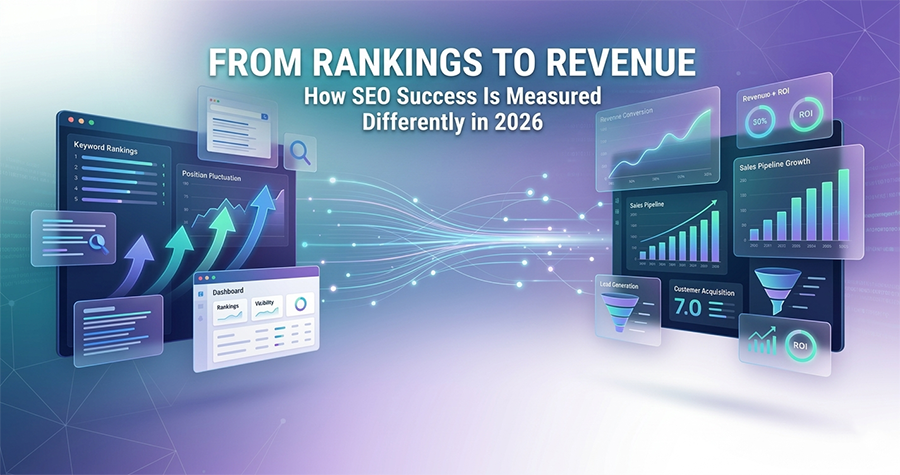
If your content clearly explains your topic and compares options honestly, your brand can influence people earlier. Quiet influence often outperforms loud promotion. This is also why SEO success is now measured differently in 2026 — from rankings to revenue signals that reflect the full journey.
AI SEO Strategy 2026: a practical framework for brands

A workable AI-driven SEO strategy 2026 starts with topic authority.
Pick the subjects your brand truly owns. Not everything. Just the areas where you have firsthand knowledge, useful data, or repeatable expertise.
Then create connected content about those topics instead of random pages. This structure builds a strong geo strategy.
Second, improve structure. For how to optimize for AI search engines, the most useful pattern is answer first, depth second.
Give a short explanation under each major heading, then add examples and details so readers and AI systems understand clearly.
Third, make the evidence stronger. Use original examples, specific numbers, or trustworthy sources.
Google also recommends writing for people, using clear text, linking pages properly, giving users a good page experience, and using correct structured data. These are simple but important practices.
Fourth, expand measurement.
Track rankings and organic traffic, yes.
You should also track brand searches, AI citations, impressions on informational queries, and signals from direct visits or sales conversations. For small businesses building this strategy from scratch, the guide on how small businesses can compete with an AI-powered SEO strategy offers a practical starting point.
How to optimize for AI search engines
Start by writing pages that answer one real question clearly. Then broaden into supporting subtopics.
Use descriptive headings that reflect actual search intent. Define terms in plain English.
Link related pages so the site reads like a connected knowledge base.
When helpful, use tables, comparison sections, step-by-step frameworks, examples, and case studies.
You are writing content that helps people first, but it is also organized so AI systems can summarize it correctly. If you want to understand which specific SEO tactics are still moving the needle in today's algorithms, see which SEO tactics still help websites rank well.
GEO Myths
The first myth is that GEO replaces SEO. It does not. Google explicitly says the same foundational SEO best practices still apply to AI features.
The second myth is that one format hack will make you show up everywhere.
Research shows GEO works differently in different industries, and Google says AI Overviews and AI Mode may use different models and methods.
The third myth is that traffic is dead.
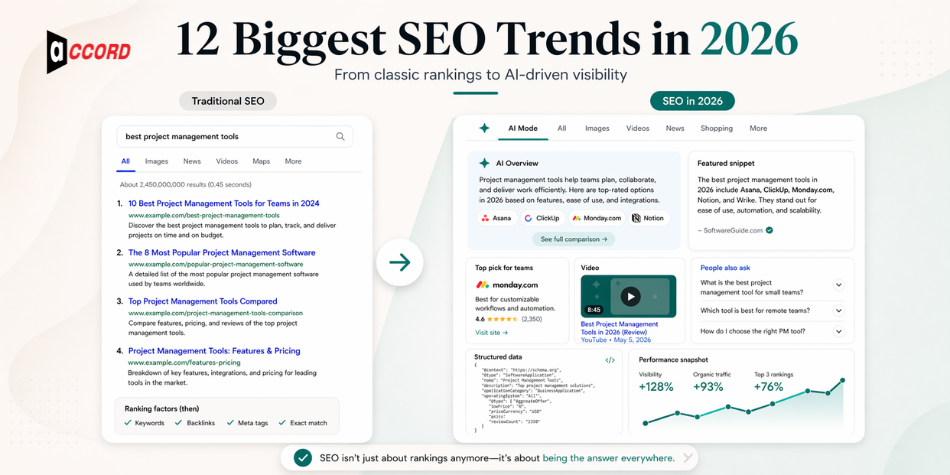
Some simple searches may get fewer clicks, but Google says overall organic clicks are still stable and AI result clicks may be higher quality. For a broader picture of what is actually shifting in search this year, the 12 biggest SEO trends in 2026 is a useful reference.
Real-World Example
Imagine a U.S. B2B agency page about technical SEO, AI s large language models LLMs, and content governance.
The newer approach still follows SEO basics, and adding short case studies can help AI systems understand the content better.
It can also include a clear definition, comparison tables, simple frameworks, examples, and supporting articles on related topics.
This type of article works better for AI Search Engine Optimization because it gives AI systems clear information to use.
AI answers can take the definition, summarize the framework, mention the example, and still link back to the source.
For a brand context, terms like Accord Tech Solutions SEO Company USA, AI SEO Services in USA – Accord Tech Solutions, Generative Engine Optimization Services in USA, and Accord Tech Solutions SEO Company USA can appear naturally while explaining solutions.
Businesses looking for Generative Engine Optimization Services in USA often need help with content structure, measurement, and topic authority.
SEO in 2026

The future of SEO in 2026 looks less like a replacement story and more like a layered search ecosystem.
Traditional search still exists. AI-generated summaries are growing.
Query fan-out, synthesized answers, and multi-step exploration are becoming more common.
The strongest brands will likely do a few simple things well.
They will publish helpful pages, organize content around real expertise, and make insights easy to understand.
Accord Tech Solutions Insight Box
For teams reviewing their current search strategy, check three things:
• whether your most important pages answer the main question in the first 100 words
• whether your site has real topic clusters instead of isolated blog posts
• whether your insights are easy for AI systems to summarize
For businesses comparing vendors, explain the problem first and the solution second. This supports searches related to SEO Services in USA – Accord Tech Solutions or AI SEO Services in USA – Accord Tech Solutions without sounding like an advertisement.